Zaproszenie na wykład Klastra 2 z cyklu Excellent Chemistry Lecture
Czas czytania: około 3 minuty
Instytut Chemii Fizycznej Polskiej Akademii Nauk serdecznie zaprasza na kolejny wykład z cyklu Excellence Chemistry Lecture, który wygłosi dr Joseph S. Beckwith z Wydziału Chemii Uniwersytetu Cambridge.
Dr Joseph S. Beckwith pełni funkcję starszego adiunkta na Wydziale Chemii Uniwersytetu Cambridge, gdzie współpracuje z prof. Stevenem F. Lee. Wcześniej był pracownikiem naukowym na stanowisku postdoktoranckim zarówno w Cambridge, jak i Princeton (u prof. Haw Yang). Posiada tytuł doktora chemii fizycznej Uniwersytetu Genewskiego (prof. Eric Vauthey). Jego prace dotyczące ultraszybkiej spektroskopii, fotoindukowanego transferu ładunku i zaawansowanej mikroskopii zaowocowały 20 publikacjami (7 jako pierwszy autor; 2 jako współautor), w tym artykułami w Nature Communications, Nano Letters i Chemistry of Materials, a także często cytowanym artykułem w PCCP z 2022 r. Jego badania otrzymały wsparcie w ramach stypendium SNSF Early Postdoctoral Fellowship oraz nagrody Cambridge Enterprise Technology Investment Fund.
Data i miejsce: wtorek, 16 września 2025 r., godz. 10:00 (CEST), Aula IChF (seminarium stacjonarne)
Tytuł: „Multicolour made easy: a simpler approach to spectral separation”
Abstrakt wykładu (w języku angielskim) znajduje się poniżej.
Multicolour and spectrally-resolved single-molecule microscopy can give considerable biological insight: fluorophores can undergo spectral changes in response to their local environment, providing information on the nanoscale hydrophobicity of oligomeric protein species;[1] coupling between fluorophores by FRET causes a colour change that gives insights into molecular dynamics;[2] and detecting multiple colours of fluorophore can enable super-resolution microscopy experiments to simultaneously image multiple biological targets, allowing interactions between biological structures to be uncovered on the nanoscale.[3] Current state-of-the-art instrumentation for multicolour experiments is often technically complex to implement, with the number of colours able to be deconvolved limited to about ~8. [4]
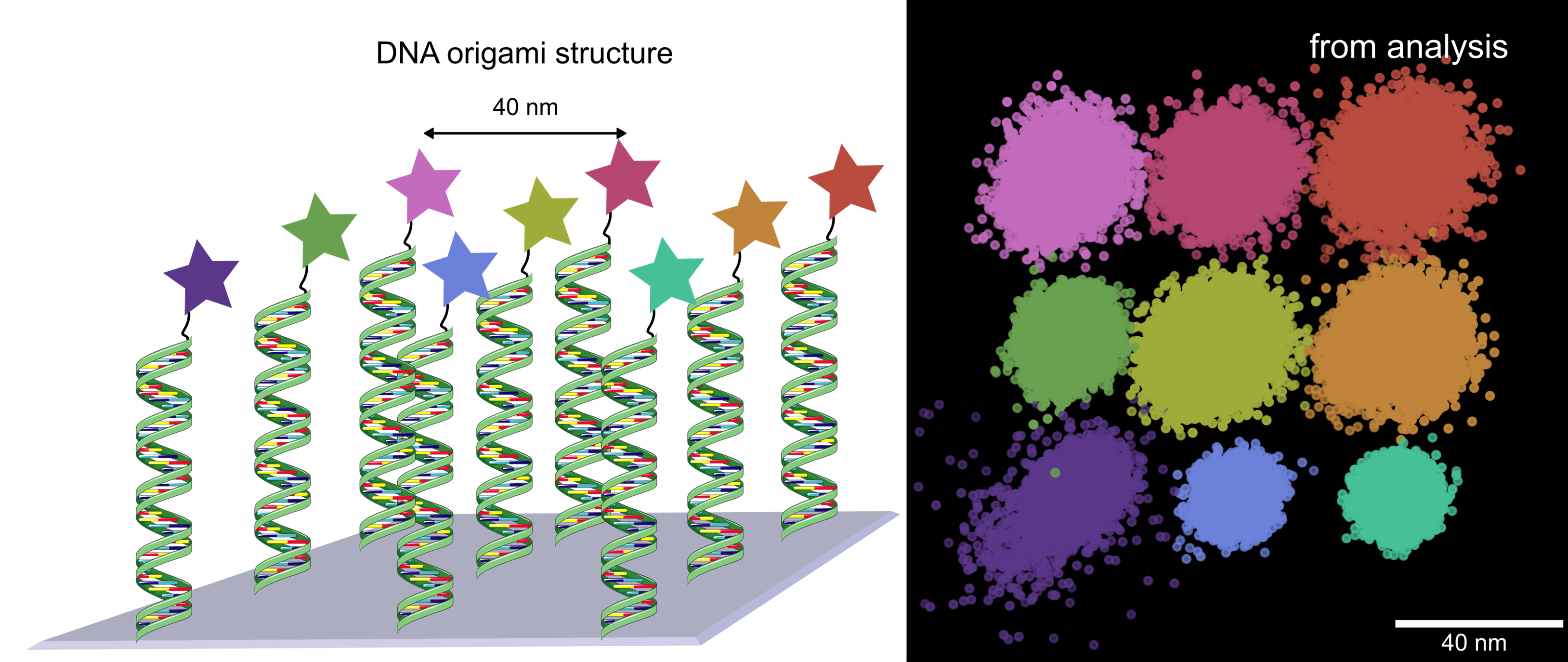
We have developed a new image analysis pipeline that works with off-the-shelf hardware. This image analysis algorithm, and the underlying information-theoretic approach, can be used to discriminate up to ~8 different fluorophores, achieving the state-of-the-art with a considerable reduction in experimental complexity. We will present experimental evidence that our method enables easy single-molecule FRET, and far greater multiplexing of multicolour super-resolution microscopy.
References
- Bongiovanni, M. N. et al. Multi-dimensional super-resolution imaging enables surface hydrophobicity mapping. Nat Commun 7, 13544 (2016).
- Hohng, S., Joo, C. & Ha, T. Single-Molecule Three-Color FRET. Biophys J 87, 1328–1337 (2004).
- Dempsey, G. T., Vaughan, J. C., Chen, K. H., Bates, M. & Zhuang, X. Evaluation of fluorophores for optimal performance in localization-based super-resolution imaging. Nat Methods 8, 1027–1036 (2011).
- Kumar, A. et. al. Multispectral live-cell imaging with uncompromised spatiotemporal resolution, biorxiv (2024) doi: 10.1101/2024.06.12.597784
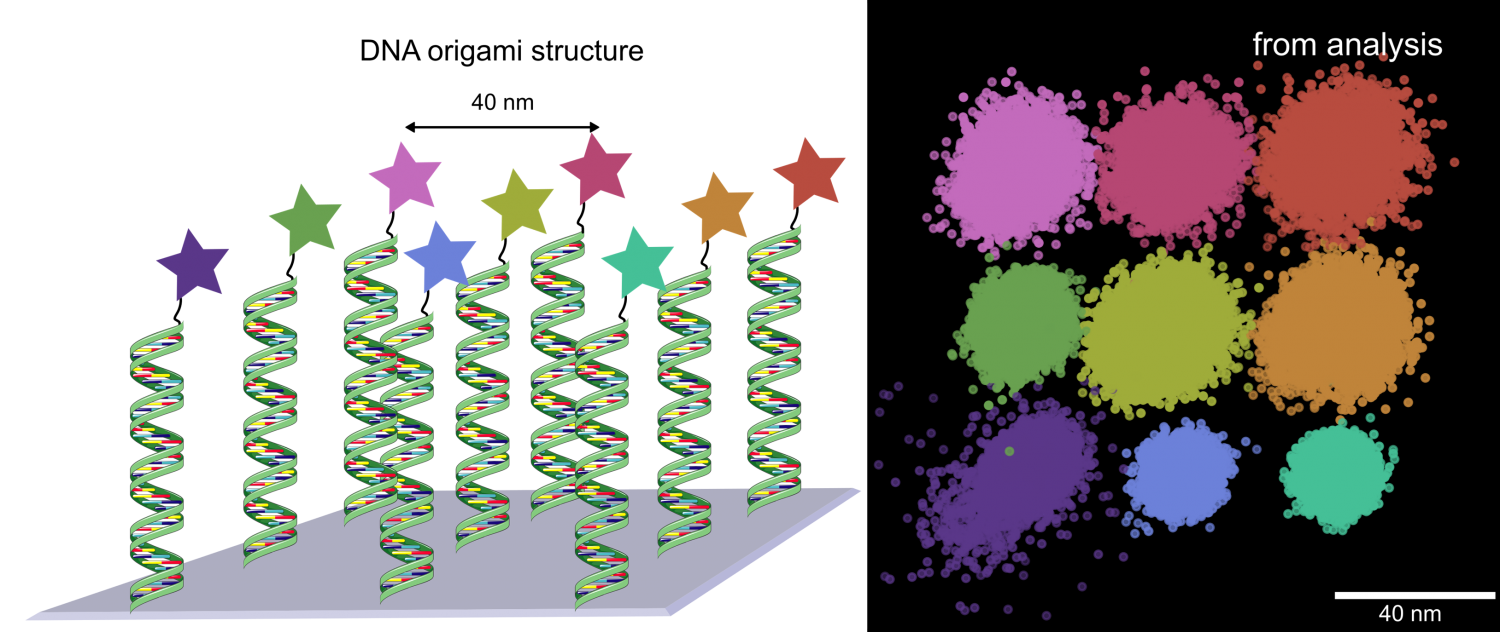
Figure 1: We are able to distinguish 9 different colours at sub-diffraction limited distances.
Wydarzenie jest obowiązkowe dla wszystkich doktorantów z Klastra 2, ale mamy nadzieję, że zainteresuje ono również pozostałych członków społeczności IChF. Zapraszamy do udziału.
- Data wpisu: 9.09.2025