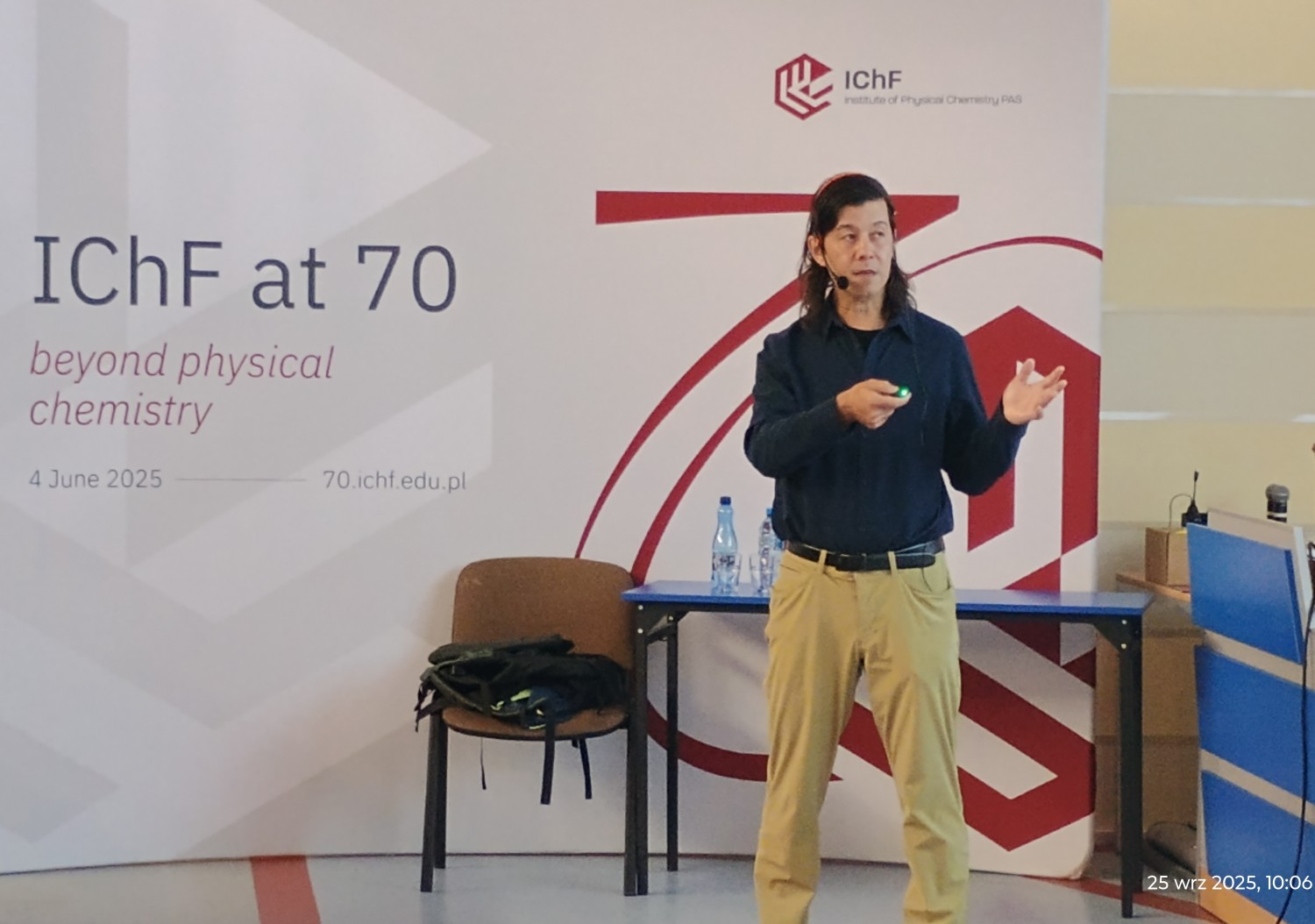
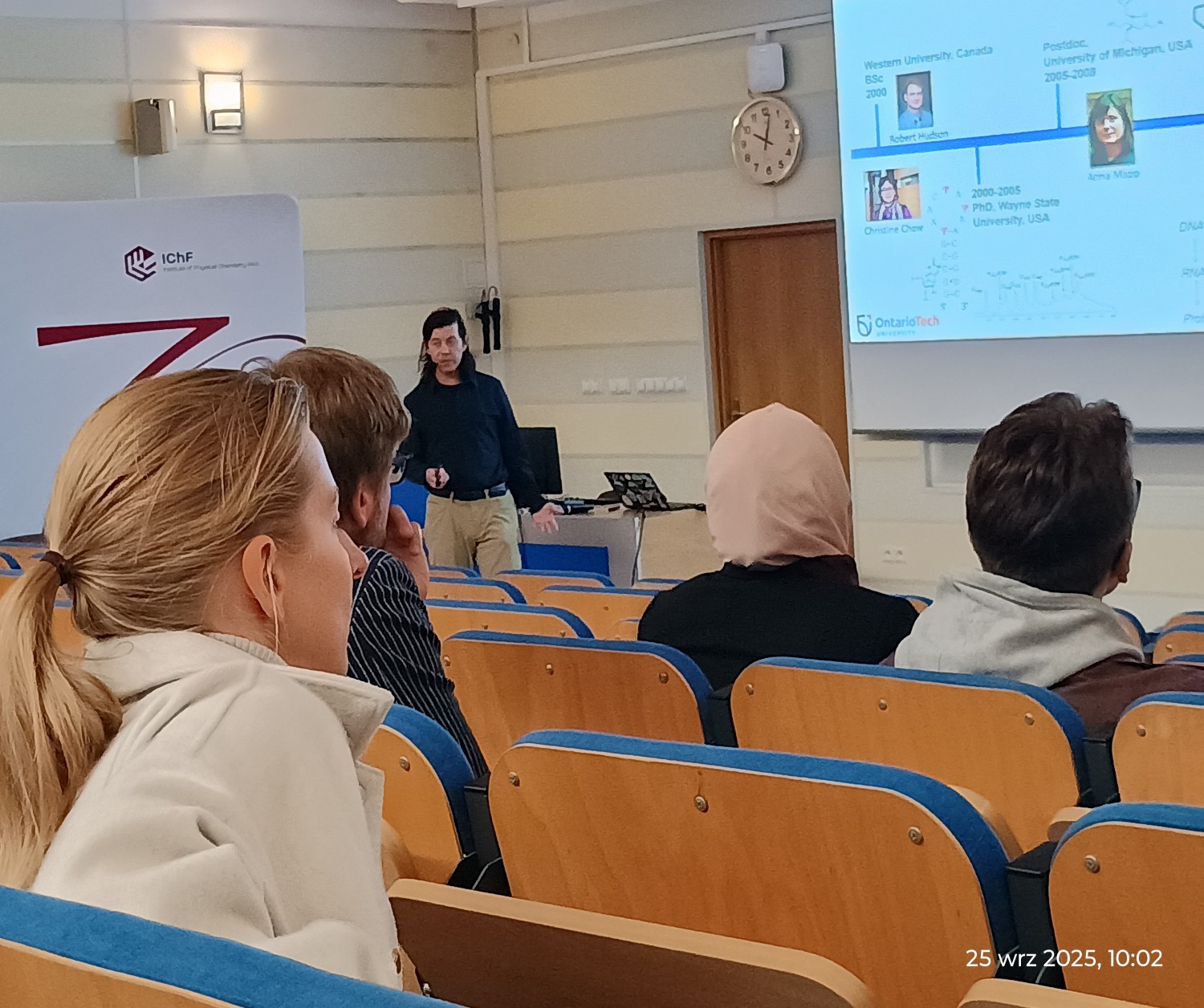
On science communication, research priorities, and scientific dreams – a conversation with Dr. Jean-Paul Desaulniers from Canada
Reading time: about 9 minuts
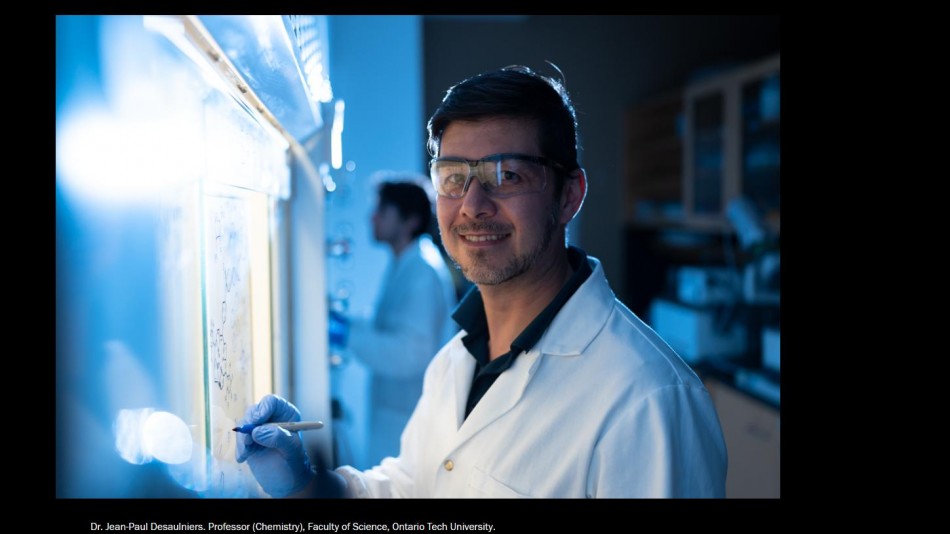
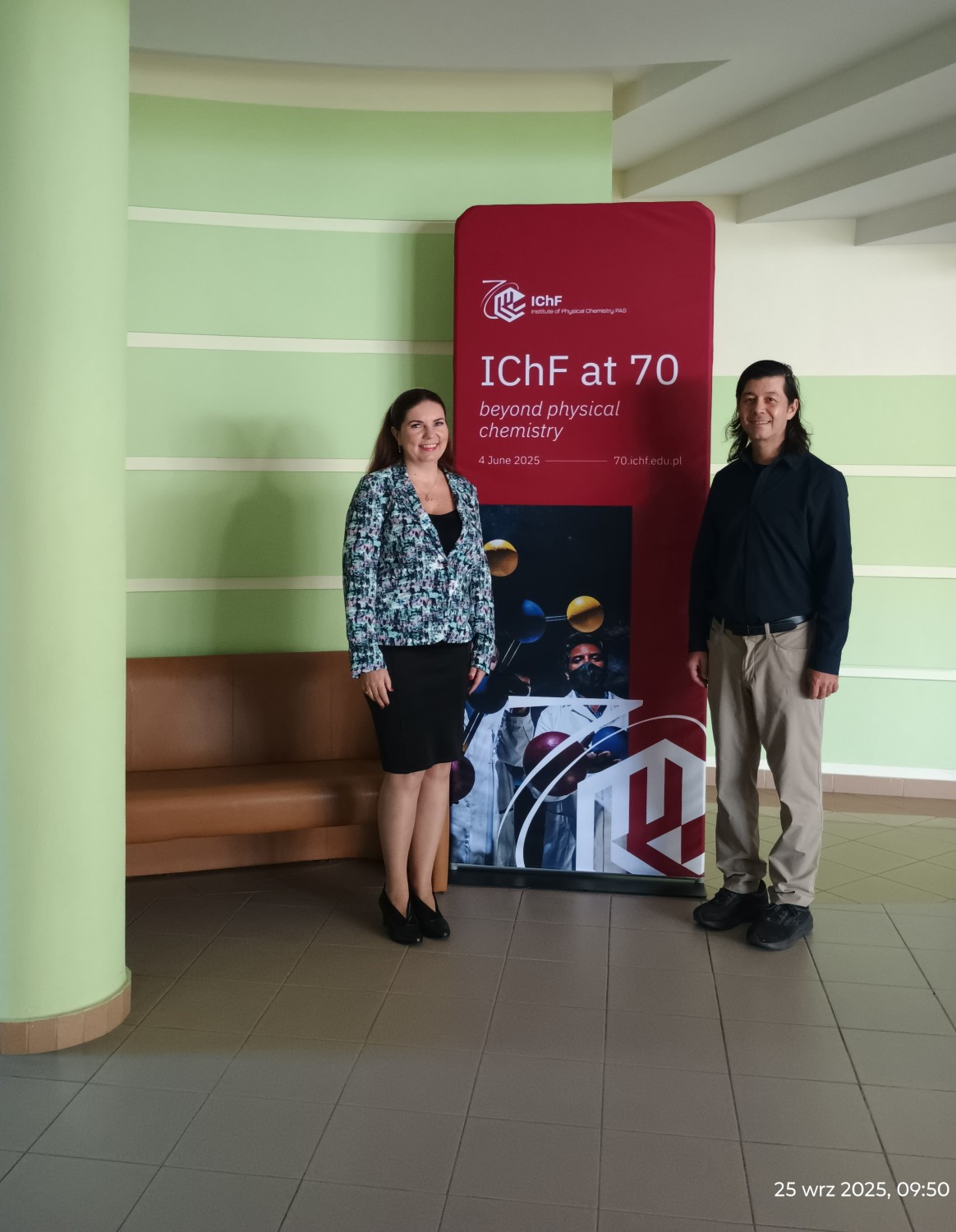
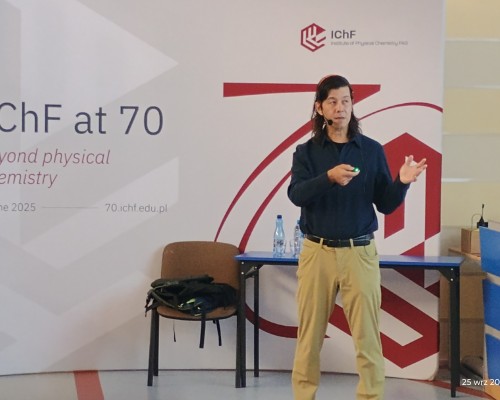
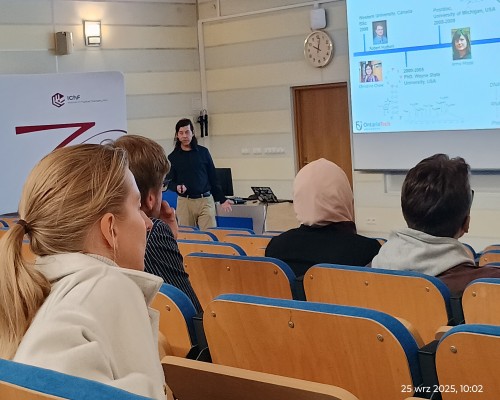
The Institute had the pleasure of hosting Dr. Jean-Paul Desaulniers, Professor of Chemistry at Ontario Tech University (Canada), who leads a research group in chemical biology focused on the design of modified nucleic acids for applications such as antisense oligonucleotides and siRNAs. During his visit in September, 2025, Dr. Desaulniers delivered an inspiring lecture titled “Fluorine Forward: Enhancing Oligonucleotide Power.”
On this occasion, he gave an exclusive interview for the Institute of Physical Chemistry, Polish Academy of Sciences, in which he spoke about science communication, research priorities, and the scientific dreams that drive his work — presented below.
Dr. Jean-Paul, what changes when research is communicated well — for science and for society? And how is science communication organized in Canada?
Let me start with the first part of your question — what changes when research is communicated well.
I believe we need better science communication, not only for scientists but also for the general public to understand what science is about and what progress we’re making.
When research is communicated effectively, it brings real benefits to society — to everyone. We’ve seen over the decades how scientific advances lead to new medicines and technologies — for example, electric cars or mRNA vaccines during the COVID-19 pandemic. How these developments are communicated to the public is extremely important so that people understand the improvements and benefits they bring, and the breakthroughs scientists are achieving.
As for how science communication is organized in Canada — well, at my level as a scientist, I communicate primarily with my students, postdocs, and colleagues. We also have national and international conferences, and we publish in peer-reviewed journals. But that’s not enough, because it doesn’t always reach the end user — the general public — who may not understand all the steps involved in scientific discovery.
So I think this is something we still need to improve in Canada, though it’s getting better.
For example, national media often invite scientists to discuss relevant topics. The Canadian Broadcasting Corporation (CBC) runs a national radio program called Quirks and Quarks, where researchers are invited to speak about new technologies, materials, or environmental issues. I think that’s very important.
But beyond that, I also believe it’s essential for scientists like myself to reach out to younger audiences — high-school, university, and even primary-school students — to talk about the exciting advances we’re making and why they matter.
Do you think young people understand when you talk about research?
We need to speak to them at the right level — not too technical — and explain why new medicines are needed, how they work, and what impact they have. It really starts there.
Many of my friends and colleagues outside academia don’t fully understand what scientists do day to day, so education and communication are crucial. We have to do our part in explaining our story to others.
Of course, social media plays a big role in this. It’s a great tool for sharing science — but in general, I think we need to be more organized and proactive in talking about our work in person.
For example, during the COVID-19 pandemic, I was involved in monitoring wastewater for viral traces with some of my university colleagues, Prof. Andrea Kirkwood and Prof. Denina Simmons. News agencies contacted us, and they did a great job explaining why this research was important — how wastewater data can help track infection trends. The public was genuinely interested, and our results were shared on a government website where everyone could see them.
That was a great example of how effective communication can bridge science and society. Still, there’s much more we could and should do — especially for advances that don’t yet have immediate applications but are nevertheless important.
Let's talk about your scientific work. What is the most important thing in what you do, and what advice would you give to young researchers starting their careers?
That’s a big question! There are many important aspects of scientific work. I think the key is to find something that truly excites you — something that motivates you and that you’re passionate about.
Science is also deeply collaborative. We have to work well with people, learn from each other, and aim to pursue common goals. Science is a team effort — not an individual sport. When we collaborate — within our labs and across institutions — we gain new insights and move science forward faster.
We’re trained from a young age to work individually — to take tests and write exams — but real scientific progress depends on teamwork. So I think it’s just as important to learn how to communicate, negotiate, and adapt with others as it is to master the technical skills of being a scientist.
Isn’t that difficult sometimes — with competition, egos, publications, and recognition getting in the way?
It can be, yes. But if there are clear boundaries, goals, and expectations, collaboration is not only possible, but advantageous. Of course, some individuals are less receptive to teamwork, and that’s fine — you just move on and find those who are.
The culture in science is changing, though. It’s becoming more collaborative, and that’s the direction we need to keep moving in.
So your advice to young researchers is to find what excites them and to stay open to collaboration?
Exactly. Young researchers are at a stage where they can learn anything they want — that becomes harder with time, trust me. (laughs).
You might start by being interested in one area of science, but through collaboration you can discover something entirely new. So be open-minded, adaptable, and curious.
It’s like learning languages — the more languages you speak, the better you can communicate across borders. The same applies to science: the more areas you become proficient in, the greater your opportunities and the more progress you can make.
That’s a very original view — in Poland, people often think you have to specialize in one thing to be respected.
Yes, I know that perspective, but I think the modern spirit of science is more interdisciplinary. My institution Ontario Tech University reflects that — it’s relatively young, about 20 years old, and it was founded on the idea of collaboration.
We don’t have traditional departments. Instead, we have interdisciplinary graduate programs. My background is in chemical biology and organic chemistry, but I collaborate with forensic scientists, ecologists, and materials researchers.
How do you collaborate with forensic scientists?
That’s part of what I’ll be talking about in my lecture today. My research focuses on DNA and RNA — we’ve developed a new type of label-free biosensor based on chemical modifications that can detect trace DNA, which potential applications at crime scenes. This is a collaboration with one of my colleagues Prof. Theresa Stotesbury, at Ontario Tech University, an expert in forensic science.
One of our graduate students was trained in forensic science, yet learned nucleic acid chemistry, and was able to bridge both disciplines — that’s exactly the kind of cross-training that leads to innovation. Personally, I also enjoy learning new things — it makes science more exciting.
Finally, one more question. Here in Warsaw, together with our partners in Prague, we organize the Dream Chemistry Award — an international competition for the best “scientific dream.” What is your scientific dream — the vision that drives your research forward?
I’ve been fascinated by medicines since I was young — how they work and how they can be improved. Many diseases remain untreatable; including cancer, losing my father to one of them has deeply influenced my scientific path
My dream is to help develop new types of medicines — particularly RNA-based therapeutics such as siRNA or short activating RNAs — and to see my work, directly or indirectly, contribute to products that improve people’s lives.
There’s still a tremendous unmet medical need. My goal is not only to pursue my own vision but also to inspire my students and postdocs to follow their own scientific dreams. It’s incredibly rewarding to see them grow, graduate, and pursue their own paths in science.
IChF: Thank you so much for sharing your valuable insights, Dr. Jean-Paul.
Thank you — these were great questions.
About the interviewee: Jean-Paul Desaulniers, PhD is a Professor of Chemistry at Ontario Tech University, and holds an Ontario Tech Research Excellence Chair in Chemical Biology where he leads cutting-edge research in the field of chemical biology. His expertise centers on nucleic acid chemistry and biology, with a focus on designing and synthesizing novel nucleic acid derivatives for therapeutic applications like RNAi.
A native of London, Ontario, Dr. Desaulniers completed his undergraduate degree in Chemistry and Biochemistry at Western University in 2000. He then completed his PhD at Wayne State University under the mentorship of Dr. Christine Chow in 2005, where his research focused on the organic synthesis of pseudouridine and its role within RNA. Following his doctoral studies, Dr. Desaulniers held a prestigious American Cancer Society postdoctoral fellowship at the University of Michigan, working in Dr. Anna Mapp’s lab until 2008. There, he designed small-molecule inhibitors to target protein-protein interactions.
Since joining Ontario Tech in 2008, Dr. Desaulniers has built a research program focused on nucleic acid chemical biology. His work explores the synthesis of nucleic acid derivatives, such as photoswitchable siRNAs, which can be used to control gene silencing in biological systems. His group has achieved notable success in creating tetrafluorinated azobenzene-functionalized siRNAs, which can be optically activated using light to regulate gene expression in model organisms like Japanese Medaka fish embryos with collaborator Dr. Simmons from Ontario Tech. His lab was awarded a patent in 2020 for this work, and commercialization funds from Canadian funding agencies such as NSERC I2I and Lab2Market to further develop this technology.
The interview was conducted by IChF's PR Manager, Dr. Anna Przybyło-Józefowicz.
Photos provided by: Dr. Desaulniers and IChF.
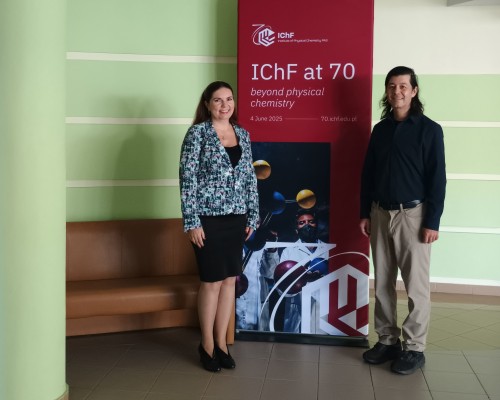
- Author: Dr. Anna Przybyło-Józefowicz
- Photo source: Photos provided by: Dr. Desaulniers and IChF
- Date: 17.10.2025