Silent enemies, smart weapons - switching off contamination by nanoparticles
Reading time: about 6 minuts
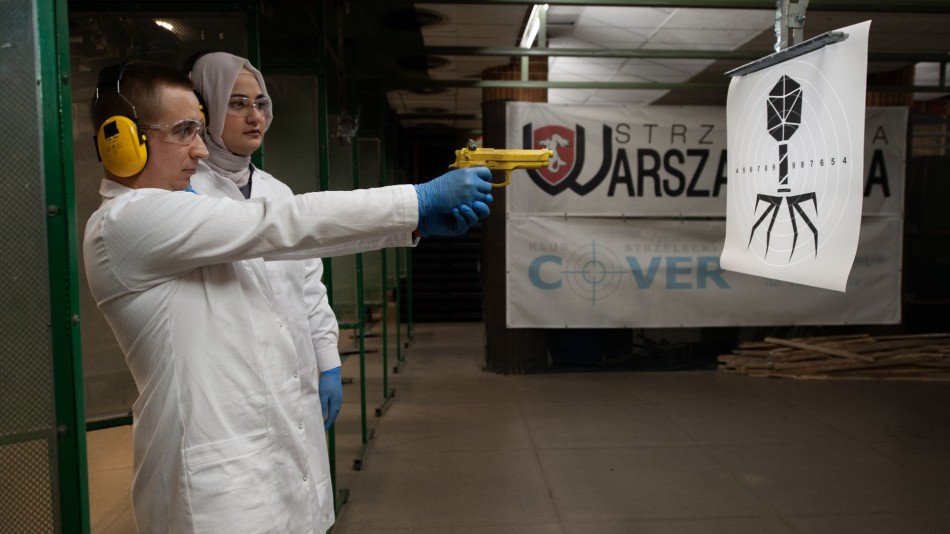
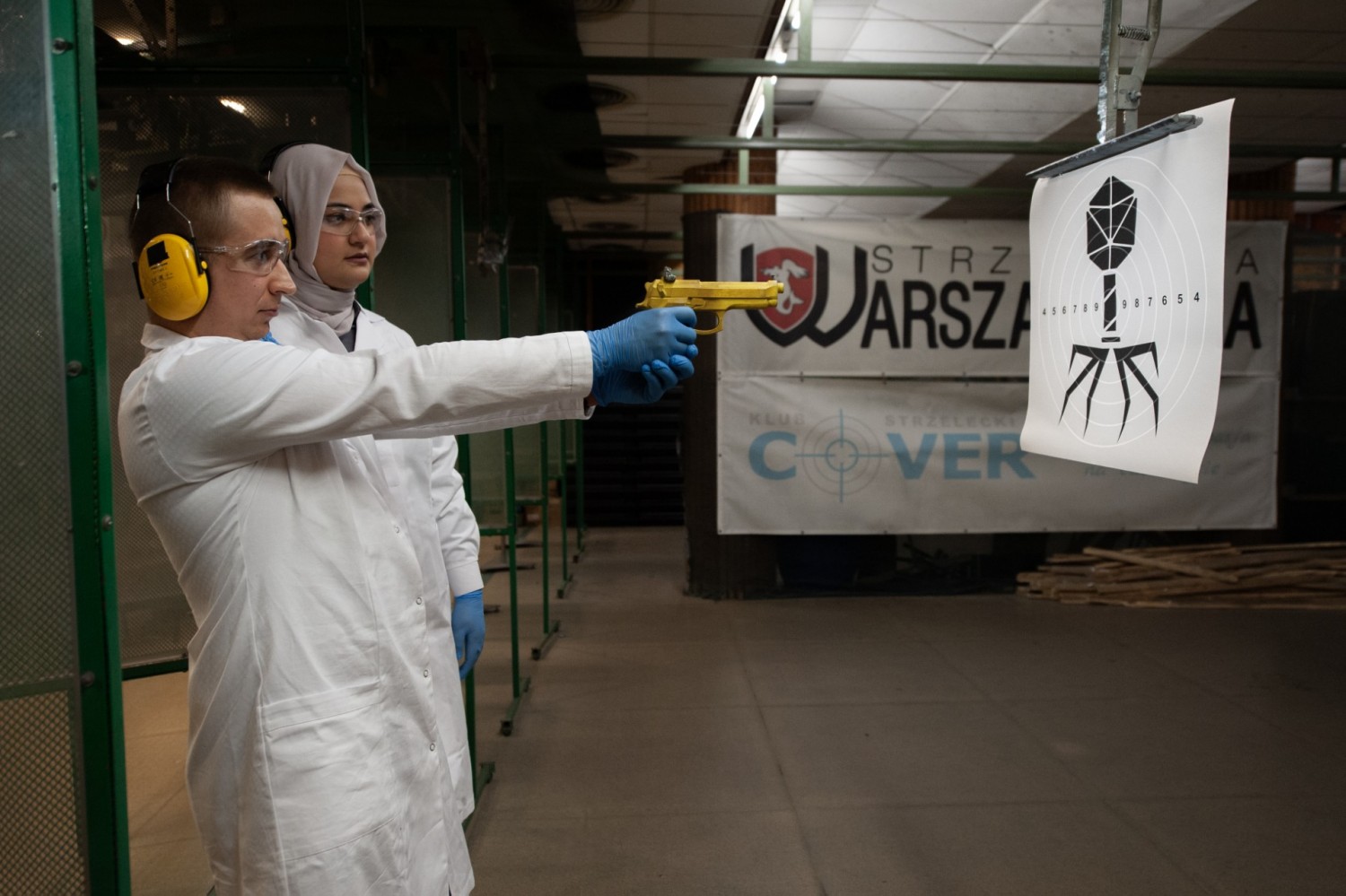
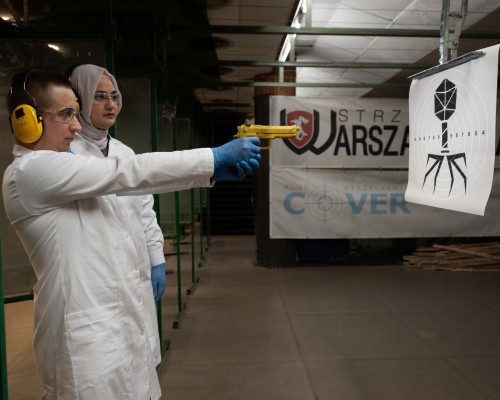
Bacteriophages are viruses that can kill bacteria through highly specific interactions. While this property can be beneficial in selected applications, bacteriophages represent a serious threat to laboratories and industries that rely on bacterial cultures for production. Their selective inactivation remains a major challenge. Recently, researchers from the Institute of Physical Chemistry, Polish Academy of Sciences in Poland, demonstrated an innovative solution that enables targeting the surface of bacteriophage through electrostatic interactions as a promising strategy for their inactivation without adversely affecting bacterial strains or eukaryotic cells.
Decades ago, antibiotics were considered wonder drugs capable of curing bacterial infections. Unfortunately, overuse of these drugs led to the development of antibiotic-resistance in many pathogenic bacterial strains, raising global concern. One of the solutions to defeat these pathogens is bacteriophages, also called phages. While phages are explored as therapeutic agents in medicine, their presence is highly undesirable in laboratories and industrial processes that depend on carefully controlled bacterial cultures.
In many industrial sectors, including food fermentation, enzyme, pharmaceuticals, and cosmetics production, specific bacterial strains are essential for efficient and reproducible manufacturing. In these settings, bacteriophages pose a major risk, as they can selectively infect and eliminate production strains, leading to failed batches and significant economic losses. Phages may also appear in agriculture or wastewater treatment environments, where their presence can influence microbial populations, but in controlled bioprocesses their uncontrolled spread is particularly detrimental.
Despite their small size, bacteriophages are highly persistent and can easily spread within laboratory and industrial environments. They may be introduced through contaminated raw materials, inadequately disinfected equipment, surfaces, or even air. Once present, phages can rapidly propagate within bacterial cultures, often remaining undetected until the entire system collapses due to bacterial lysis. To prevent phage contamination, laboratories and factories rely on strict hygiene protocols involving sterilization and disinfection methods such as UV-C radiation, high temperature and pressure, ozone, and aggressive chemicals including potassium peroxymonosulfate (Virkon), ethanol, bleach, and hydrogen peroxide. These approaches typically aim to damage phage capsid proteins or nucleic acids, thereby inactivating the virus. However, bacteriophages can aggregate, increasing their resistance to harsh environmental conditions such as heat or chemical exposure. Moreover, phages are often more resilient than bacteria themselves. As a result, disinfection methods strong enough to eliminate phages frequently destroy the bacterial strains required for industrial processes. This lack of selectivity represents a critical limitation of existing anti-phage strategies and drives the search for safer, more effective solutions.
Addressing these challenges, the interdisciplinary team of researchers from the Institute of Physical Chemistry, Polish Academy of Sciences, propose a solution that enables the selective killing of phages without any harmful effect on bacteria. Their latest work, published in Materials & Design, shows an innovative approach based on polymeric nanospheres having a well-defined surface that interacts with bacteriophages. How does it work? Bacteriophages possess characteristic surface charges that differ from those of bacterial and eukaryotic cells. The researchers designed polypyrrole nanoparticles (NPs) that interact directly with charges on the phage surface through electrostatic interactions. Because the biological membranes of bacteria and human cells have different surface properties than bacteriophages, they are not affected, and the charged polypyrrole NPs act selectively on phages.
“Importantly, the present study demonstrates that selective antiphage activity can be achieved using polymer-based nanoparticles, offering a significantly cheaper and scalable alternative to other nanostructural solutions like gold-based systems.” – comments prof. Piyush Sindhu Sharma.
The proposed nanoparticles are approximately 50 nm in diameter and contain specific chemical groups on their surface, namely negatively charged carboxylic groups, which enhance electrostatic interactions with bacteriophages. The researchers controlled the density of these groups during fabrication by polymerizing mixtures of pyrrole with and without carboxylic modifications. Importantly, they identified an optimal surface composition required for effective phage inactivation. Once the content is too small or too high, the effect can be worsened. Among many different stoichiometries between bare pyrrole and carboxylic group-modified pyrrole, the 1% content of carboxylic groups in the obtained NPs is sufficient to inactivate even 95% of phages.
“Our study proposes polypyrrole nanoparticles functionalized with 1% carboxyl groups (P(Py:PyCOOH) 100:1 NPs) as a targeted solution for phage inactivation due to their selective antiviral properties. Their high efficacy, combined with a simple synthesis method, offers the potential for later use on a larger scale.” – adds Dominik Korol
The authors first confirmed the antiviral activity of the nanoparticles against bacteriophages and then evaluated their effects on bacteria exposed to nanoparticle-treated phages. Their results demonstrate that the proposed NPs effectively protect bacteria from phages. Importantly, they also checked whether phage inactivation was reversible. The presence of carboxylic groups in the NPs in described content is effective to disrupt the phage’s essential functions, such as host recognition and attachment. The cytotoxicity studies that were performed on fibroblasts demonstrated that the nanoparticles were biocompatible at concentrations effective for phage inactivation. The irreversible inactivation of phages along with minor cytotoxicity shows the potential of the proposed NP in biotechnology, antimicrobial, and medical applications.
Why does the topic matter so much? The proposed approach differs from the commonly used methods that are applied in industry and laboratories, such as pasteurization or chemical disinfection by the abovementioned harsh compounds. Proposed NPs can be used in an indirect approach that avoids introducing nanoparticles directly into fermenters, reduces safety and regulatory concerns, and provides effective protection in high-value bioprocesses.
Sada Raza – the first author of this study, remarks: “We combined our know-how in different disciplines, delivering a highly effective and selective strategy that simplifies the control of phages. Our particles minimize cost and safety concerns, and offer practical use in high-value bioprocesses where phage outbreaks are especially detrimental.”
Understanding the mechanisms that stand behind the bacteriophages' inactivation required interdisciplinary approaches combining the use of methods from different fields from virology to polymer chemistry. That enabled the design of surface attachment through functional NPs with controlled size and charge. Integration of diverse fields led to the development of a solution that can help to control phage contamination in laboratories and technological processes. Demonstrated work illustrates how complex biological challenges are addressed through open-minded researchers and cross-disciplinary collaboration.
Presented work was financed by the National Science Centre, Poland, within the grants OPUS 2022/45/B/ST5/01500 and UMO-2023/49/B/ST11/01771, and PRELUDIUM BIS 2020/39/O/ST5/01017.
CONTACT:
Dr. hab. Piyush Sindhu Sharma
Dr. hab. Jan Paczesny
Institute of Physical Chemistry, Polish Academy of Sciences
email: psharma@ichf.edu.pl, jpaczesny@ichf.edu.pl
ARTICLE:
“Targeted inactivation of bacteriophages by polypyrrole nanoparticles”
Sada Raza, Dominik Korol, Enkhlin Ochirbat, Bartosz Kamiński, Maciej Cieplak, Piyush Sindhu Sharma, Jan Paczesny
Materials & Design, 2025, 115204
DOI: https://doi.org/10.1016/j.matdes.2025.115204
The activity is implemented as part of the project “WelcomeIChF: Support and Integration of Foreign Employees at the Institute of Physical Chemistry of the Polish Academy of Sciences” (contract no. BPI/WTP/2024/1/00020/U/00001), financed by the Polish National Agency for Academic Exchange (NAWA) under the “Welcome to Poland – 2024 call” programme. The “Welcome to Poland” programme is financed by the European Union through the European Funds for Social Development 2021–2027 (FERS), under the project “Support for higher education and science institutions in serving foreigners and Poles traveling abroad”, no. FERS.01.05.IP.08-0003/24.


- Author: Dr Magdalena Osial
- Contact: magdalena@osial.eu
- Photo source: Grzegorz Krzyżewski
- Date: 10.02.2026