No more guesswork in drug design. ICTER shows a new path
Reading time: about 5 minuts
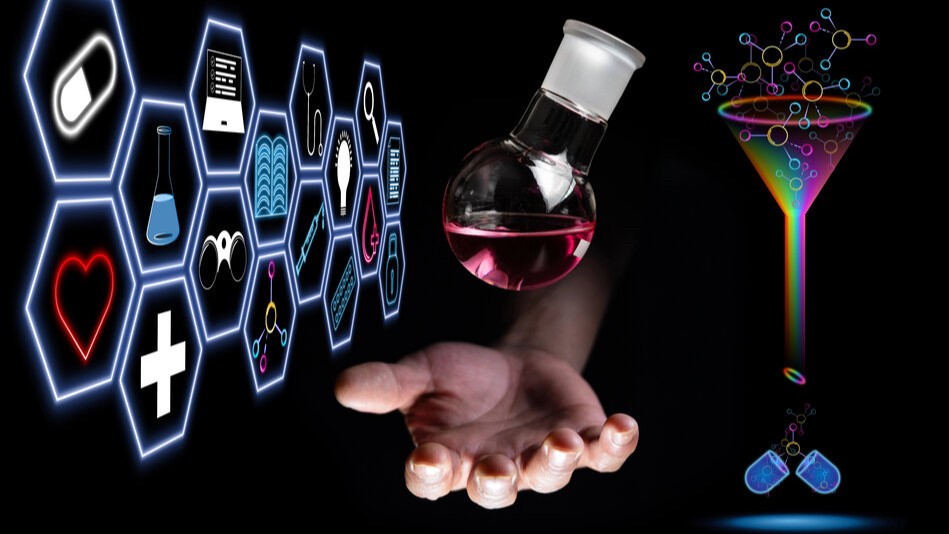
Drug discovery still too often relies on expensive trial and error. Researchers from ICTER show there is another way - building molecules step by step and observing their behavior at atomic resolution. This approach could significantly speed up the development of new therapies while reducing side effects.
The starting point of the study, published in Diabetology by Vineeta Kaushik, Saurav Karmakar, and Humberto Fernandes, is aldose reductase (AR) - an enzyme that has long been at the center of research into diabetic complications. Under conditions of chronic hyperglycemia, the so-called polyol pathway becomes overactive, converting glucose into sorbitol. Its accumulation leads to osmotic stress, redox imbalance, and ultimately cellular damage.
This mechanism is directly linked to complications such as diabetic retinopathy, neuropathy, and nephropathy. Inhibiting aldose reductase, therefore, appears to be an obvious therapeutic strategy. Yet despite decades of research, no drug has successfully combined strong efficacy with a favorable safety profile.
"The biggest challenge is not simply to inhibit the enzyme, but to do so in a precise and safe way", says Dr. Vineeta Kaushik from ICTER.
The difficulty lies in the enzyme's structure. AR belongs to a larger family of proteins with highly similar architectures. As a result, molecules designed as inhibitors often bind not only to AR but also to related enzymes, leading to off-target effects. In practice, this lack of selectivity has been the main reason why many promising candidates have failed.
Why traditional methods fall short?
Conventional drug discovery often relies on screening vast libraries of chemical compounds to identify those that interact with a biological target. In the case of aldose reductase, however, this strategy has clear limitations.
The enzyme's active site is highly conserved, meaning it looks very similar across related proteins. As a consequence, many compounds "fit" multiple targets at once. This creates a situation where a drug may work, but at the cost of interfering with other biological processes.
As the authors emphasize, the problem is not a lack of candidate molecules, but rather a lack of tools that allow researchers to design them with sufficient precision. What is needed is a detailed understanding of how a molecule interacts with its target - not in general terms, but at the level of individual atomic interactions.
Designing from the ground up
This is where fragment-based drug discovery (FBDD) comes in. Instead of starting with large, complex molecules, researchers begin with very small chemical fragments - simple structures that bind only weakly and partially to the target.
This fundamentally changes the logic of drug design. These small fragments act as probes, revealing which regions of the protein surface are most promising for further development. From there, molecules are gradually built up, step by step.
"Small fragments act like probes - they show us where it actually makes sense to build a drug", explains Saurav Karmakar, a PhD researcher at ICTER.
As the process continues, fragments are expanded, linked, or modified. Each stage is carefully analyzed, allowing researchers to avoid random interactions and focus on those that truly contribute to selectivity. This is particularly important for enzymes like AR, where structural differences between proteins are subtle but critical.
MicroED: seeing interactions at atomic resolution
The second pillar of the approach described in the study is MicroED - microcrystal electron diffraction. This technique allows scientists to determine the structure of proteins and their complexes with drug molecules even when only extremely small crystals are available.
In practical terms, this opens access to structural information that was previously difficult or impossible to obtain. Researchers can directly observe how a fragment binds to an enzyme, identify hydrogen bonds, analyze molecular orientations, and pinpoint areas that require optimization.
This level of detail makes it possible to move from approximate fitting to truly rational design. Instead of guessing which modifications might improve a molecule, scientists can make informed decisions based on precise structural data.
"With tools like this, we can significantly shorten the path from an initial idea to a real drug candidate", says Dr. Humberto Fernandes from ICTER.
What this means for future therapies?
Although the publication is methodological in nature, its implications are highly practical. A better understanding of drug - target interactions increases the chances of developing therapies that are both effective and safe.
In the context of diabetes, this could mean a renewed opportunity for aldose reductase inhibitors - this time designed with far greater precision. But the potential of this approach goes well beyond a single enzyme. FBDD combined with techniques such as MicroED could be applied to drug development in oncology, neurodegenerative diseases, and inflammatory conditions.
For patients, the benefits could be tangible. More selective drugs mean fewer side effects. A more predictable design process increases the likelihood of success. And faster optimization could shorten the time needed to bring new therapies to market.
In a field where developing a single drug can take more than a decade, such improvements are not incremental - they are transformative.
--------------------------------------------------------------------------------------------------------------------
Vineeta Kaushik, Saurav Karmakar, Humberto Fernandes (2026). Old Target with New Vision: In Search of New Therapeutics for Diabetic Retinopathy by Selective Modulation of Aldose Reductase. Diabetology.
DOI: https://doi.org/10.3390/diabetology7030042
Author: Scientific Editor Marcin Powęska
- Author: Marcin Powęska
- Photo source: Depositphotos
- Date: 30.04.2026