Collaboration between IChF and Leibniz IPHT – job shadowing visit and an interview with a member of the institute’s leadership in Jena
Reading time: about 11 minuts
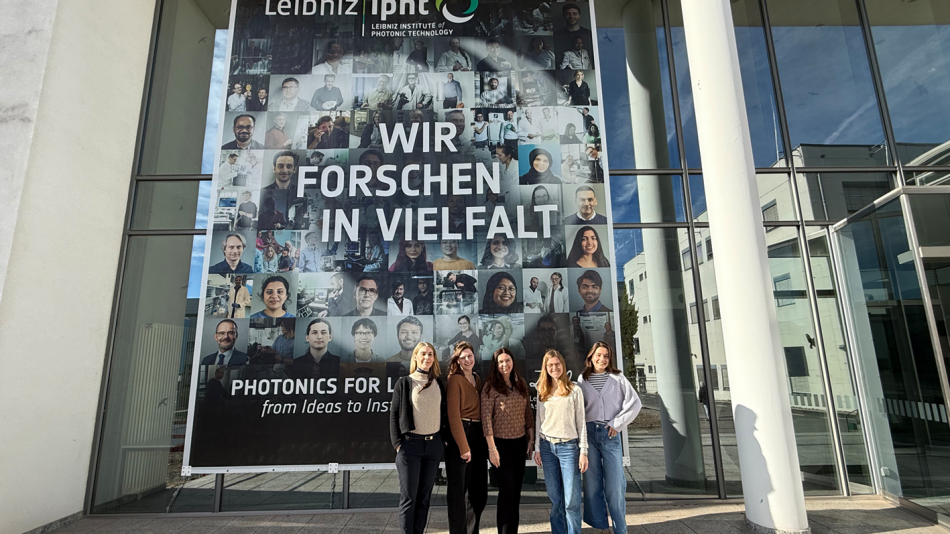
Deepening cooperation with a strategic partner in Europe was the focus of a recent professional exchange between the Institute of Physical Chemistry, Polish Academy of Sciences (IChF) and the Leibniz Institute of Photonic Technology (Leibniz IPHT) in Jena, Germany.
From February 24 to 26, Dr. Anna Przybyło-Józefowicz, Communications & PR Manager at IChF, spent three days at the institute as part of a job-shadowing visit hosted by the Leibniz IPHT communications team. The exchange provided an opportunity to explore how communication is organized at a leading European research institute and to further strengthen cooperation between the two institutions.
Leibniz IPHT is one of IChF’s strategic partner institutions in Europe, and the visit offered valuable insight into how communication supports research, collaboration, and institutional visibility.
Inside the communication structure at Leibniz IPHT
The visit began with an introduction to the structure and priorities of the communications department, as well as the distribution of responsibilities within the team.
A distinctive feature of the institute’s communication structure is its tandem leadership model. The communications department is jointly led – with responsibility shared between two female leaders – covering both internal and external communication. This shared leadership approach combines perspectives on internal engagement and external visibility and helps ensure that communication activities remain strategically aligned across the institute.
Internal communication activities support employee engagement and help strengthen identification with the institute, while external communication focuses on visibility, media relations, and outreach to broader audiences.
Event management and scientific conferences
The visit also included an overview of event management activities at Leibniz IPHT, covering the development of scientific events from early planning to implementation.
This includes coordination with speakers and participants, communication activities, and the preparation of materials supporting outreach and visibility. Event formats range from internal meetings to international conferences and initiatives connecting research and industry.
Digital communication and social media
Another part of the programme focused on digital communication, including social media, photography, and visual storytelling.
Discussions addressed how research topics are translated into accessible formats, how tone and style are adapted to different audiences, and how visual content supports communication goals across platforms.
Design, visual identity, and scientific graphics
The visit also highlighted the role of design and visual identity in communicating research.
Graphic design supports a wide range of communication activities, including publications, scientific graphics, and visual materials for events and campaigns. Close collaboration between designers and researchers helps ensure that complex topics can be presented in a clear and engaging way.
Dialogue with research leadership
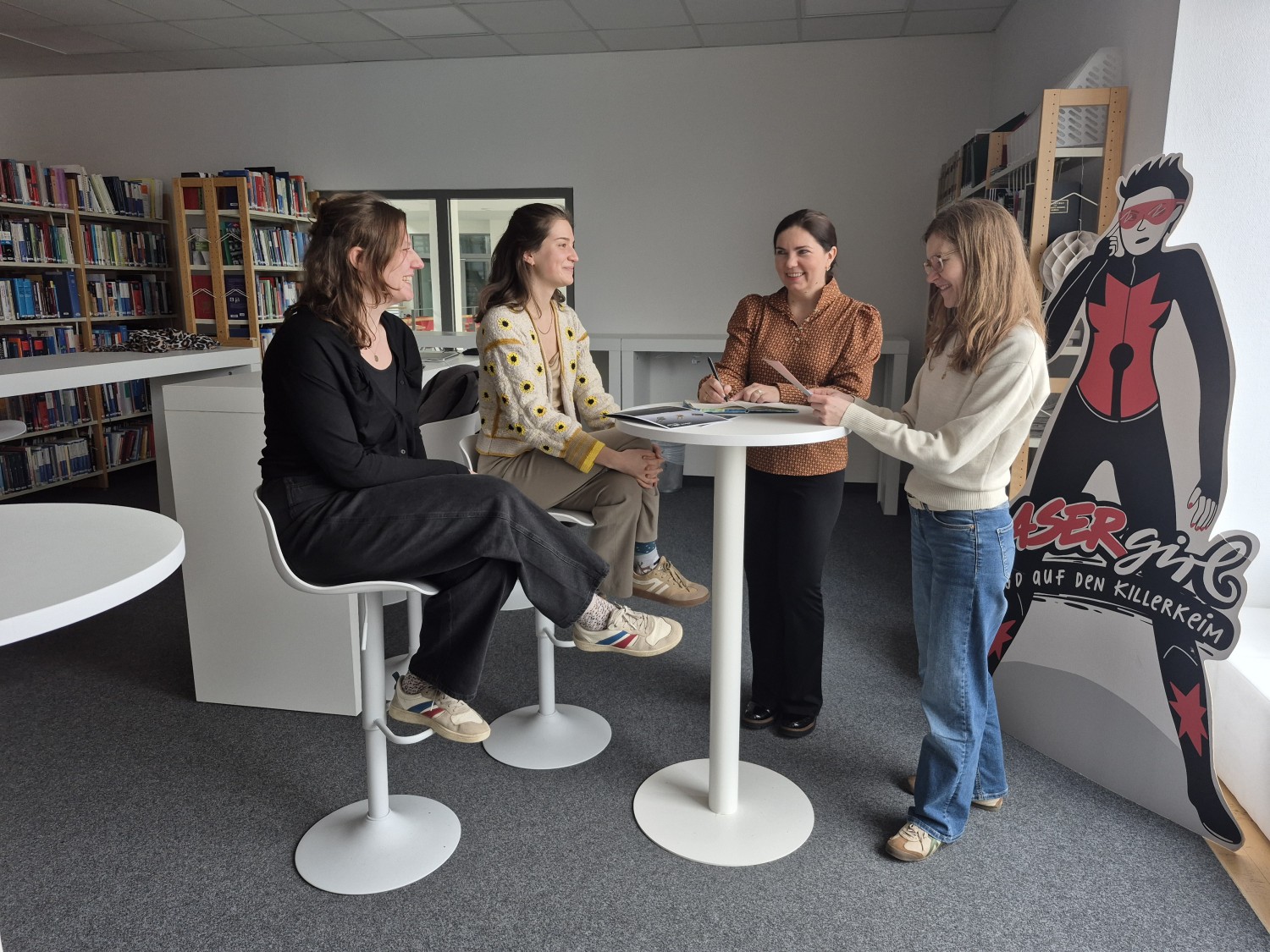
A particularly valuable element was an interview with Prof. Ute Neugebauer, Deputy Scientific Director at Leibniz IPHT and Professor of Physical Chemistry at Friedrich Schiller University Jena, conducted by Dr. Anna Przybyło-Józefowicz of IChF.
Dr. Neugebauer’s research focuses on spectroscopic methods — in particular Raman- and fluorescence-based approaches — for the medical diagnosis of infections and for the characterization of physiological interactions.
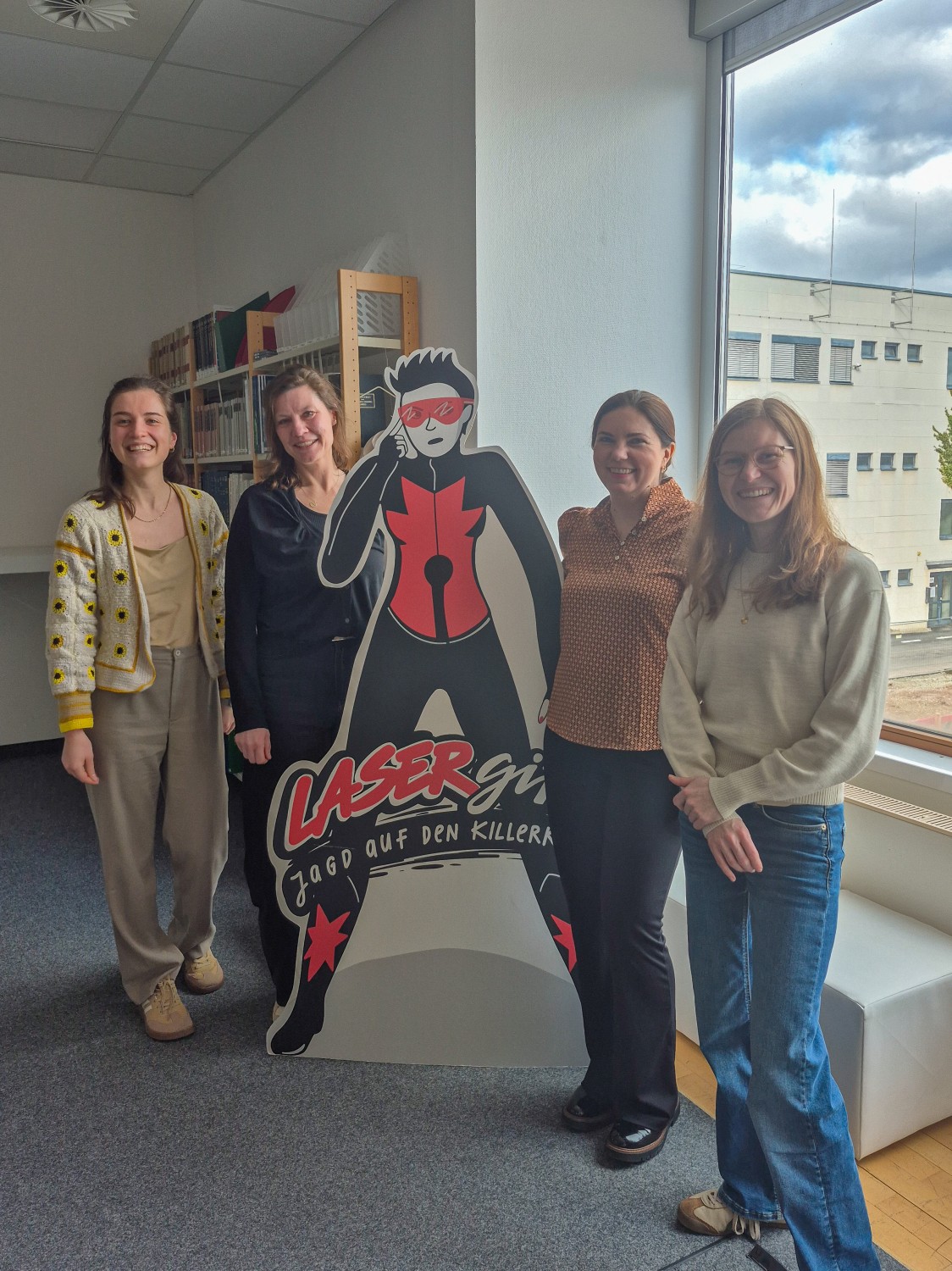
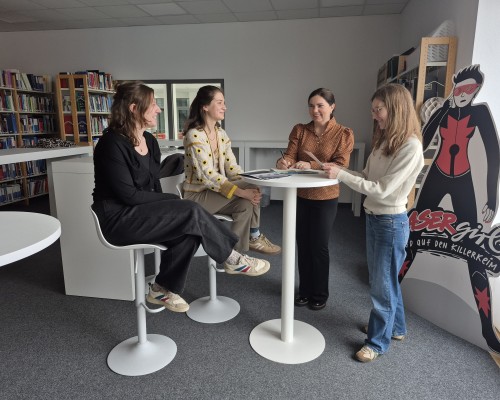
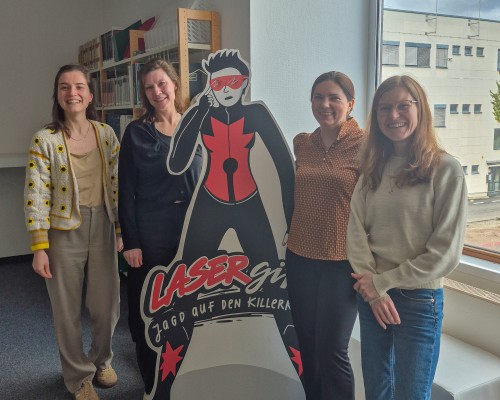
Interestingly, Prof. Neugebauer also appears as one of the characters in the science comic Laser Girl, which was developed by the Leibniz IPHT communications team to present research to a broad audience in an engaging way, combining an action-driven storyline with explanatory sections.
The discussion addressed institutional cooperation, doctoral training, gender equality in research environments, leadership models, and the strategic role of communication in research institutes.
Interview with Prof. Dr. Ute Neugebauer, Deputy Scientific Director, Leibniz IPHT
How would you describe the development and strengths of the cooperation between IPHT and IChF?
The collaboration originally developed because colleagues recognized that the two institutes are highly complementary. Many of the research topics addressed at your institute are also explored here, and it is always valuable to have a second scientific perspective.
Such partnerships are particularly important when planning joint projects, for example within European Union research programs. It is beneficial to work with partners you already know and with whom you can build long-term relationships.
Over time the partnership has really come to life. Research groups exchange samples, ideas, and researchers. Scientists visit each other’s institutes to get to know one another and develop joint projects.
In some cases, one institute has technologies that the other does not, while the partner provides unique samples or expertise. Through this exchange of materials and ideas, new scientific insights and research outputs emerge.
What opportunities do you see for further strengthening this collaboration?
As people become more familiar with one another, collaboration grows naturally. One valuable initiative is the joint doctoral seminar that takes place once per semester. PhD students from participating institutes present their research online.
Typically, two students from each institute present their work, and the seminar attracts a good audience — often around one hundred participants. These meetings help researchers become familiar with each other’s work and open new opportunities for collaboration.
Structured programs such as EU research projects also provide an excellent framework for cooperation. Another idea currently being considered is the creation of a joint research cluster, where several groups would contribute to a common scientific topic and work together within a shared project structure.
Moreover, also addressing the gender gap in natural sciences, Leibniz IPHT has launched a funding programme called “Women4Photonics” which specifically aims to support talented early-career female researchers in advancing their own research projects. Female young postdocs from IChF can also apply for this seed funding when they intend to prepare third-party funding applications (e.g. EU, Marie Skłodowska-Curie Global Fellowships, Alexander von Humboldt Foundation, ERC) with our institute.
What role does collaboration play in doctoral training?
For PhD students, these collaborations provide an opportunity to see research outside their own group. The doctoral seminars allow them to discover what other institutes are working on, sometimes in related areas and sometimes in completely different fields.
Short research visits are also possible. We have already had examples where a researcher came for a week with samples to perform measurements here, followed by joint data analysis.
Such connections can also support future career development. Programs such as the Marie Skłodowska-Curie fellowships encourage researchers to work abroad. When young scientists already know potential host groups through seminars or collaborations, it becomes easier for them to take this next step.
How does Leibniz IPHT implement gender equality policies in everyday practice?
Gender equality is very important at our institute. Structured programmes, flexible working conditions, and practical support measures help improve everyday working environments.
We participate in structured programs such as the German certification initiative Berufundfamilie (“Work and Family”), which helps institutions evaluate their working environment and identify areas for improvement.
One important aspect is flexibility in working hours. Important meetings are scheduled at times when childcare is available so that colleagues with family responsibilities can participate fully.
We also have practical solutions such as a family working room where employees can bring their children if necessary. The room includes workspace as well as a play area so that parents can remain close to their colleagues while managing family responsibilities.
For conferences, support for childcare can also be requested. These measures may appear small individually, but together they significantly improve everyday working conditions.
What challenges remain regarding gender balance in science?
Our institute has strong foundations in physics, mathematics, and engineering. In some groups there are fewer women, while in others - especially those connected to biological applications - the proportion is higher.
Across the Leibniz Association we follow the cascade model. At the PhD level the gender balance is often close to equal, but the proportion of women tends to decrease at higher career levels.
To address this, mentoring programs, soft-skills training, and networking initiatives support female researchers and encourage them to pursue leadership roles. To help to establish a good scientific network and promote careers, Leibniz IPHT regularly organizes the workshop “Women in photonics”. It also initiated the above mentioned funding programme “Women4Photonics”.
What has been your personal experience as a female leader in science?
Personally, I have rarely experienced difficulties because I am a woman in science. In most situations there has been mutual respect.
What has helped significantly is the availability of good childcare in Jena. When you know your children are well cared for, you can concentrate fully on your work. Reliable childcare is extremely important, particularly for researchers whose families may live far away.
What role does communication play in the strategic development of the institute?
Communication is essential both internally and externally.
Internally, it helps connect people and maintain a sense that we are one institute. With more than 450 staff members - some working on campus and others in partner locations - good communication ensures that everyone knows what is happening and how they can contribute.
Externally, communication is equally important because research should benefit society. As a publicly funded institute, our work must be communicated so that people understand what we are doing and how our results can be used.
Much of our research focuses on health, life sciences, and environmental applications - in other words, on making life healthier and safer. Communication helps ensure that new discoveries, technologies, and devices reach the people who can benefit from them.
Researchers from the institute also contribute their expertise to policy discussions and advisory activities, ensuring that scientific knowledge informs societal and political decision-making.
Exploring research infrastructure
The visit also included a tour of the institute’s impressive Fiber Drawing Tower, one of Leibniz IPHT’s central research infrastructures, providing a rare opportunity to see the technological foundations of photonics research up close.
Building EU connections in science communication
Beyond the formal program, the visit was marked by openness and collegial exchange. Shared lunches and an evening dinner in the city centre created space for informal discussions and strengthened professional connections between colleagues working in science communication.
The exchange highlighted how professional job-shadowing visits can strengthen communication practices and foster new connections between research institutions across Europe.
This perspective is particularly relevant in the context of IChF’s role as the Polish national hub of the European COALESCE initiative, which aims to build a competence center for science communication across Europe.
According to the Director of the Institute of Physical Chemistry, Polish Academy of Sciences, Prof. Adam Kubas:
“Job shadowing is a tool for institutional development and for building strategic partnerships within a top-down framework. It enables the transfer of practices associated with scientific mobility to the sphere of research administration.
From a broader perspective, it supports the professionalization of administrative staff. While researchers develop through publications and scholarly exchange, in administration particular importance lies in direct contacts, the exchange of good practices, and the opportunity to observe how other teams operate in similar areas, yet within different institutional, cultural, and linguistic contexts.
In this sense, job shadowing strengthens capacity in science management by reflecting the logic of scientific development itself—rooted in mobility, collaboration, and work across diverse environments. Applied to the administrative domain, it fosters professional networks and supports more effective communication practices that enhance research collaboration and societal engagement across the international scientific landscape.
As the Polish hub within the COALESCE network, we see this structure as a platform for exchange between partner institutions and collaborators. Job shadowing visits can also contribute to the wider European body of knowledge and practice in science communication.”
The Institute of Physical Chemistry PAS extends its sincere thanks to the Leibniz Institute of Photonic Technology in Jena for hosting this shadowing visit. Special gratitude goes to Andrea Borowsky and Lavinia Meier-Ewert, as well as the entire Leibniz IPHT communications team — Katharina Szulc, Stela Todorova, Katrin Uhlig, and colleagues — for their warm welcome and generous sharing of experience.
The visit opens new perspectives for continued cooperation between IChF and Leibniz IPHT, further strengthening dialogue and collaboration between the two institutions.
- Date: 29.04.2026