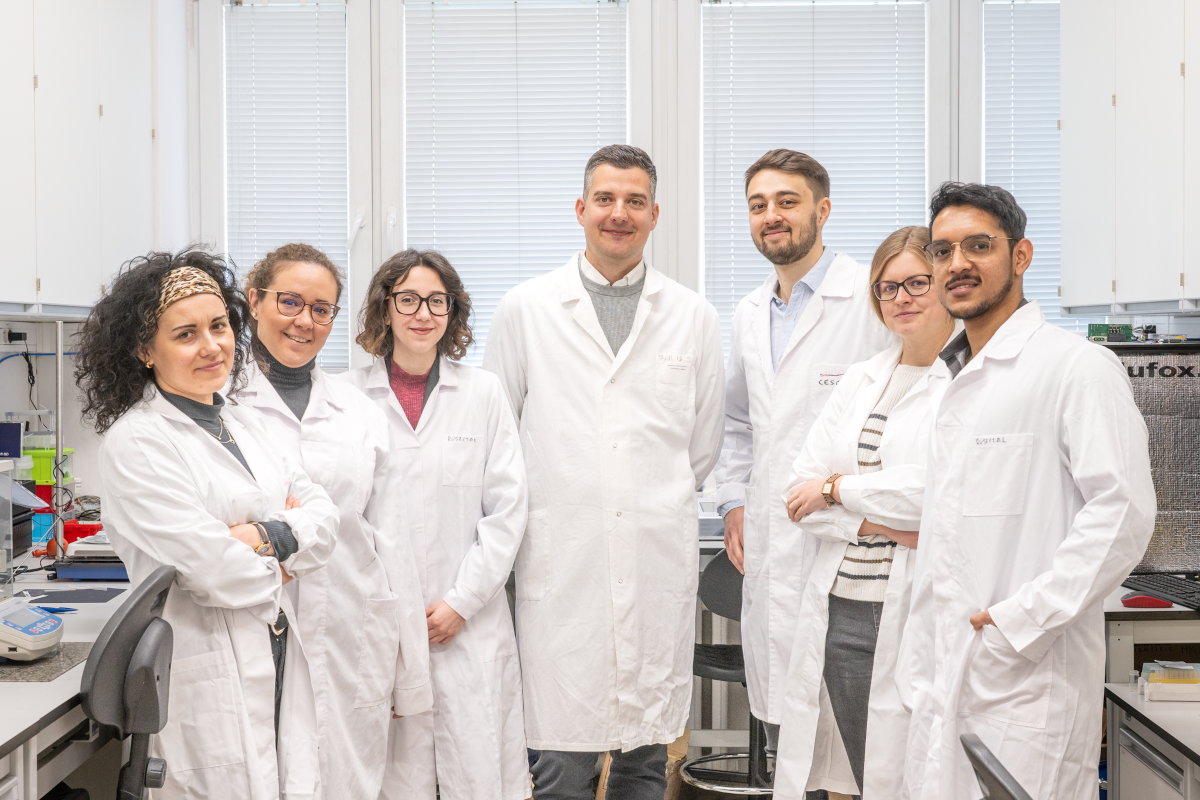
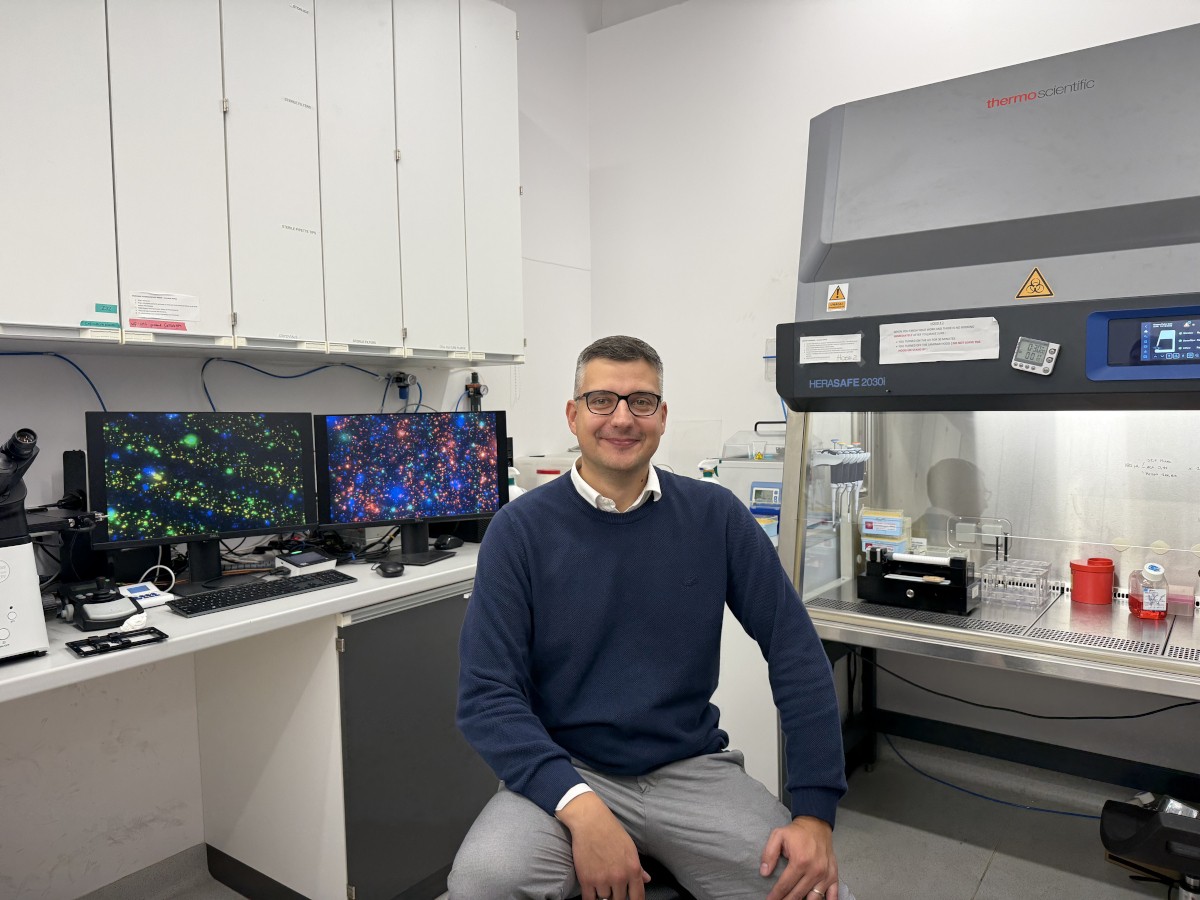
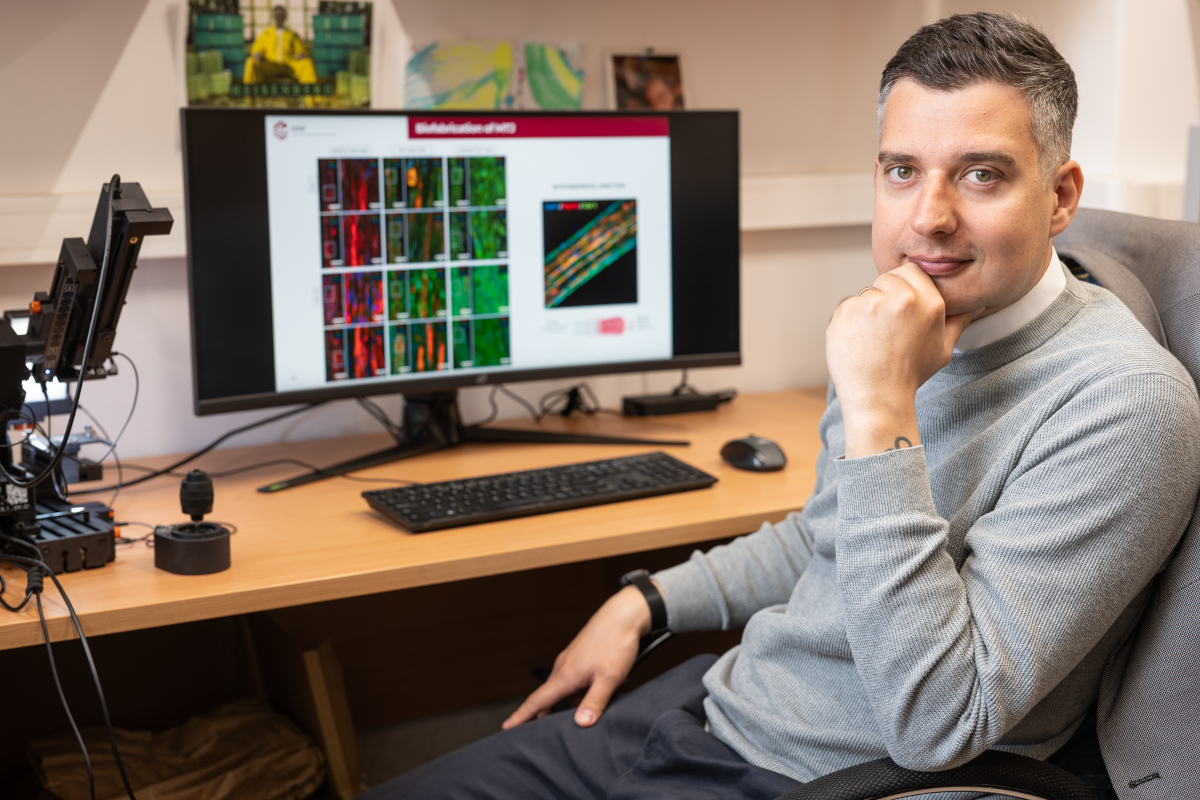
Dr. Marco Costantini, laureate of the 2025 Prime Minister’s Award for outstanding scientific achievements
Reading time: about 8 minuts
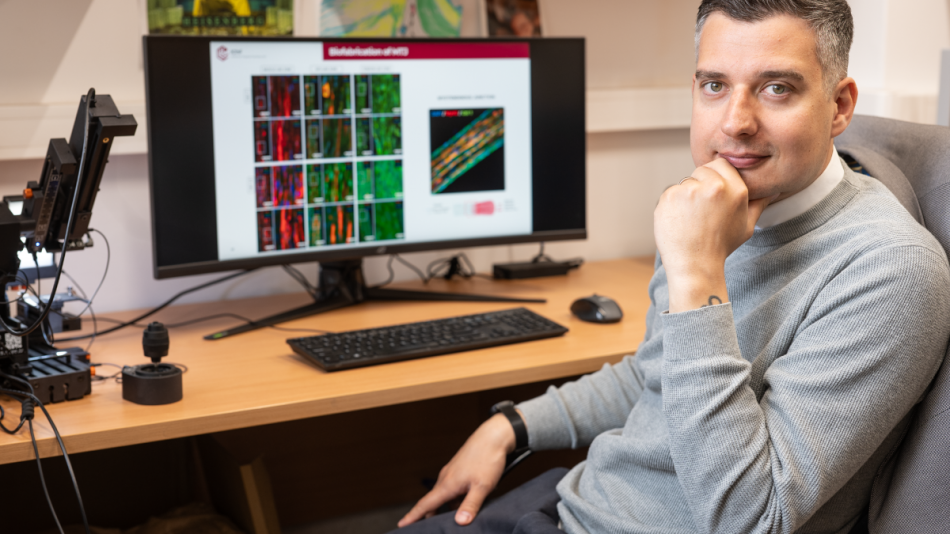
This year, the Prime Minister’s Award in the category “Highly rated scientific achievements forming the basis for conferral of the habilitated doctor degree” was granted to Dr. hab. Marco Costantini of the Institute of Physical Chemistry, Polish Academy of Sciences (IChF).
His habilitation work, “Synthesis of biopolymer materials with controlled composition, morphology, and physicochemical properties supported by microfluidic techniques,” was recognized for its high level of interdisciplinarity and innovation.
By combining microfluidics, 3D bioprinting, and polymer chemistry, Dr. Costantini’s research introduces new methods for designing biomaterials with tailored structures and functions. These findings, confirmed by publications in leading journals, a patent, and international collaborations, open new pathways in biofabrication, tissue engineering, and regenerative medicine.
In this interview, Dr. Costantini discusses how his team’s work bridges materials science and biomedical applications, the inspiration behind developing materials that could one day help restore muscle function, and what this recognition means for biofabrication research in Poland and Europe.
On the interdisciplinarity of his research
Your research was recognized for its high interdisciplinarity and innovation. What do you think makes your approach — combining microfluidics, 3D bioprinting, and polymer chemistry — stand out in the broader landscape of materials science?
What we try to do is to merge microfluidics and additive manufacturing — or 3D bioprinting — in a very synergistic way. This combination allows us to create materials with new, tunable properties, both chemical and physical, that are precisely tailored for biomedical engineering.
Within my habilitation, this work connects two major domains: one is porous materials science, and the other focuses on the musculoskeletal system. We have a core technological expertise that we apply across these areas.
The goal is to develop new materials with specific properties for biomedical applications — from in vitro models that replace animal testing, to biomaterials capable of repairing damaged tissue.
Ultimately, our vision spans from in vitro systems to clinical applications.
On the medical motivation
This award celebrates not only a scientific achievement but also a vision of real-world impact. What medical needs inspired your work?
The main inspiration comes from the devastating loss of muscle function. When someone loses control of their muscles, their quality of life drops dramatically.
There are genetic conditions — like ALS or muscular dystrophies — that we cannot yet cure, but there are also trauma cases, car accidents, or surgeries where patients lose significant amounts of muscle tissue. Large injuries simply don’t regenerate naturally.
Our goal is to design materials that can help repair or replace lost muscle tissue and restore its functionality.
We’re working on materials that integrate with nerves and blood vessels — so they can generate force and behave like real muscle. In animal models, such as mice, we’ve already seen promising results. Of course, scaling this up to humans is much more complex — humans are bigger, the tissue volumes are much larger, and you need to ensure full vascularization and innervation.
It’s high-level bioengineering, but we’re making progress step by step. Even centimeter-scale models have great value — for example, they help accelerate drug discovery and reduce animal testing, which is ethically and scientifically important.
On the significance of the Prime Minister’s Award
This recognition by the Prime Minister’s is a major milestone. Beyond personal success, what message do you think this award brings for your team and for the field of biofabrication in Poland and Europe?
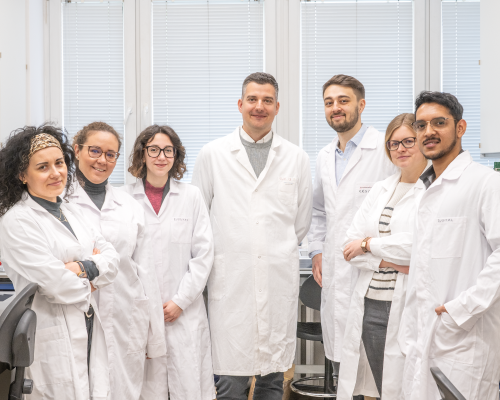
It’s definitely a big milestone. I’m personally very happy because we started only about three years ago — back then the group consisted of just two people, and now we are around twenty. We’ve grown a lot. I’ve been lucky with the people who joined — they’re excellent collaborators. So this recognition is really for everyone. You can’t do this kind of multidisciplinary research alone — it’s a team effort.
For the field of biofabrication, both in Poland and in Europe, I think we are quite advanced. I don’t like to make grand statements, but in general this award shows that the field is growing. There are several very good research groups in Poland, and it’s encouraging that such an emerging field is being recognized. It’s still relatively new — not brand new, but new enough that this momentum really matters.
On other leaders and Poland’s place in the field
Apart from your own team, who do you see as leaders in this area worldwide?
It depends on the specific niche, because each group tends to specialize — the human body is complex. In muscle biofabrication, I would say that our team and close collaborators are among the best. Our work is very well recognized.
For example, last September we helped organize the Biofabrication Conference in Poland, and the feedback was extremely positive — people were genuinely impressed by what we’re doing. So overall, we’re well positioned internationally. Of course, this kind of work remains very costly, and we hope we can maintain this level in the coming years.
On the scientific culture at IChF
You’ve been developing your research at IChF in a strong local and international environment. What does the Institute’s scientific culture give you — in terms of opportunities, inspiration, and collaboration?
I’m extremely grateful to the Institute. My first visit here was during my PhD in Rome, when I was studying microfluidics. I kept seeing papers by Prof. Piotr Garstecki, so one day I simply came to meet him — out of the blue — and he was incredibly welcoming. He introduced me to the IChF world.
For some time, we worked closely with him and his group, then I went back to Italy for postdocs. When the opportunity to return to Warsaw appeared, I didn’t hesitate. From the start, I had a very good impression of the Institute.
In a short time, I was able to do a lot — the Institute listened, the Directors trusted me and my ideas (it helped that grants were coming!), and the support has been broad, including for commercialization of our results. I was first hosted here as a PhD student, then returned later — so the story has come full circle.
People abroad are sometimes surprised: “Why is a biofabrication group in an Institute of Physical Chemistry?” But the research here is much broader than the name suggests — there’s a strong presence of biology and biomedical work.
When I joined, I was really impressed by how active people were. Now I take it for granted!
On scientific and personal growth in Poland
Every researcher’s path is shaped by the places that host their ideas. What has Poland given you, scientifically and personally?
I wouldn’t say it’s something I couldn’t find elsewhere, but here the key thing has been trust — the trust to be independent early. In some systems, becoming independent takes longer; you remain part of large groups for years.
In Poland, thanks to the National Science Centre (NCN) and programmes like Polonez and Sonata, young researchers can lead projects much sooner. You can build your own team, develop your own ideas, and grow quickly. That helped me to establish my group and contribute to building this field.
Scientifically, you grow because you are independent. Personally, you grow because you manage a team, make decisions, and think beyond your own experiments. At IChF — and more broadly in Poland — there’s also a strong focus on turning ideas into products.
We don’t have a spin-out yet, but that’s our plan for next year. In recent years, we’ve already achieved significant sales from our solutions, which shows that innovation and application can go hand in hand.
That kind of innovation pathway isn’t always prioritized elsewhere. I hope nothing changes in the core pillars — especially basic science funding via NCN — because it’s the key that unlocks the next levels. Without it, progress would be much harder.
Thank you for this inspiring conversation and congratulations.
Thank you. It was a pleasure.
The interview was conducted by Dr. Anna Przybyło-Józefowicz.
Short professional profile of Marco Costantini: He studied Industrial Chemistry at La Sapienza University of Rome, where he received his BSc and MSc degrees cum laude, and later earned a PhD in Chemical and Process Engineering. After postdoctoral research at the Warsaw University of Technology and Campus Bio-Medico University of Rome, he joined the Institute of Physical Chemistry, Polish Academy of Sciences, where he is now Group Leader and Associate Professor.
Dr. Costantini’s research focuses on bioprinting, microfluidics, and the synthesis of porous biomaterials, with applications in biomedical engineering and regenerative medicine. He has authored over 65 peer-reviewed publications, several book chapters, and international patents.
Dr. Costantini leads the research group No. 32 at IChF, "Digital manufacturing of biomimetic systems".
The activity is implemented as part of the project “WelcomeIChF: Support and Integration of Foreign Employees at the Institute of Physical Chemistry of the Polish Academy of Sciences” (contract no. BPI/WTP/2024/1/00020/U/00001), financed by the Polish National Agency for Academic Exchange (NAWA) under the “Welcome to Poland – 2024 call” programme. The “Welcome to Poland” programme is financed by the European Union through the European Funds for Social Development 2021–2027 (FERS), under the project “Support for higher education and science institutions in serving foreigners and Poles traveling abroad”, no. FERS.01.05.IP.08-0003/24.

- Author: Dr. Anna Przybyło-Józefowicz
- Photo source: Dr. Karol Karnowski
- Date: 3.11.2025