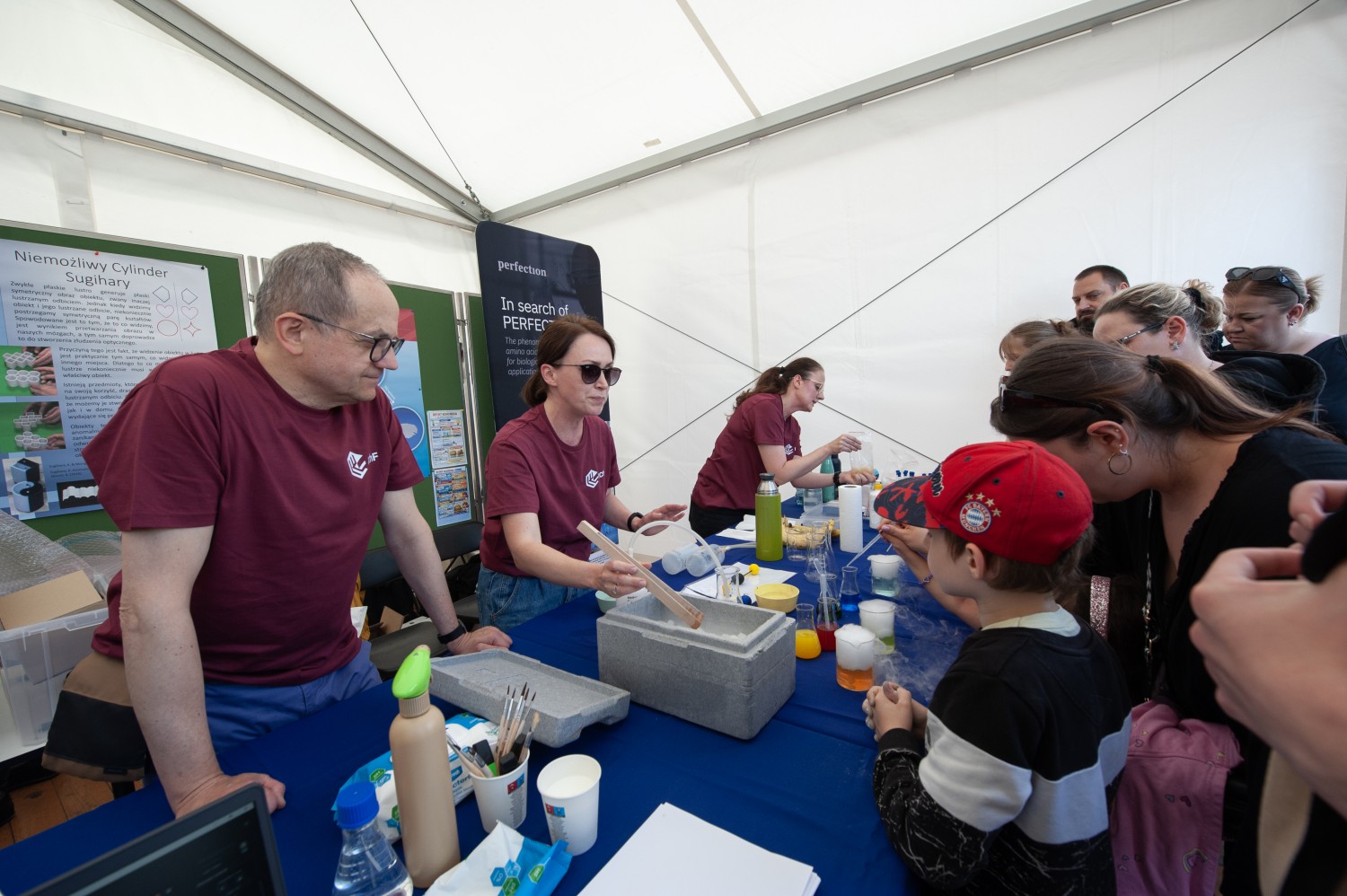
IChF at the 29th Science Picnic at the National Stadium in Warsaw
Reading time: about 7 minuts
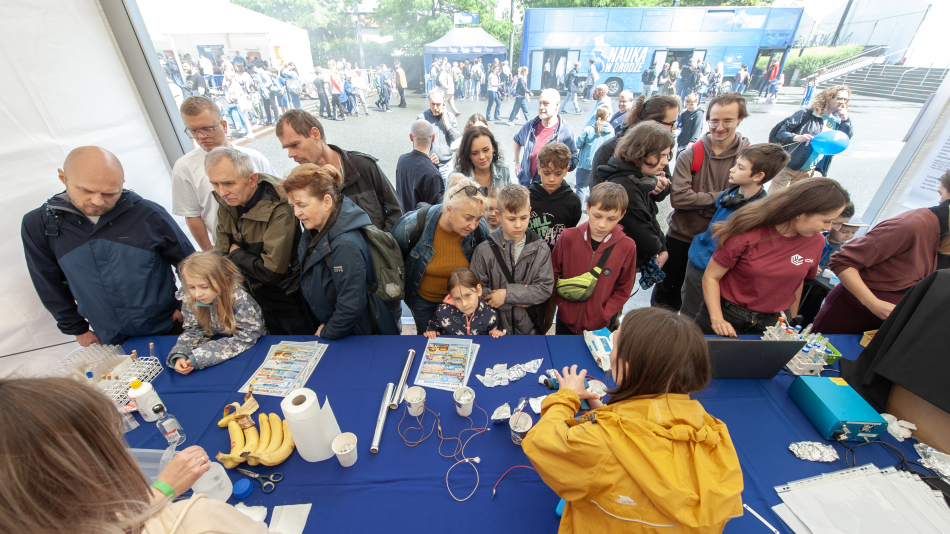
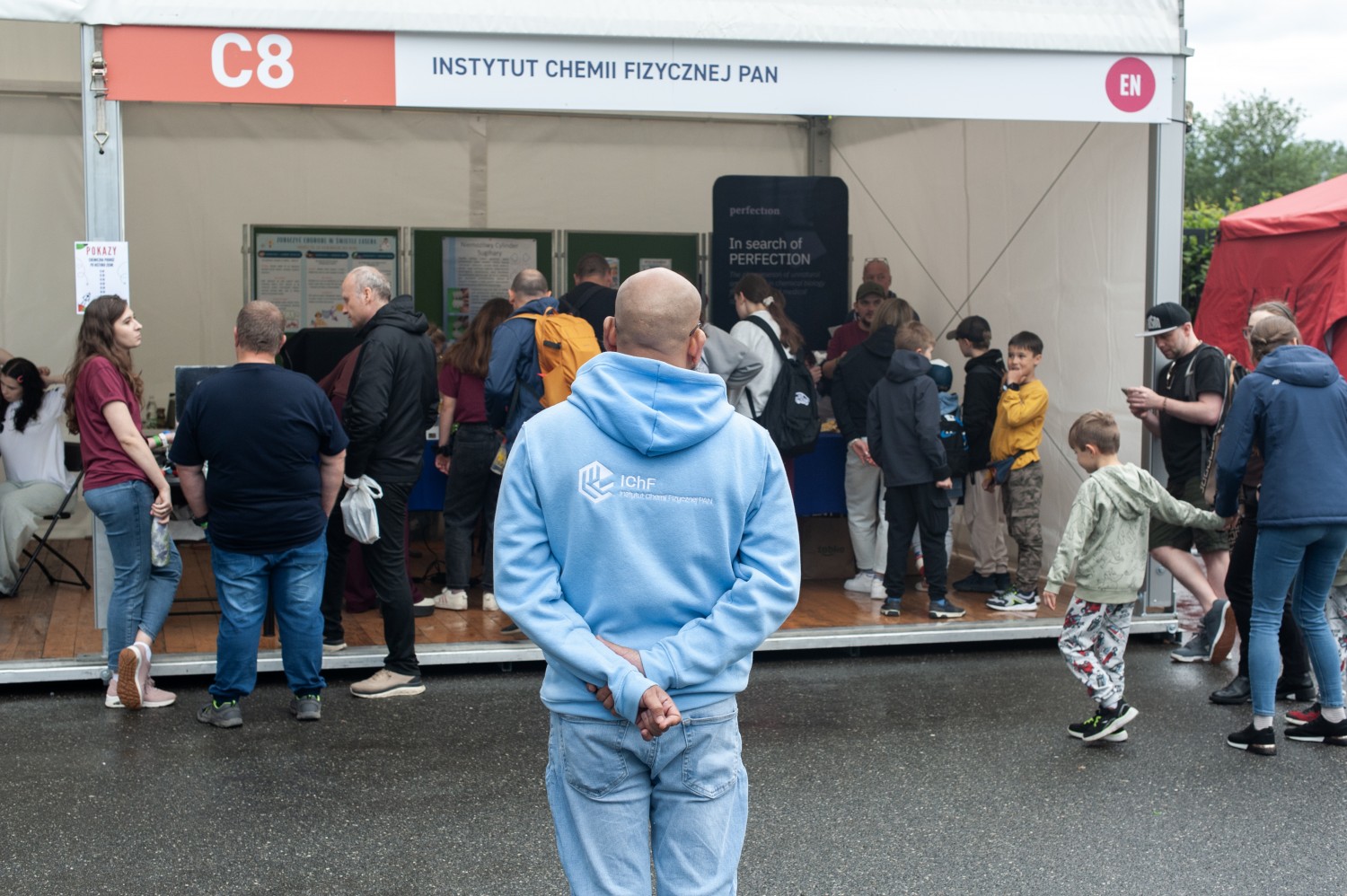
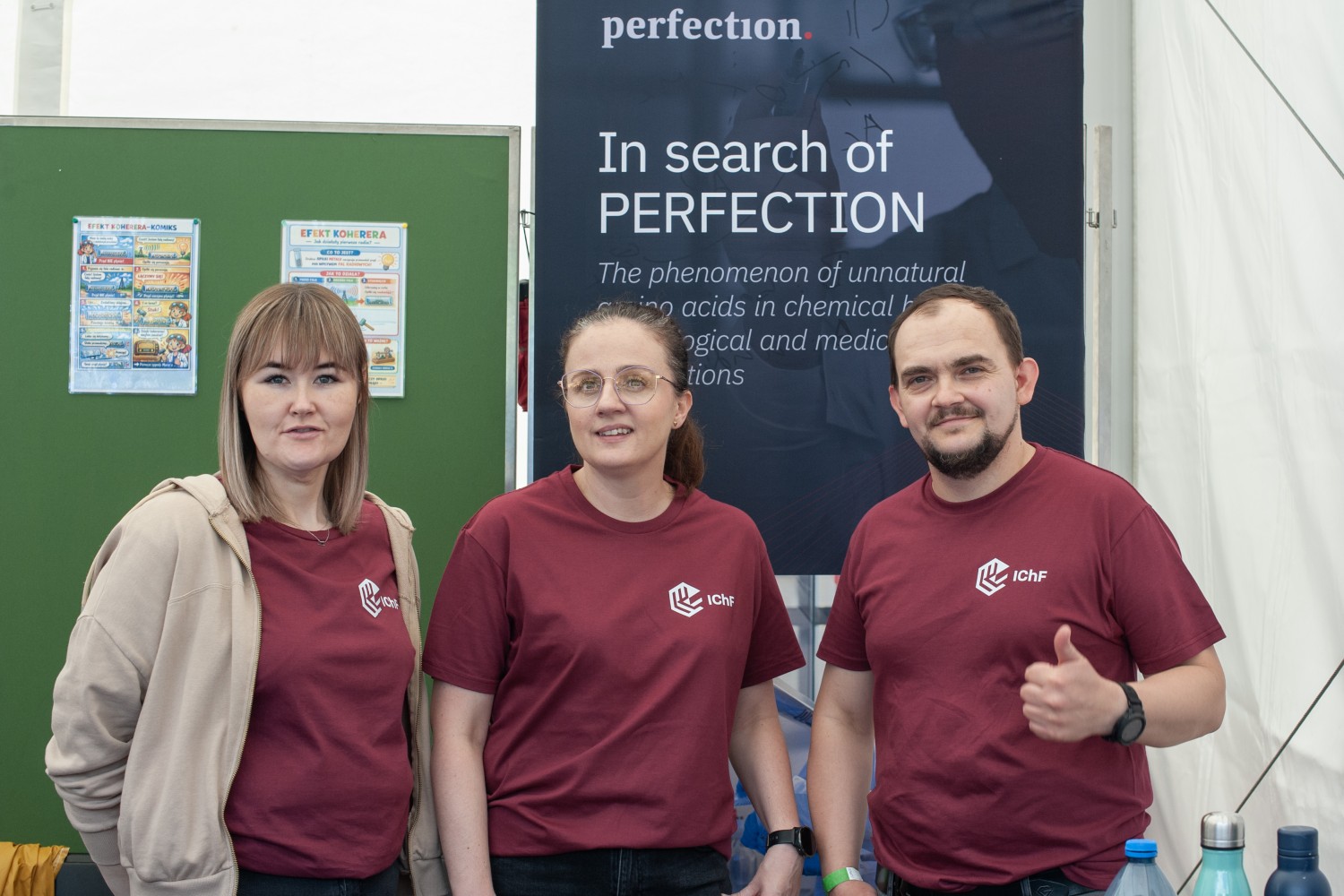
On Saturday, June 13, 2026, the Institute of Physical Chemistry, Polish Academy of Sciences (IChF) took part in the 29th Polish Radio and Copernicus Science Centre Science Picnic - the largest outdoor science event in Europe. This year’s edition, held at PGE Narodowy Stadium in Warsaw, was organized under the theme “Inspired by Life.”
The theme highlighted the science embedded in everyday life: hidden within seemingly ordinary phenomena, objects, and questions we encounter every day. The organizers reminded visitors that many groundbreaking discoveries began with simple observations: Why does something smell a certain way? Why does it glow, grow, change color, or behave as it does? This year’s Science Picnic encouraged participants to look at the world through the lens of curiosity.
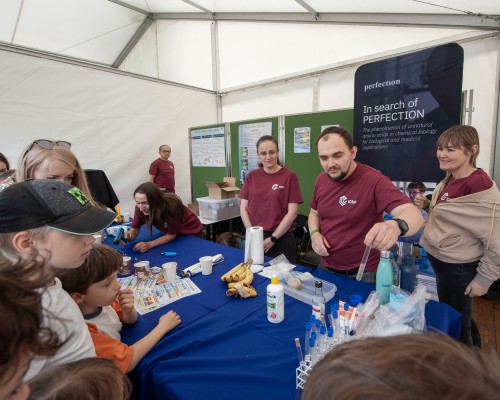
This perspective is particularly close to the mission of IChF. At the Institute’s stand, visitors discovered that chemistry, physics, and biology are not distant disciplines confined to laboratories. Instead, they are present in the scent of a pine forest, in a banana purchased at a grocery store, in the bacteria living on our hands, in mirror reflections, and in the electromagnetic waves that surround us even though we cannot see them.
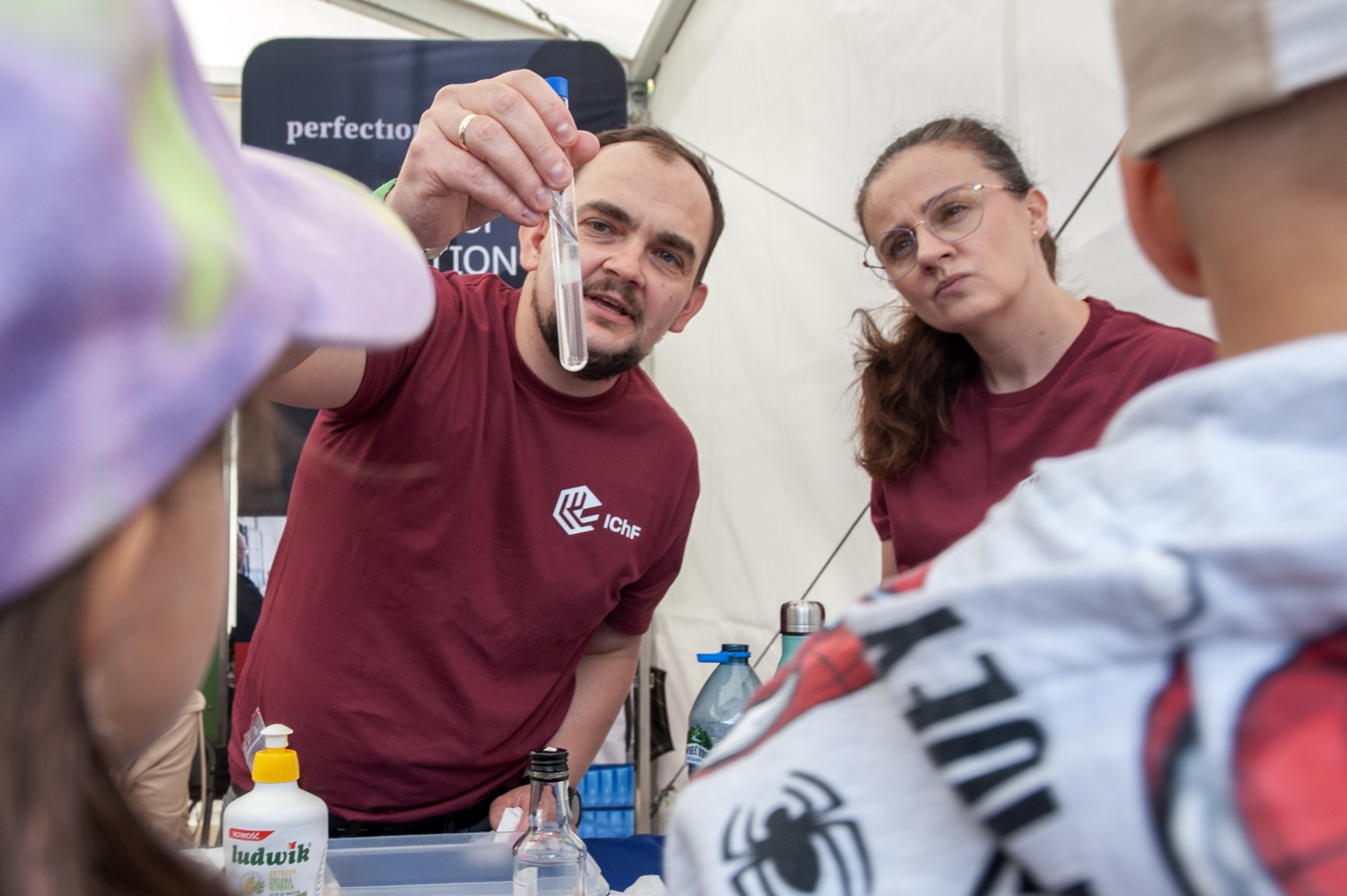
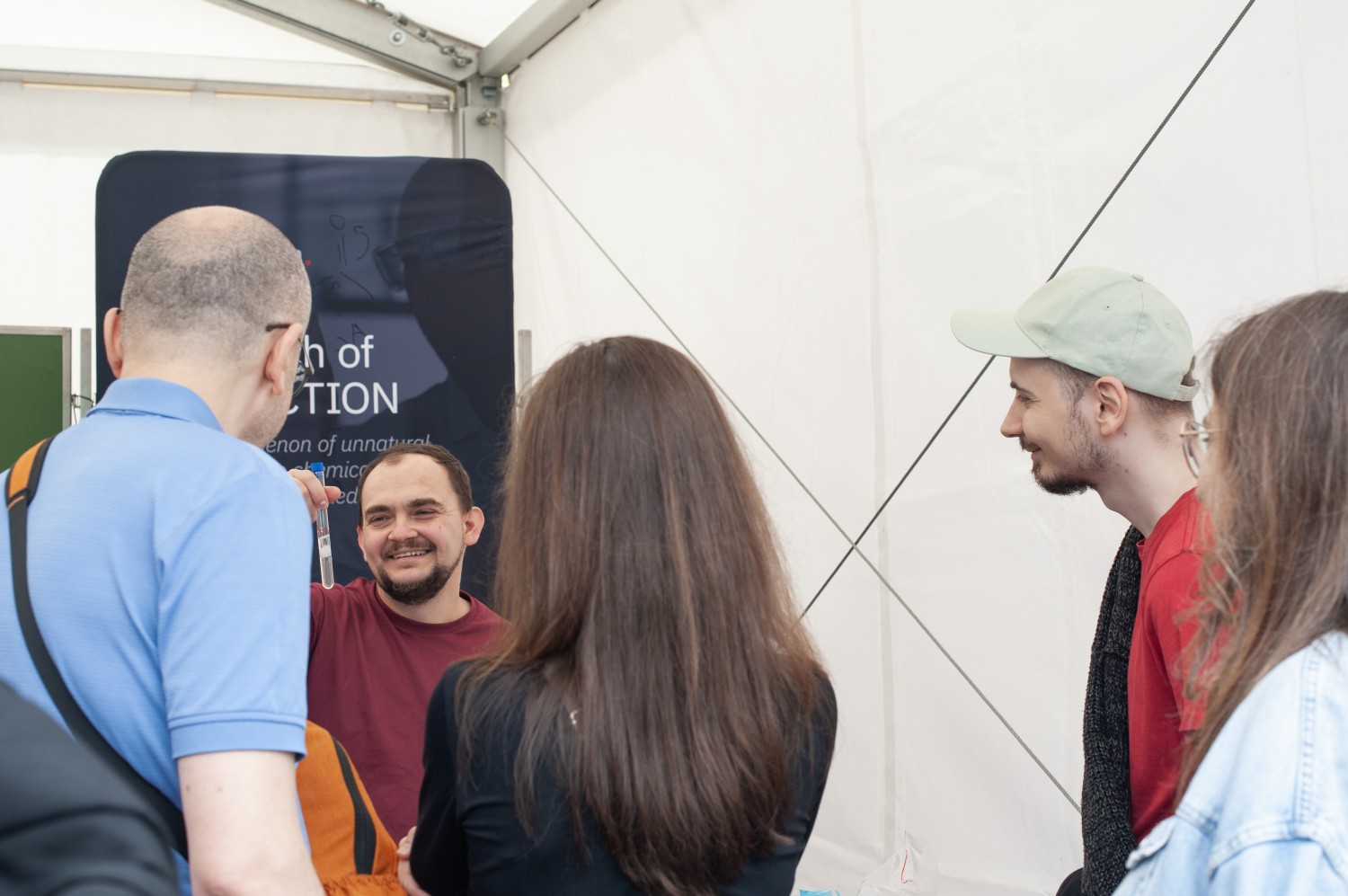
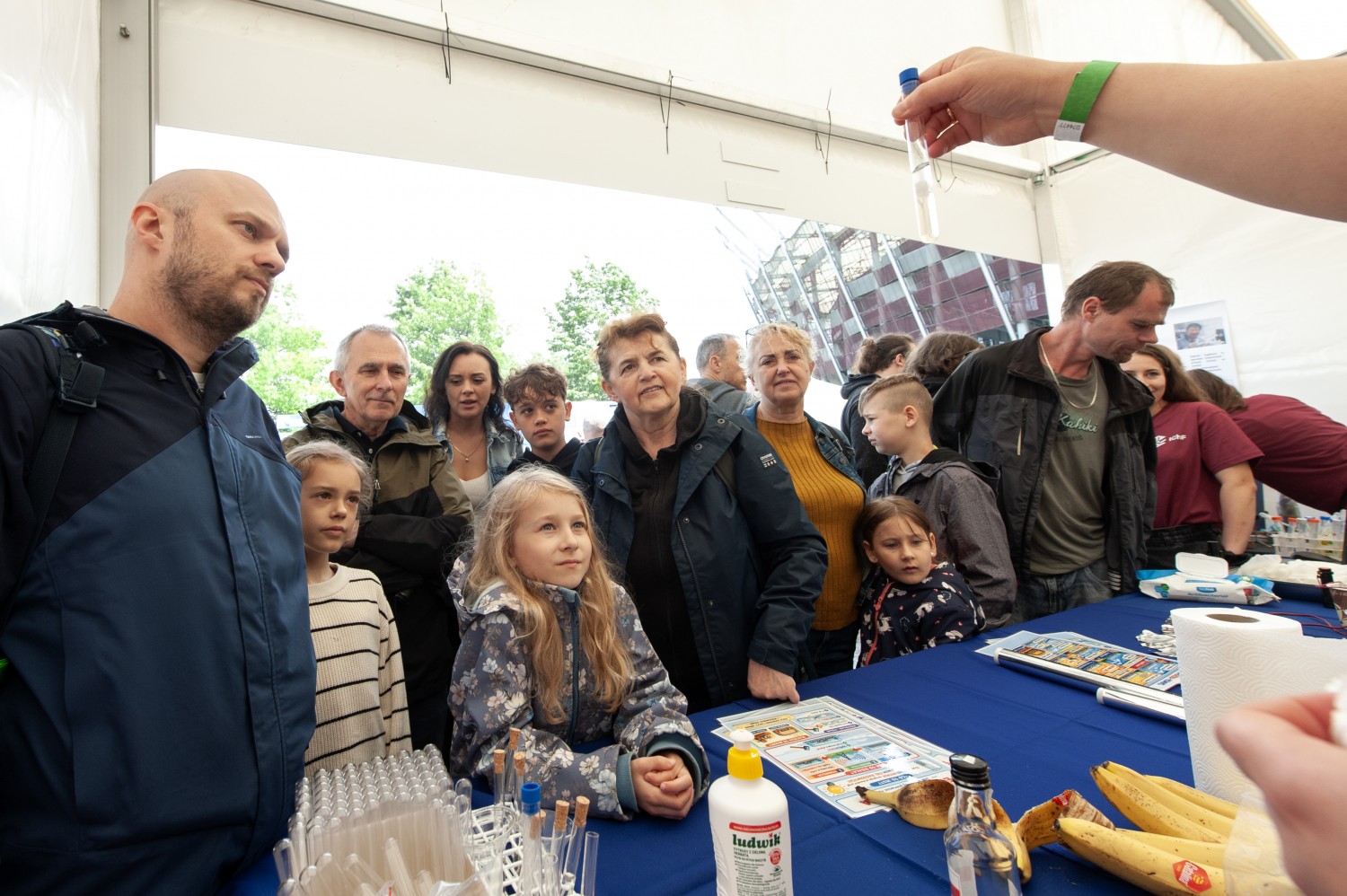
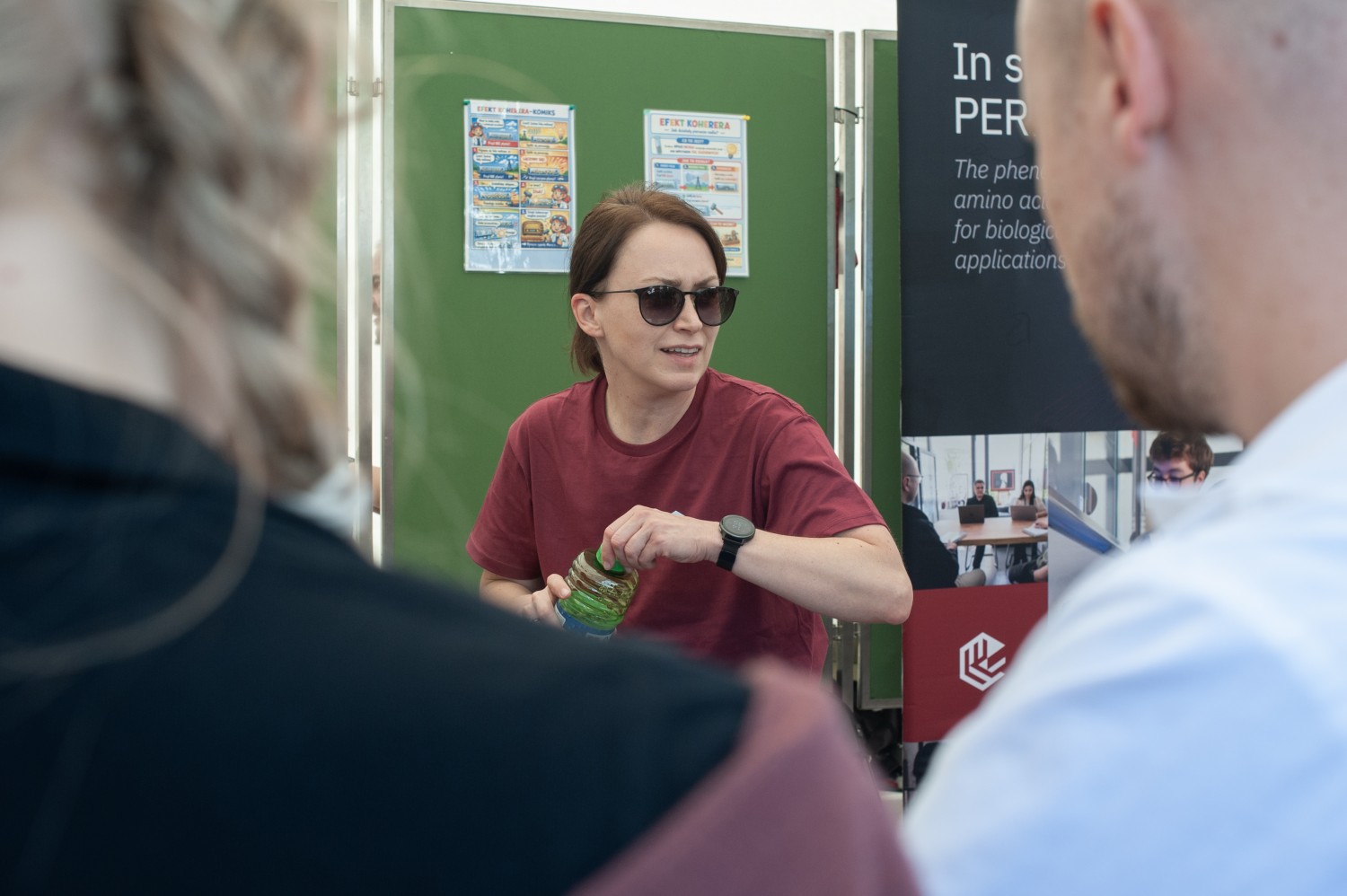
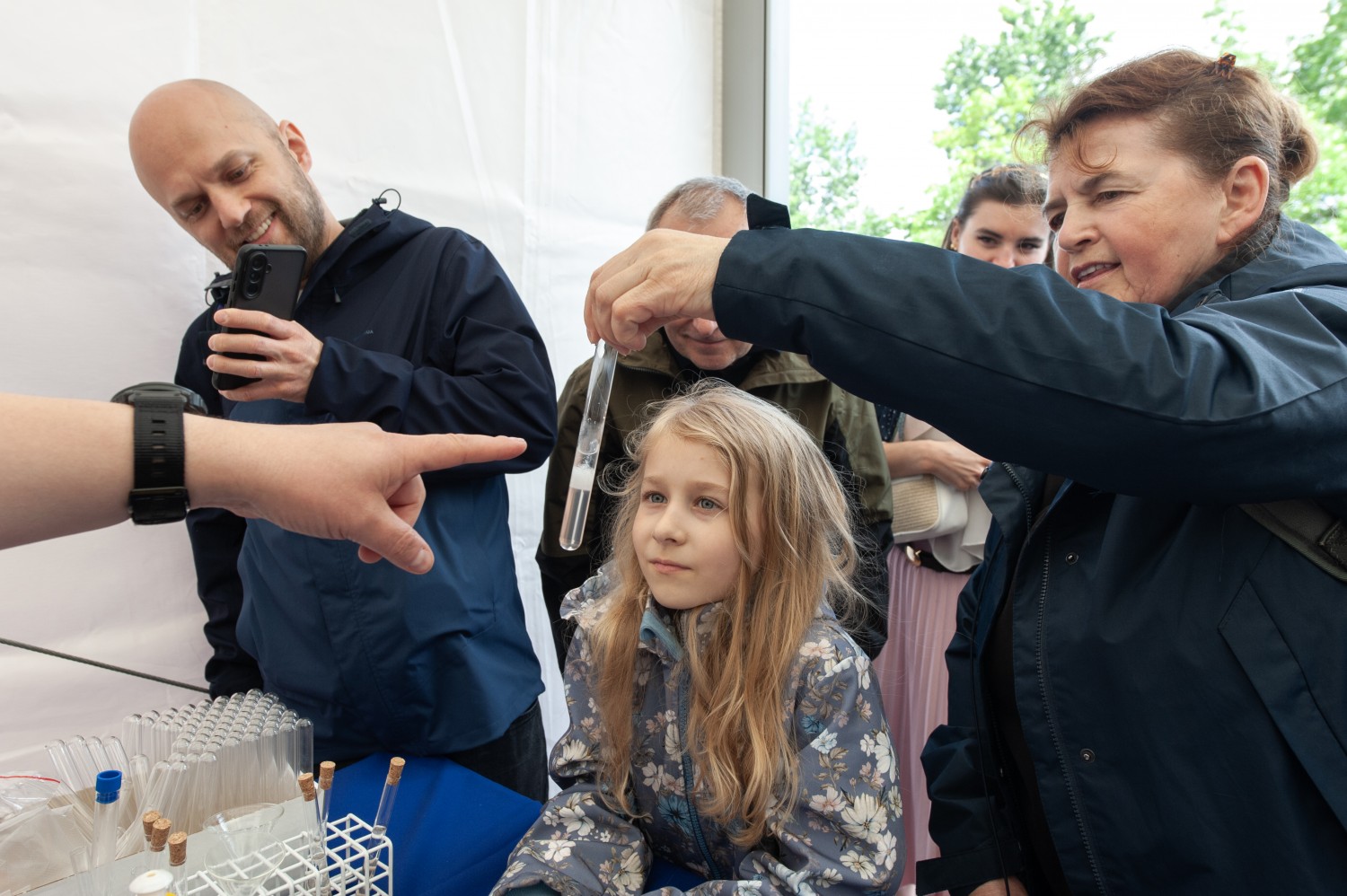
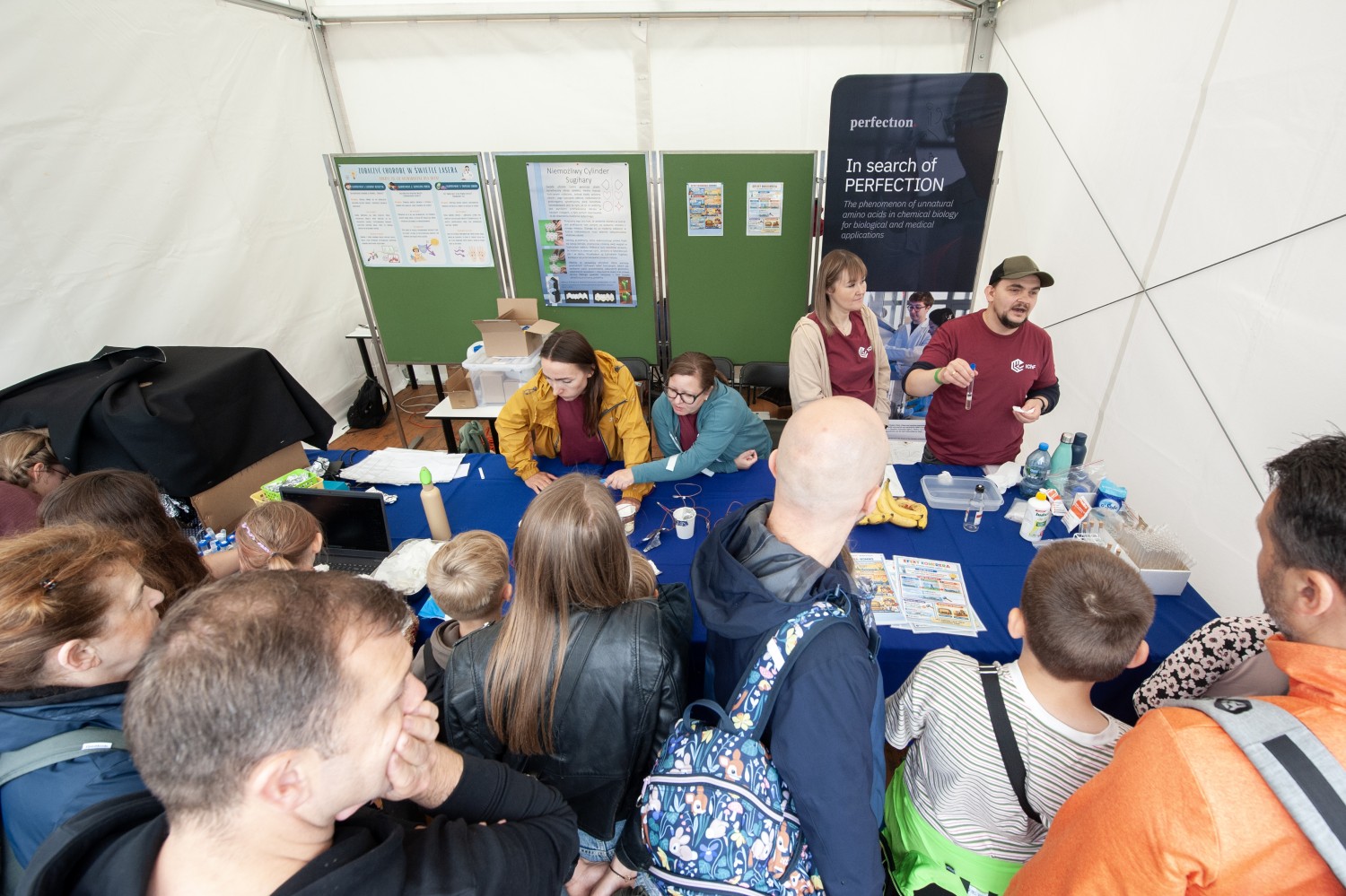
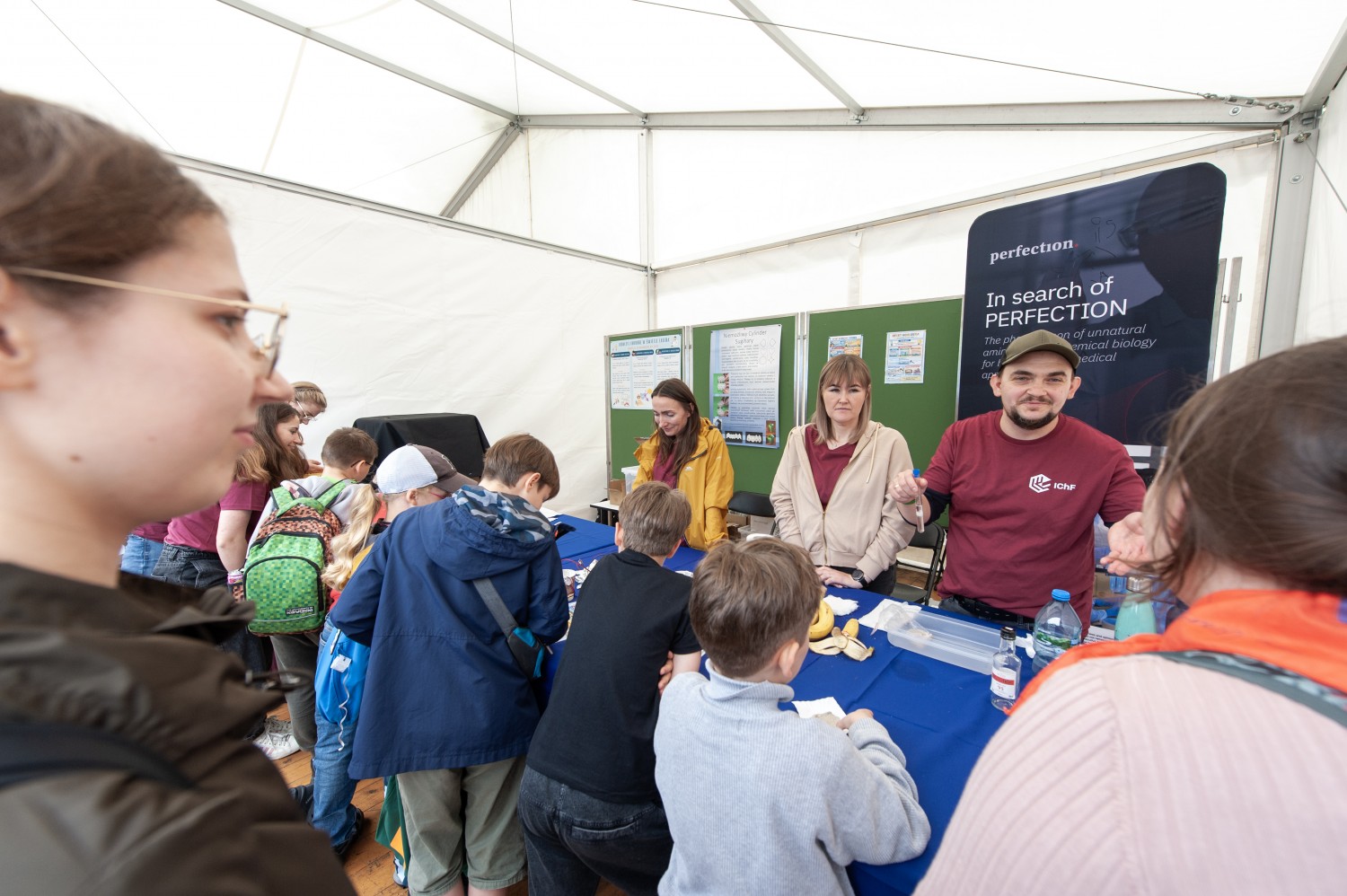
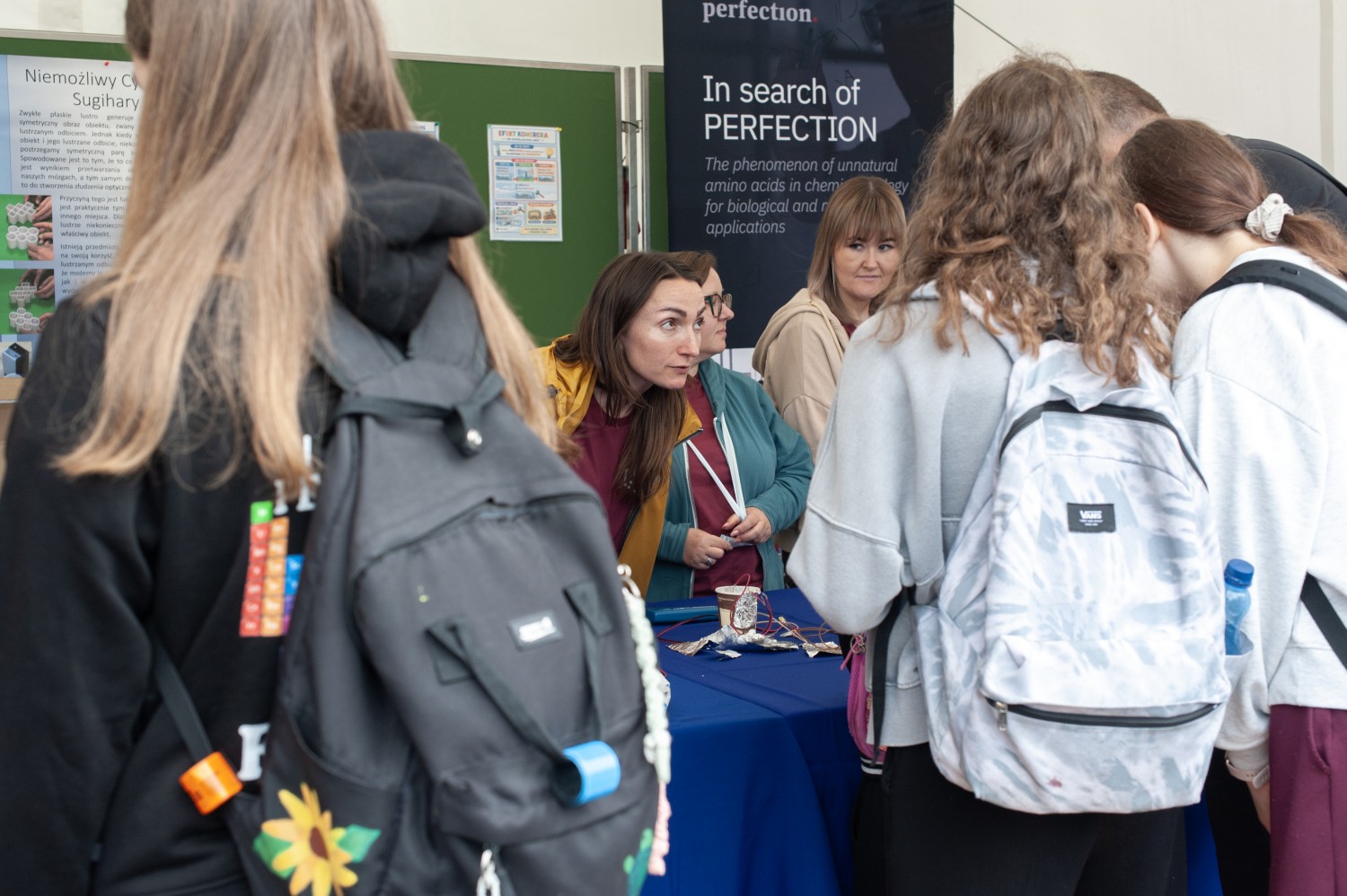
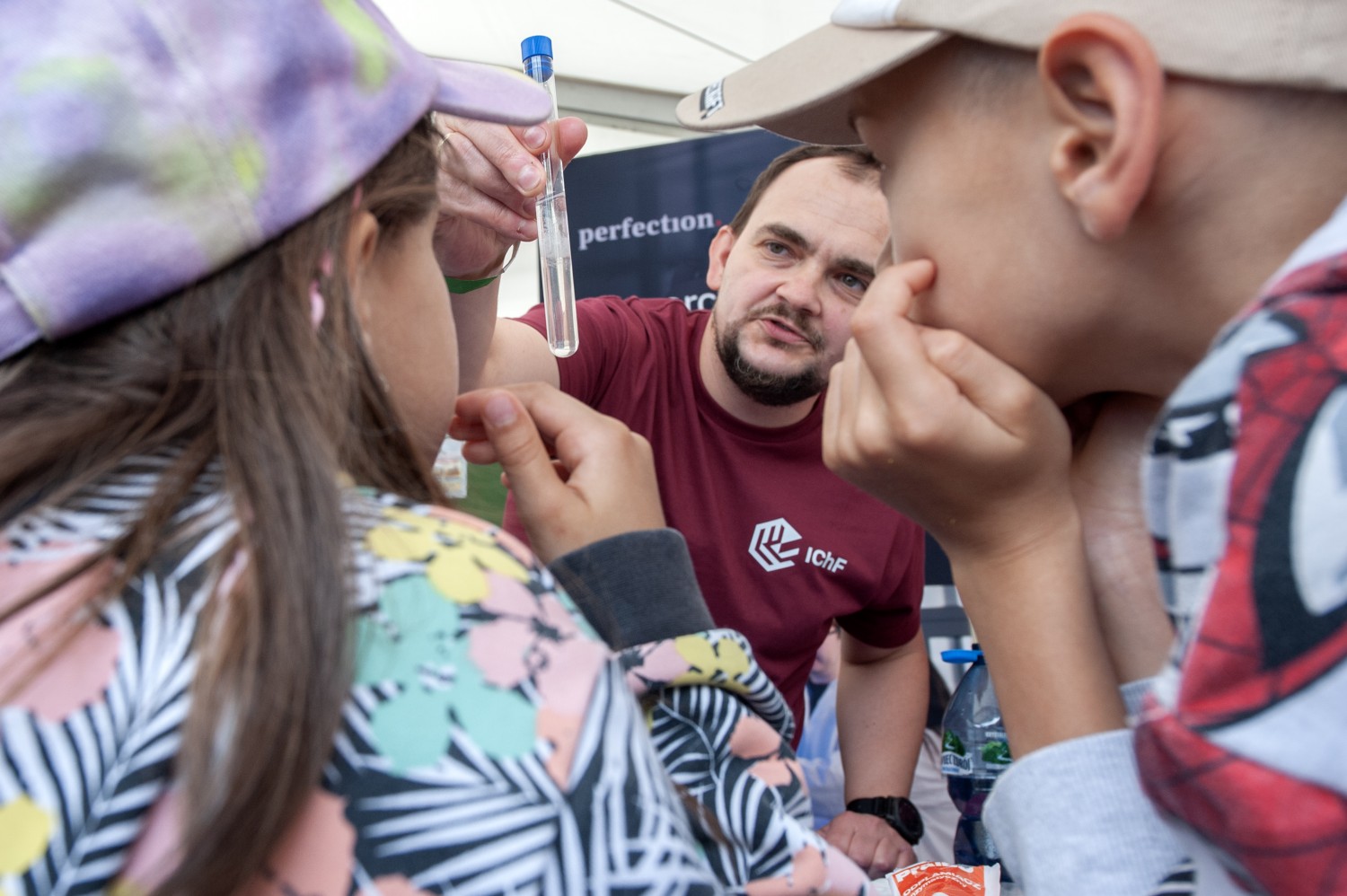
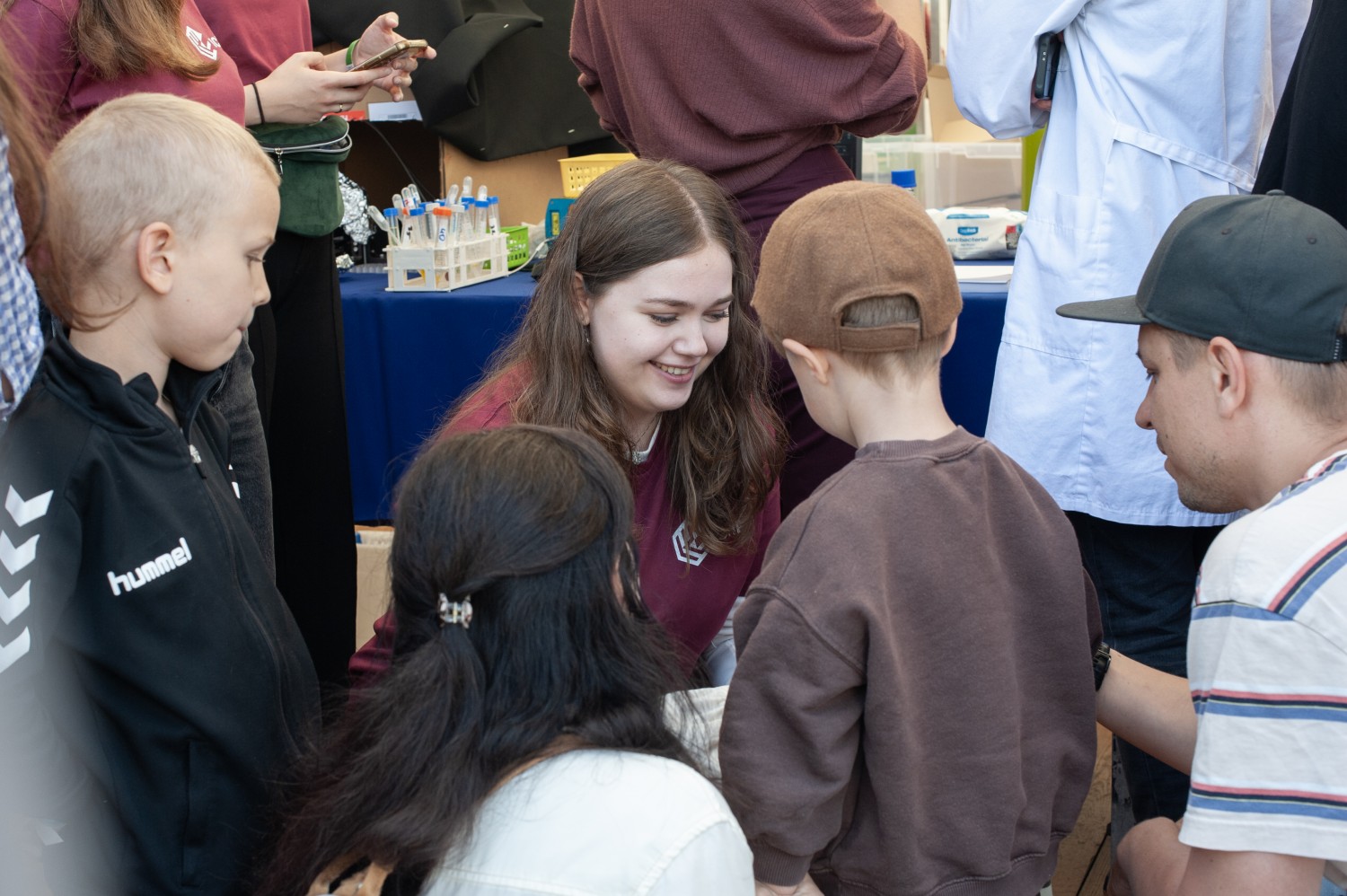
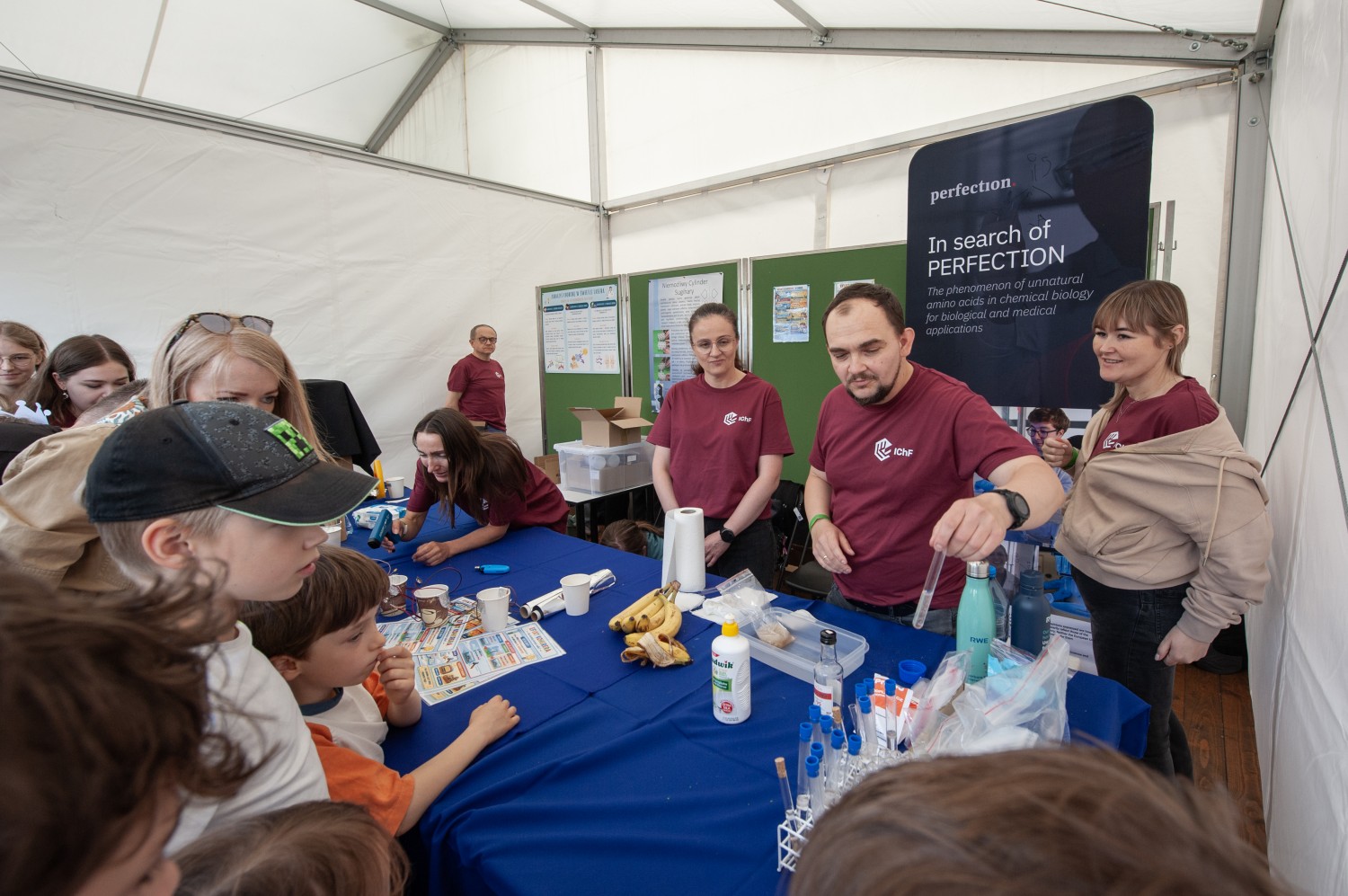
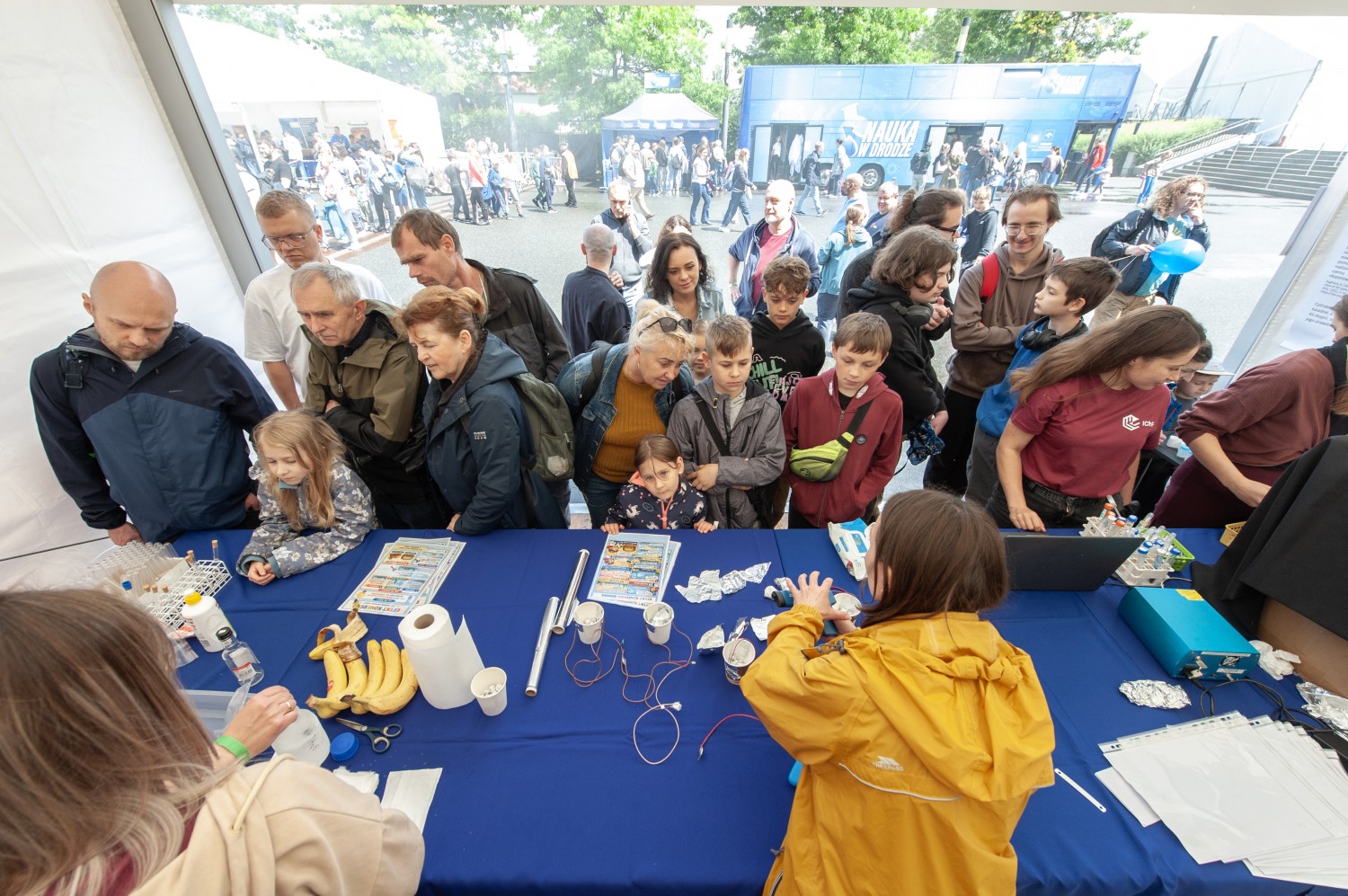
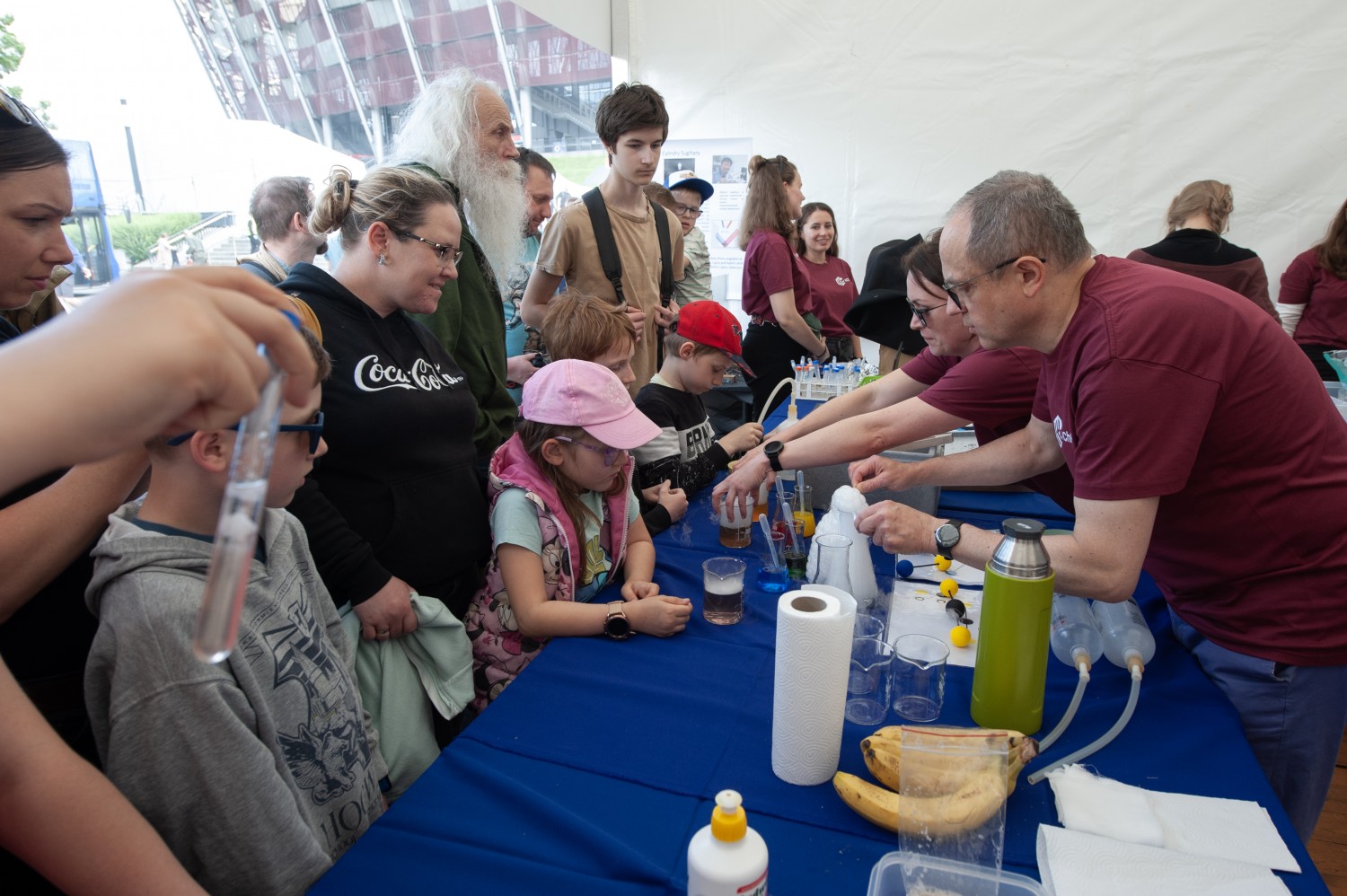
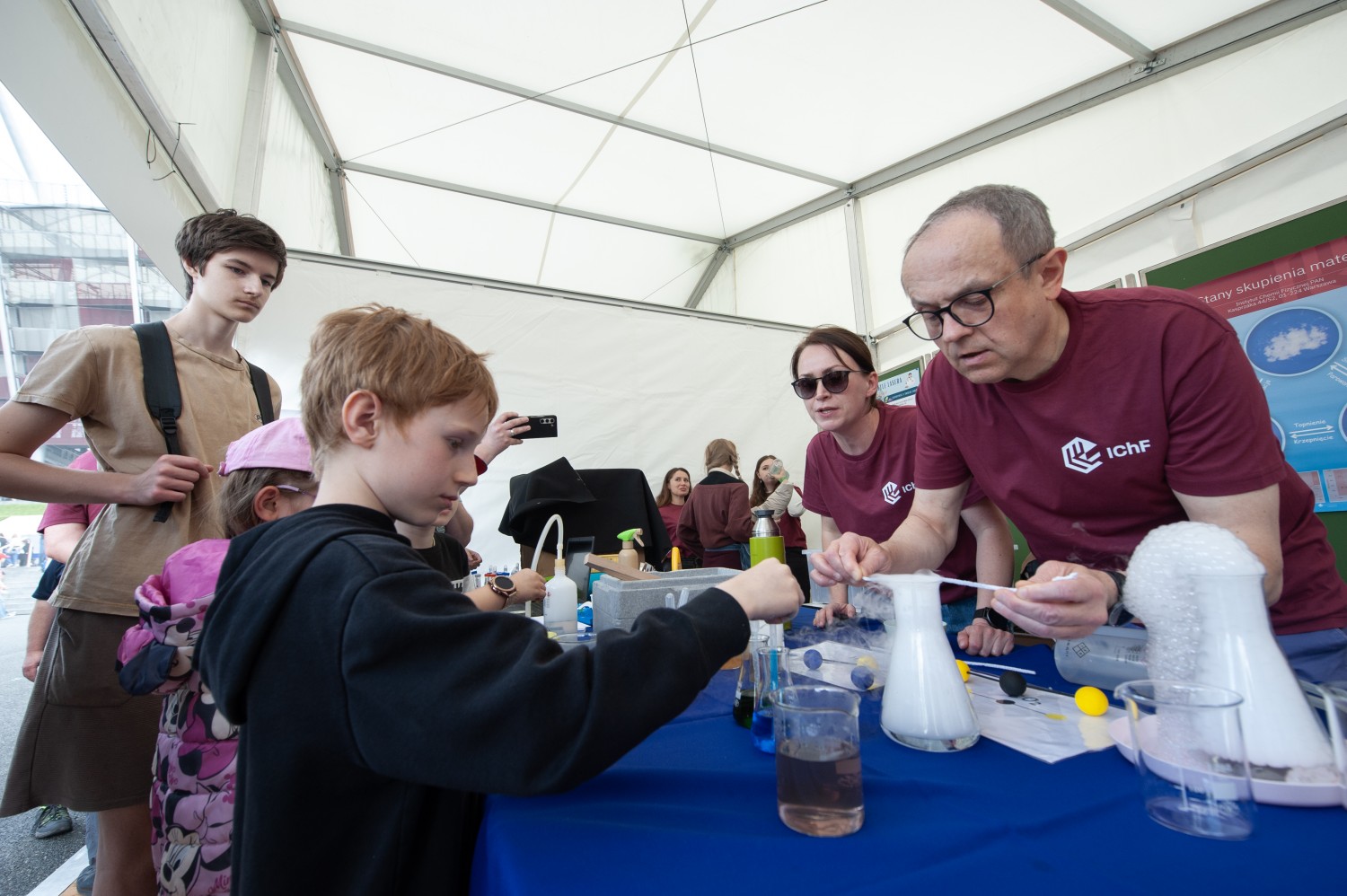
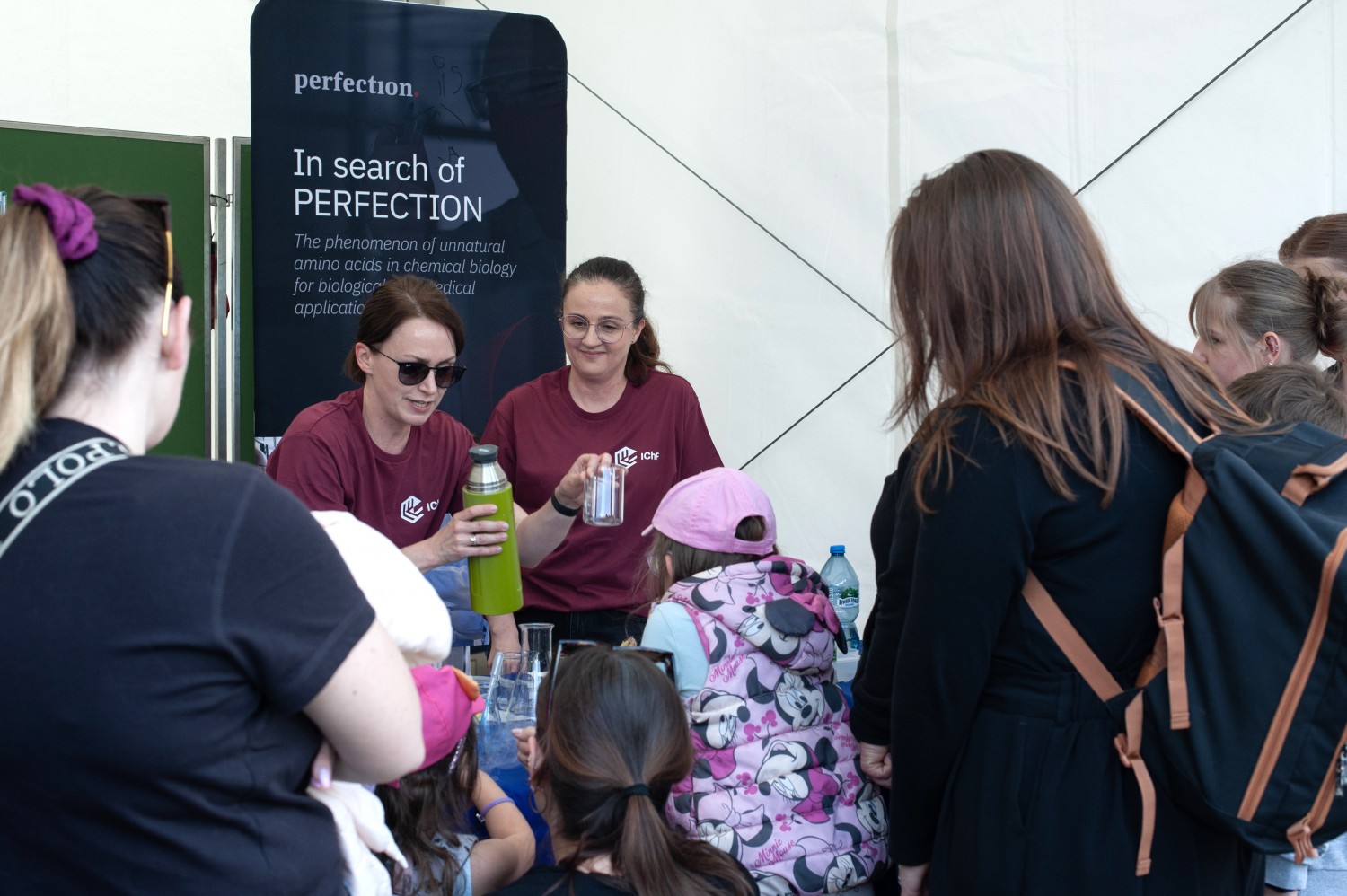
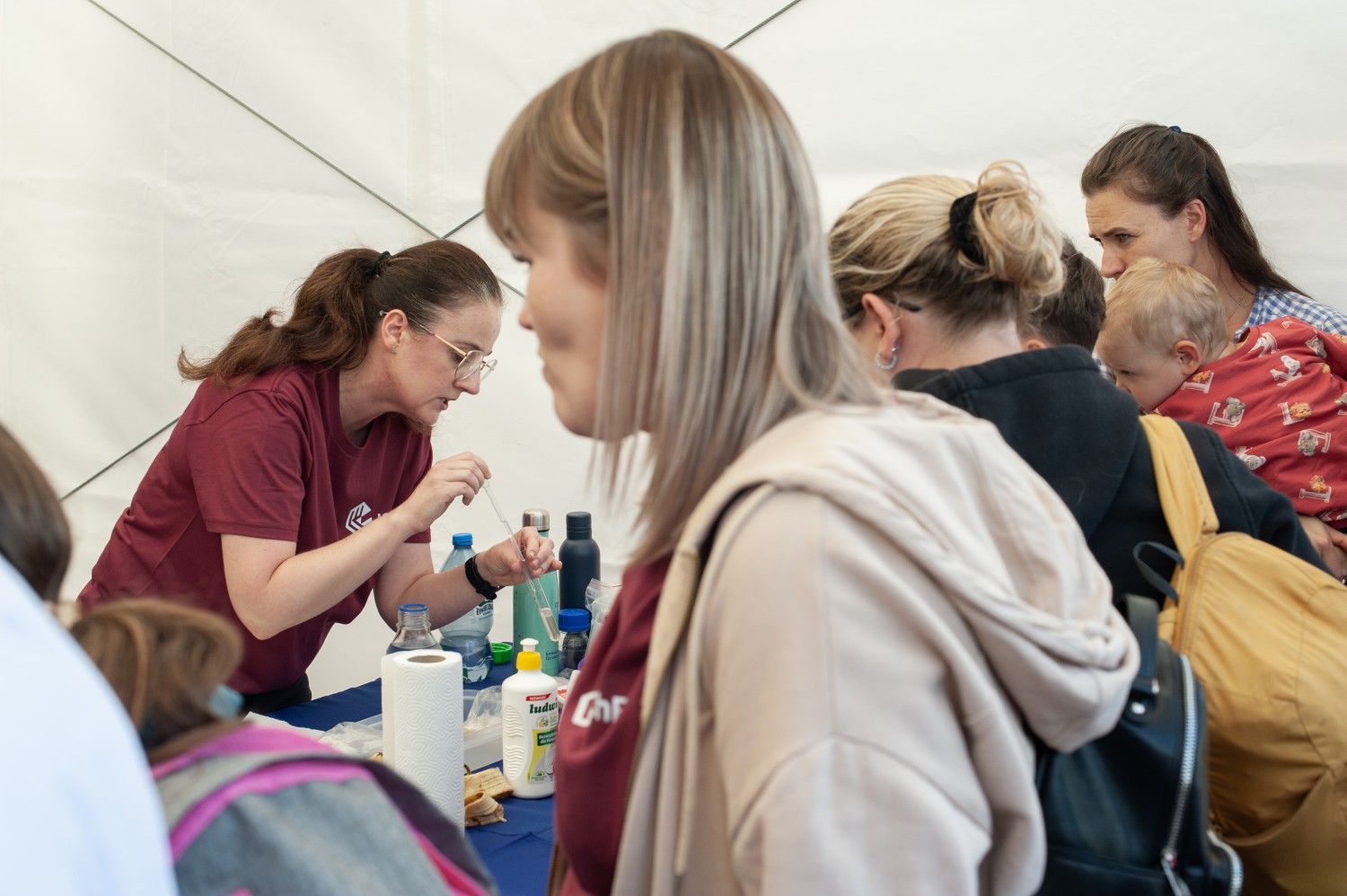
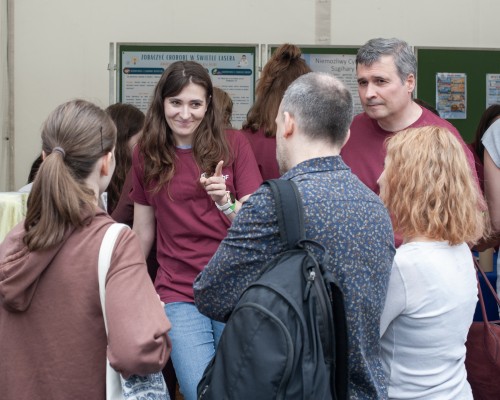
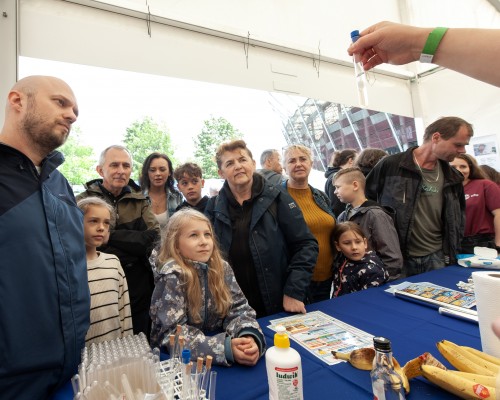
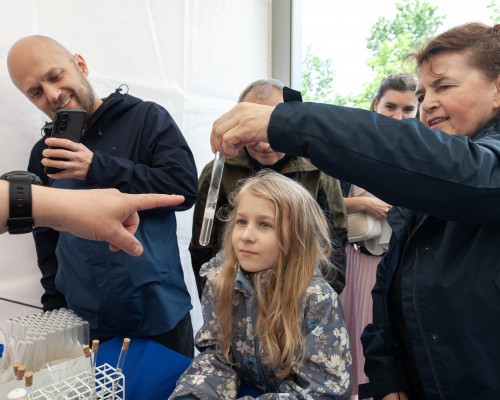
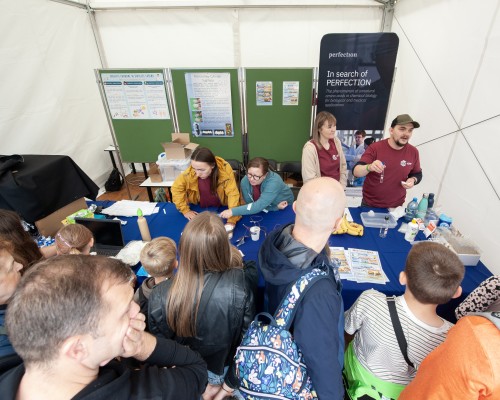
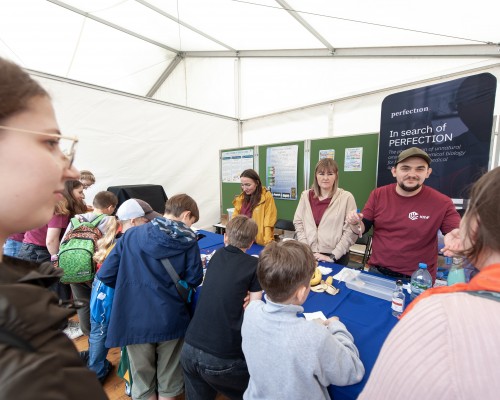
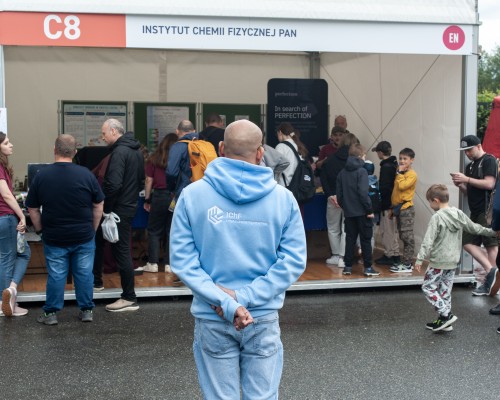
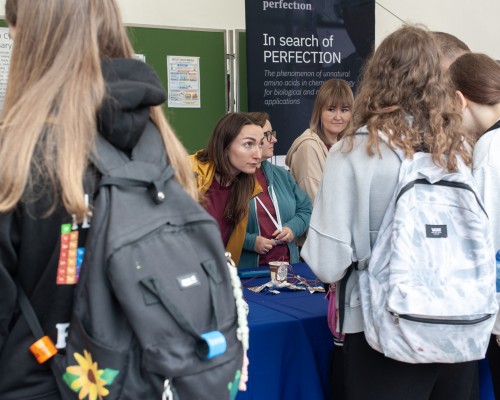
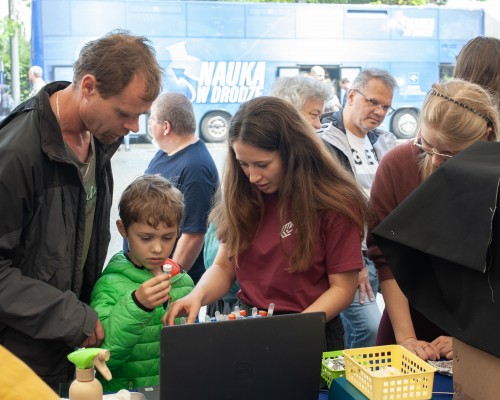
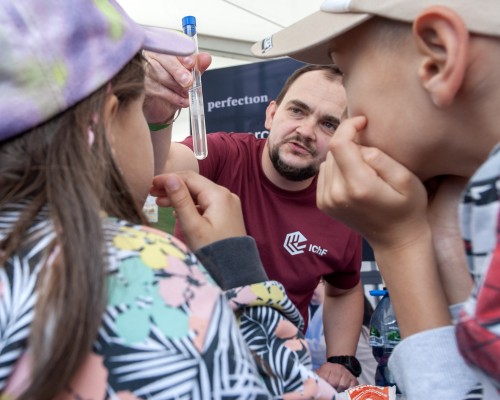
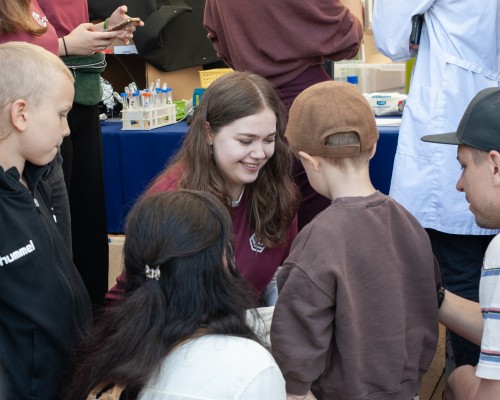
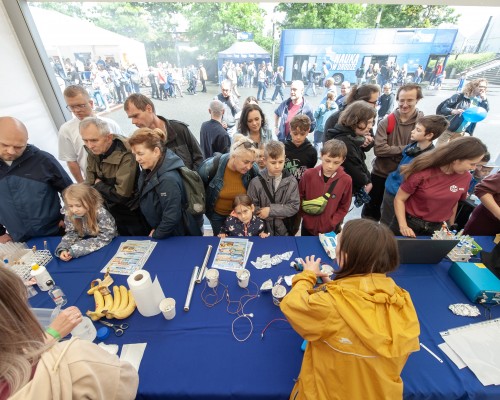
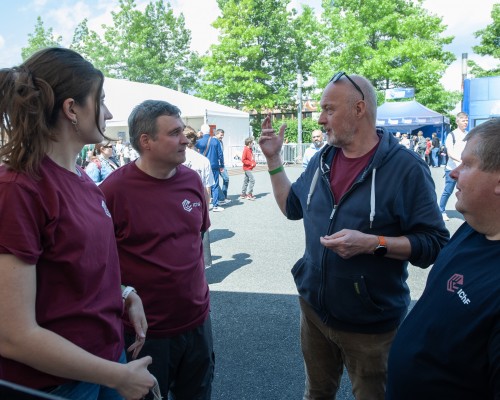
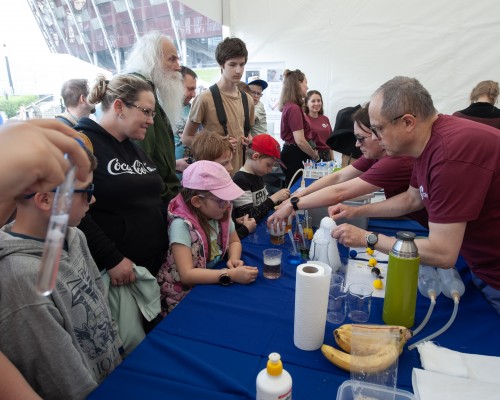
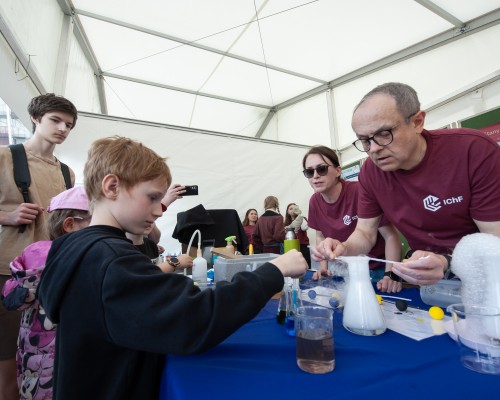
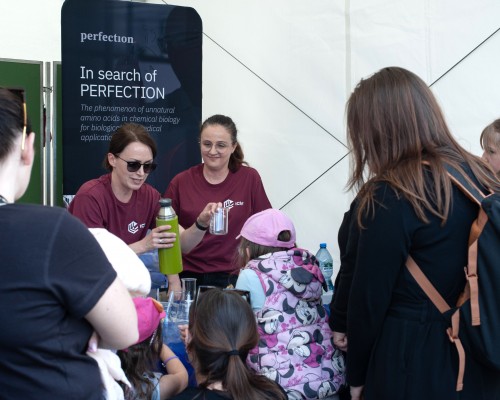
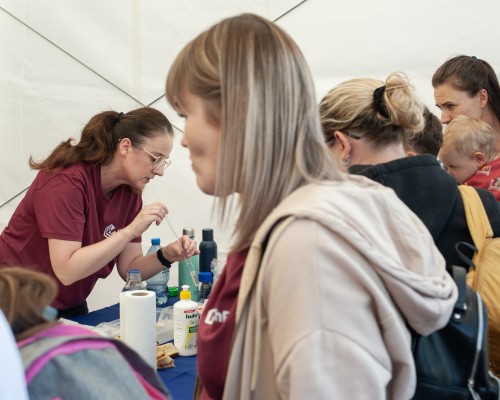
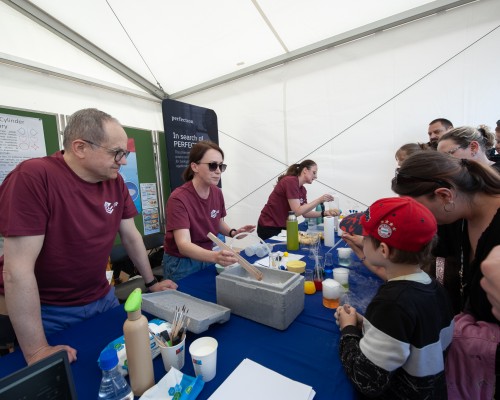
Throughout the day, the IChF stand attracted crowds of visitors of all ages. Children carried out experiments, teenagers asked questions about studying science and pursuing research careers, and adults often discovered that familiar phenomena had far more interesting explanations than they had imagined. It quickly became clear that each experiment was only the beginning of a conversation.
This approach is no coincidence. IChF serves as the Polish hub of the COALESCE project, a European initiative dedicated to advancing new standards in science communication. The project promotes communication based on dialogue, participation, and trust rather than one-way knowledge transfer. This philosophy was clearly visible at the Science Picnic: researchers rarely began with a presentation. Instead, they started with a question, an observation, or a simple experiment that encouraged visitors to think for themselves. Such moments of shared discovery, rather than one-sided explanation, are at the heart of the approach developed within COALESCE.
Dr. Roman Luboradzki, who coordinated IChF’s participation in the event, ensured that the stand offered something for both young explorers and visitors interested in more advanced scientific topics. Alongside hands-on activities designed for children, the booth also featured demonstrations of real research tools used by scientists. As he noted during the event, “We have one experiment that truly showcases our work: Raman spectroscopy.” The demonstration became an opportunity to discuss how light can be used to investigate the composition and structure of materials and how modern instrumentation enables researchers to study the world at scales invisible to the human eye.
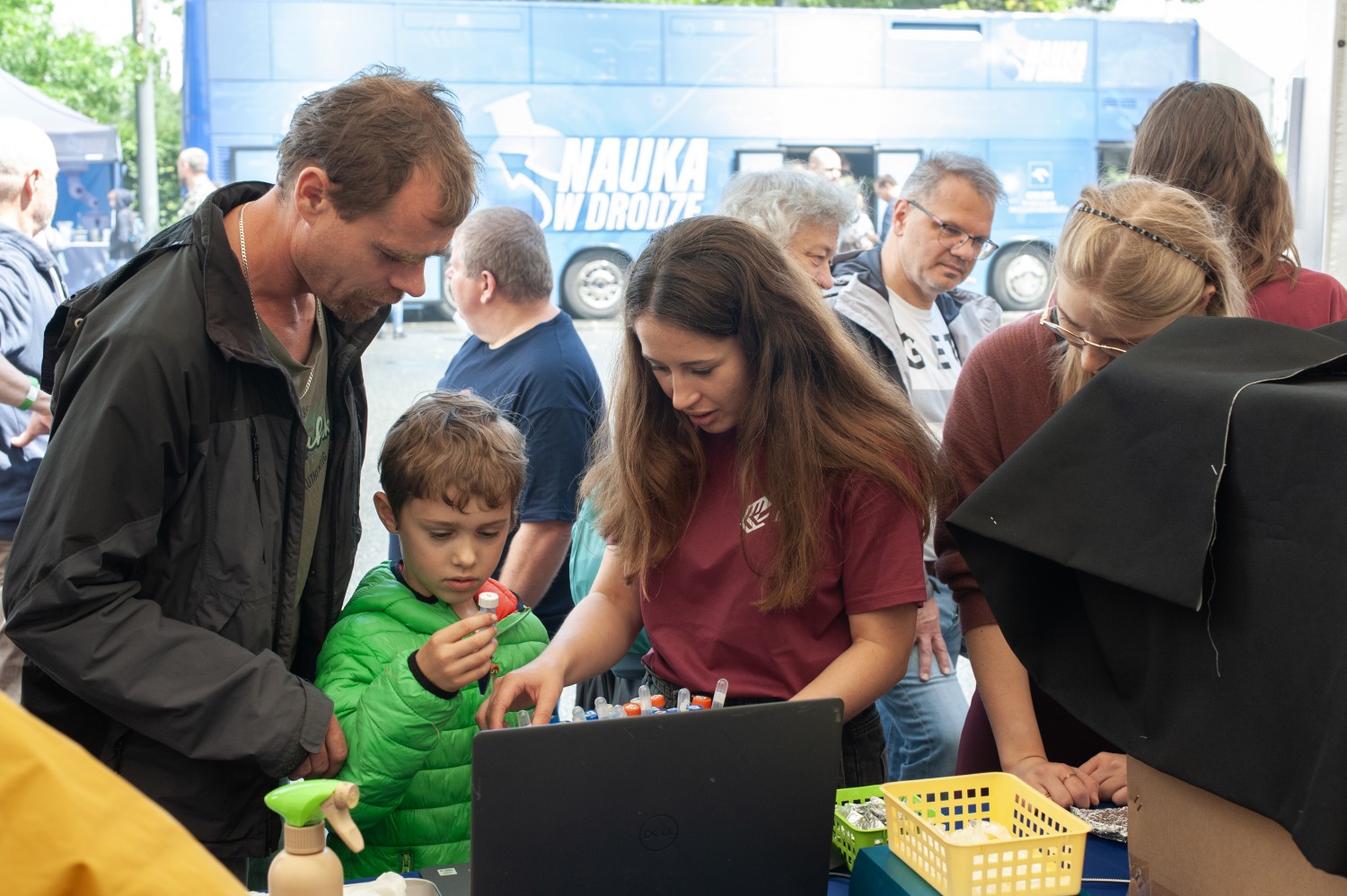
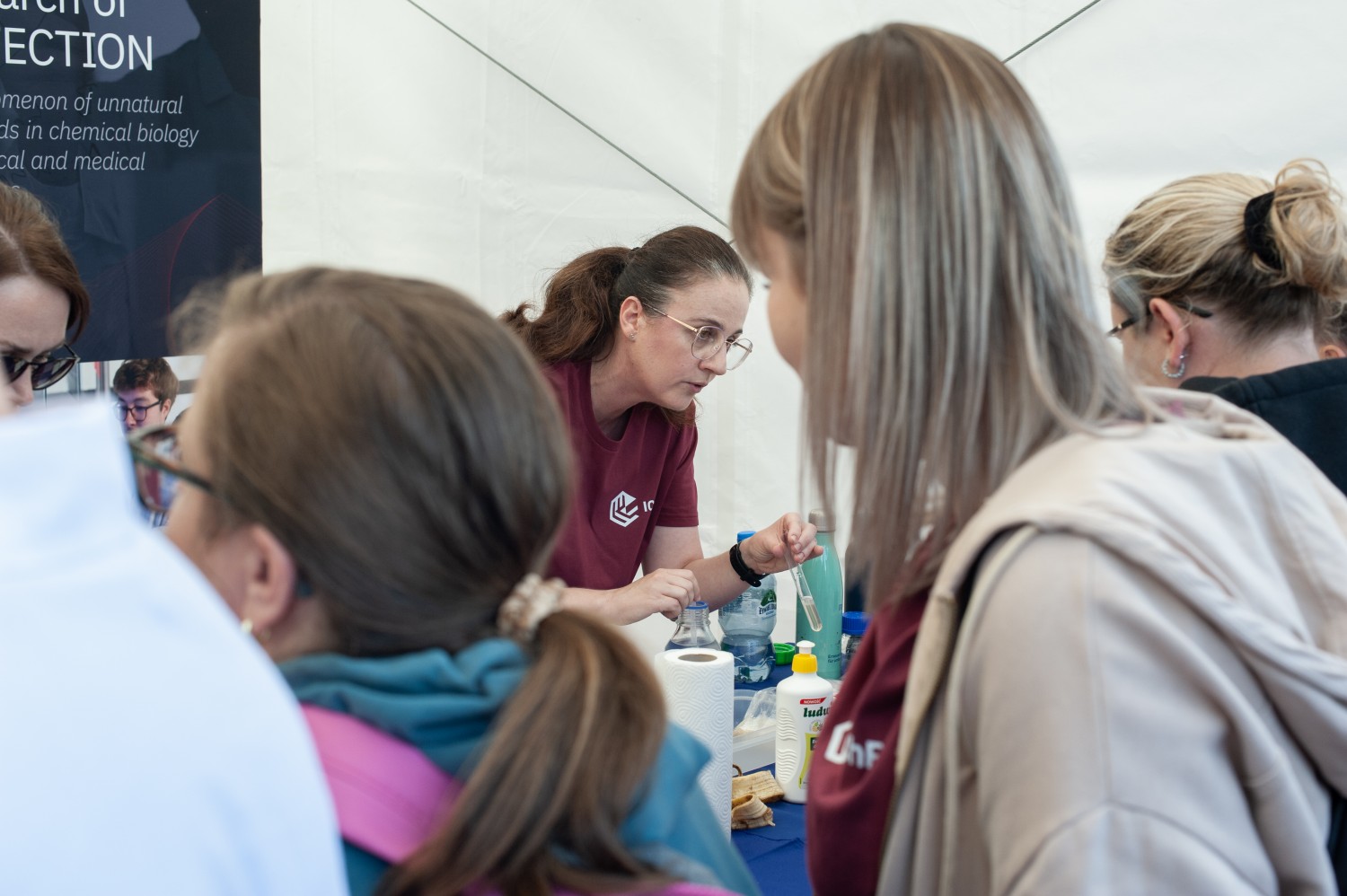
One of the most popular attractions was the banana DNA extraction activity, led by Dr. Łukasz Krzemiński with the support of Patrycja Kuźma, Patrycja Nitoń, and Klaudia Staśkiewicz. For many participants, it was the first time they had ever seen genetic material with their own eyes. Questions followed immediately: What exactly is DNA? Why is it present in every cell? What can scientists learn from it? A conversation that began with an ordinary banana soon led to discussions about molecular biology, genetics, and modern medicine.
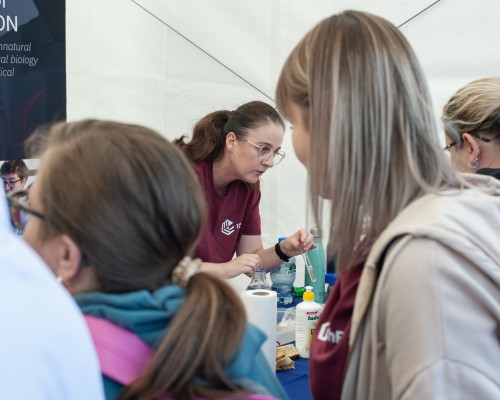
At another station, discussions focused on microorganisms found on our hands and the importance of everyday hygiene habits. Children and adults alike discovered that science is not only about uncovering new phenomena, it also helps us make better decisions about our health and daily lives.
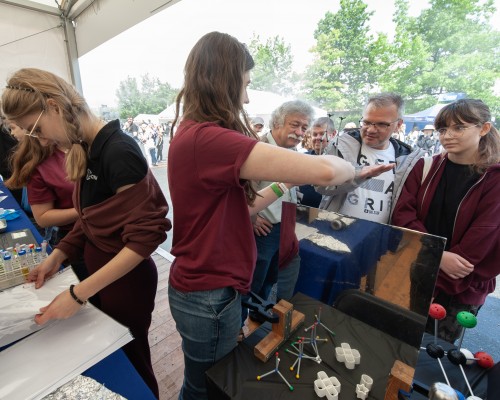
Another crowd favorite was the coherer, one of the earliest devices used to detect electromagnetic waves. Historically, similar instruments were employed to detect atmospheric electrical discharges and storms. For visitors, it provided a tangible demonstration of how scientific discoveries made more than a century ago contributed to the development of modern wireless communication. Through a simple setup, participants could observe the effects of phenomena that remain invisible to the human eye.
For Beata Pleskot, the Science Picnic does not end when visitors leave the stadium. As she explained during the event: “I would like to spark children’s curiosity about the world, so that when they go home they want to try something themselves, experiment, and ask their parents: let’s do some live science and see how it works.”
This spirit of curiosity connected all of the Institute’s activities. The goal was not for visitors to memorize definitions or scientific terminology. Instead, it was to encourage them to observe more carefully, ask questions, and seek answers on their own.
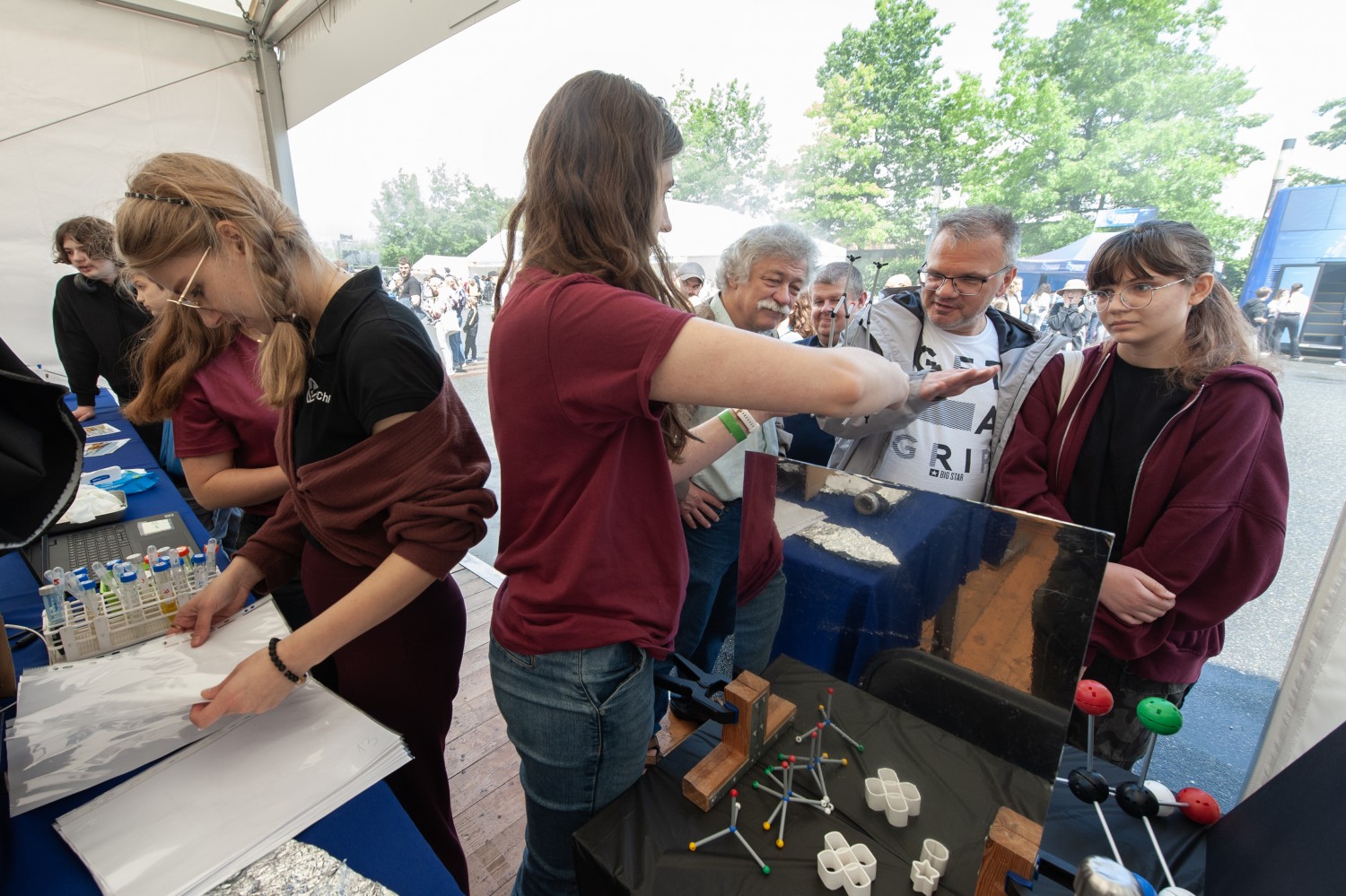
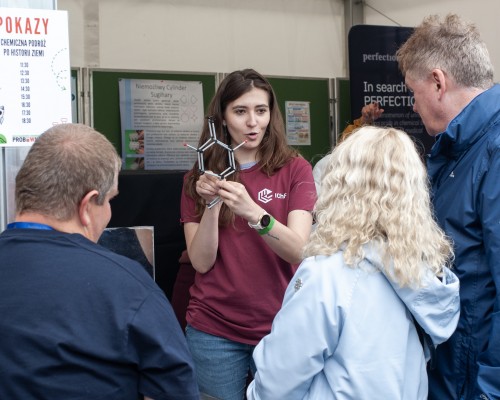
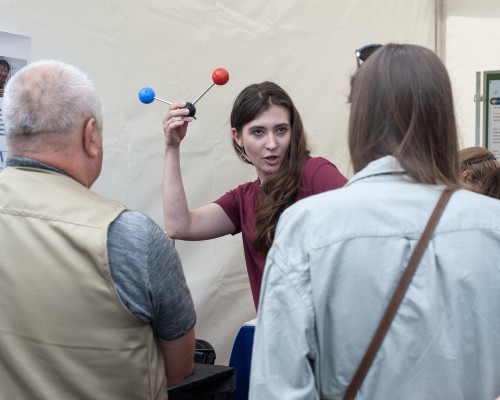
This philosophy was perfectly illustrated by the station led by Tomasz Jaroch. Everything began with a mirror.
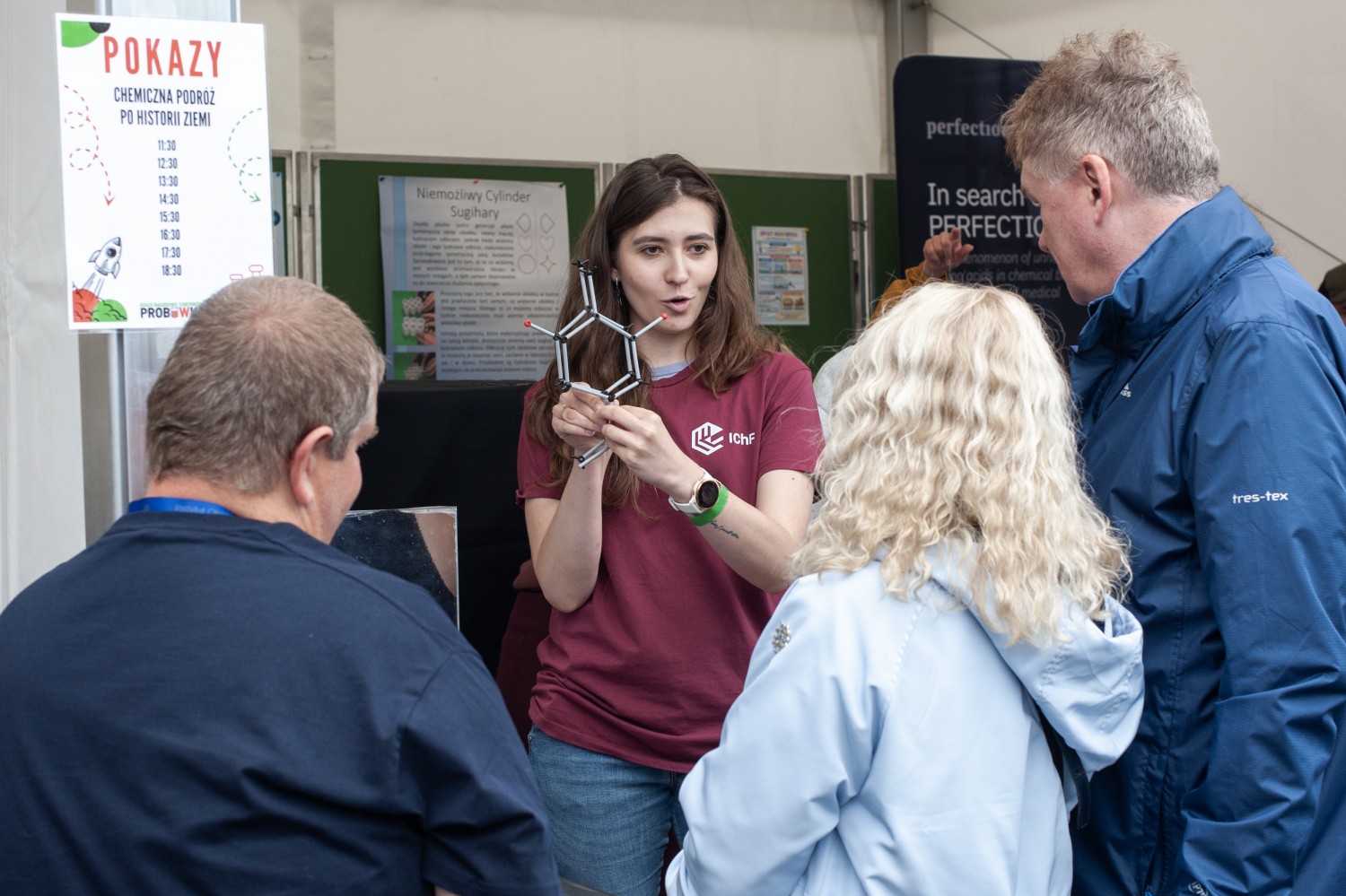
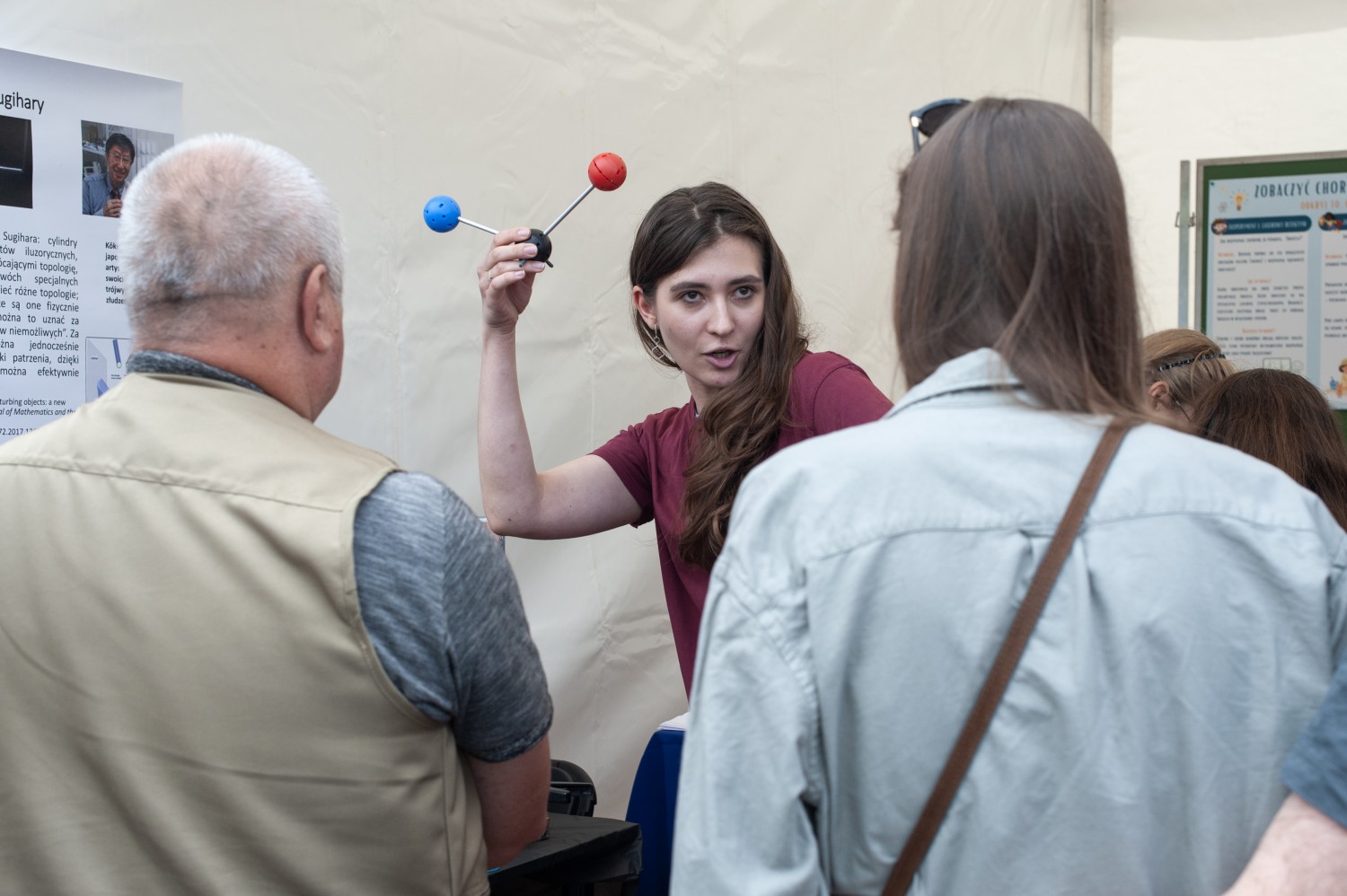
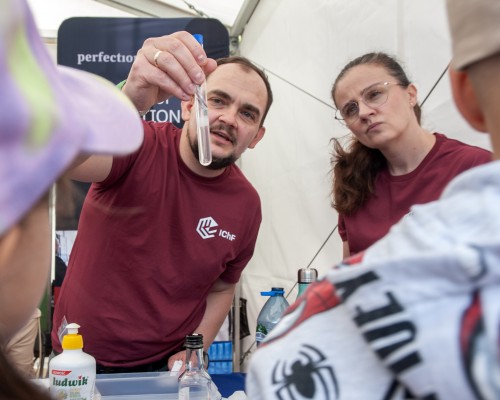
Visitors examined reflections and tried to answer a seemingly simple question: Why can’t a left hand be perfectly superimposed onto a right hand? Within minutes, the discussion moved to chirality, stereochemistry, and molecular structure. As Tomasz Jaroch explained, “Some objects are not identical to their mirror image.”
This simple observation leads to remarkable consequences. Participants learned that two molecules with exactly the same chemical composition can behave very differently simply because they are mirror images of one another.
The concept became especially vivid through demonstrations involving the sense of smell. Using limonene and pinene as examples, visitors discovered that two forms of the same molecule can produce different scents. A discussion that began with the smell of citrus fruits or pine forests naturally expanded into conversations about pharmaceuticals, diagnostics, and the functioning of the human body.
At the same station, participants also learned about thalidomide, one of the most well-known examples demonstrating the importance of molecular structure. Within a matter of minutes, visitors moved from observing their reflection in a mirror to discussing drug safety, preclinical testing, and the responsibilities that accompany scientific research.
Throughout the day, one message repeatedly emerged from conversations with IChF researchers: observation comes before explanation. First, we notice a difference, a detail, or an unexpected phenomenon. Then we ask a question. Only after that do we search for an answer. This mindset - rooted in curiosity, observation, and critical thinking - is what the researchers hoped to share with visitors.
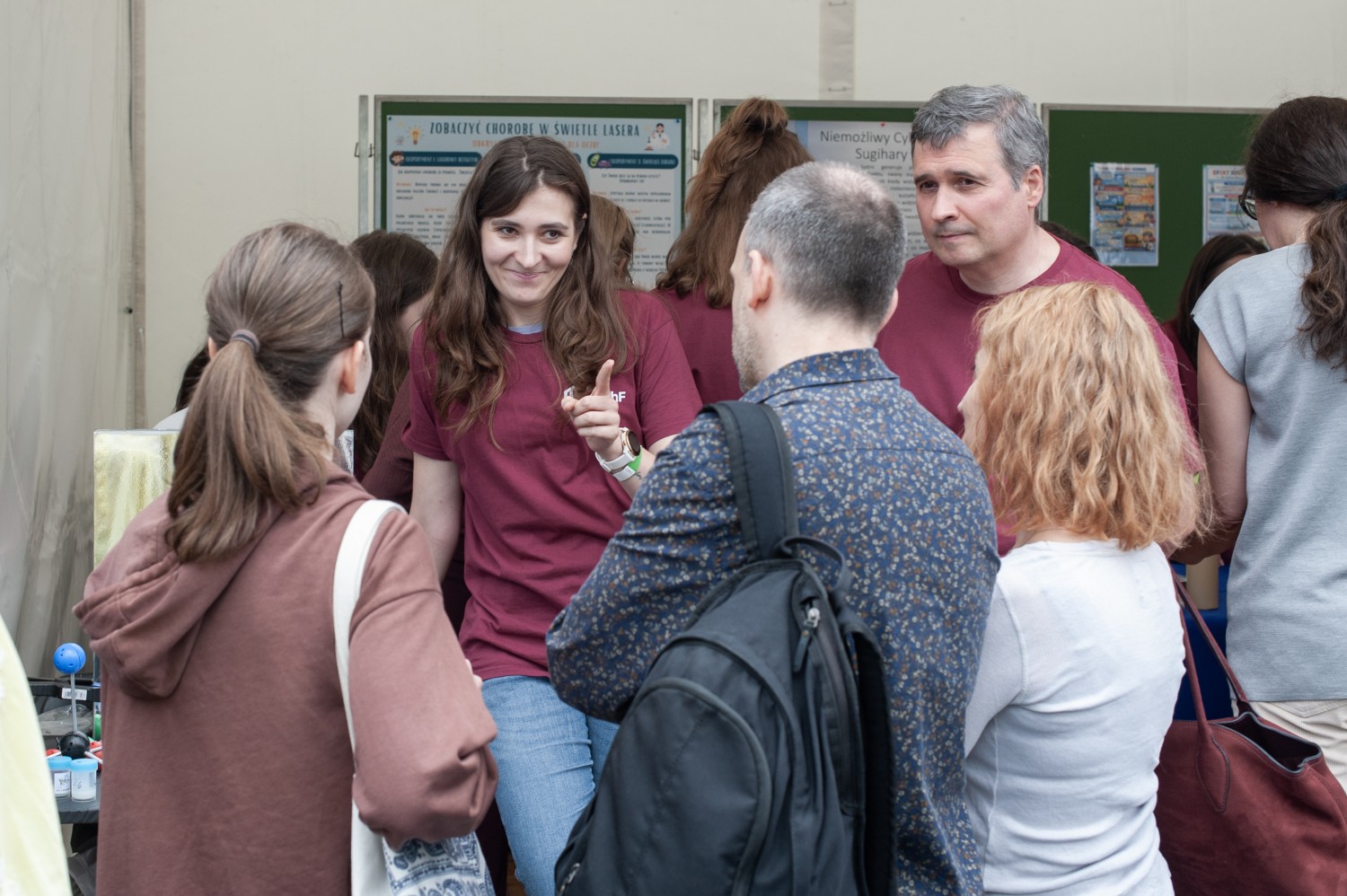
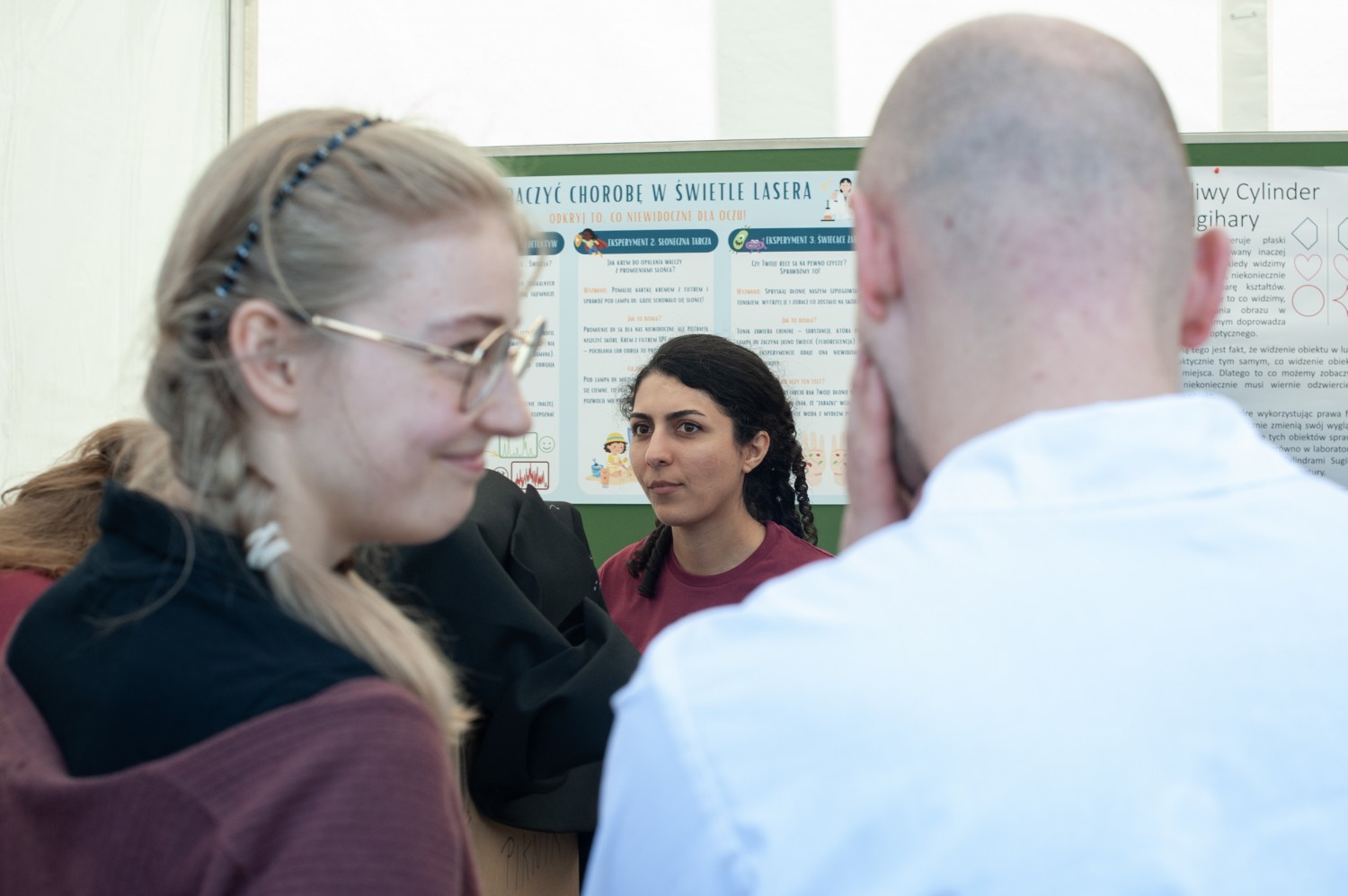
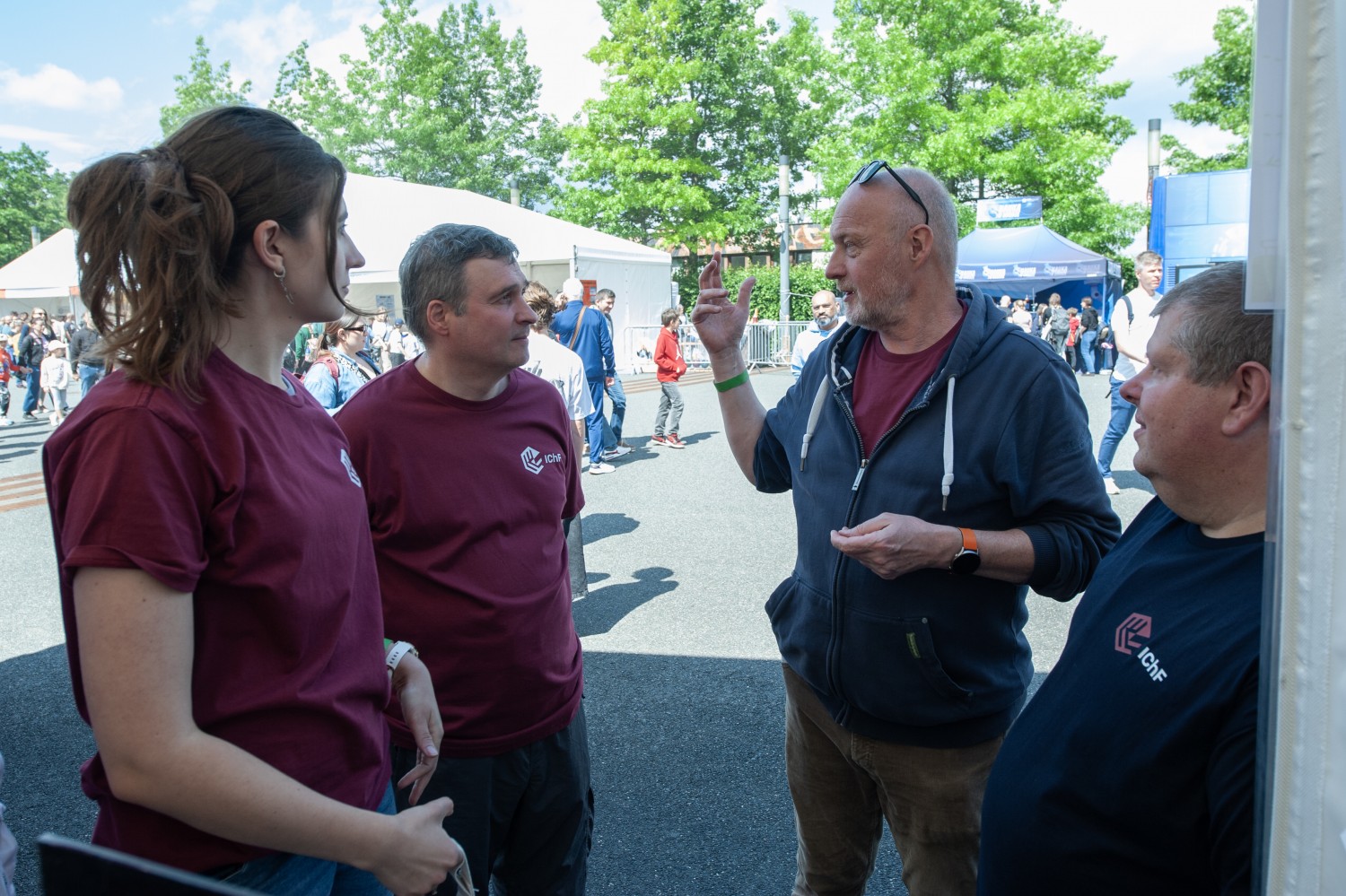
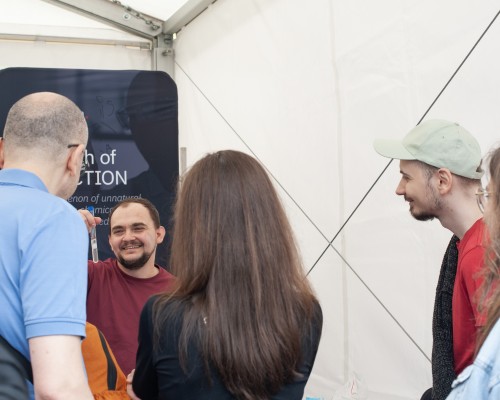
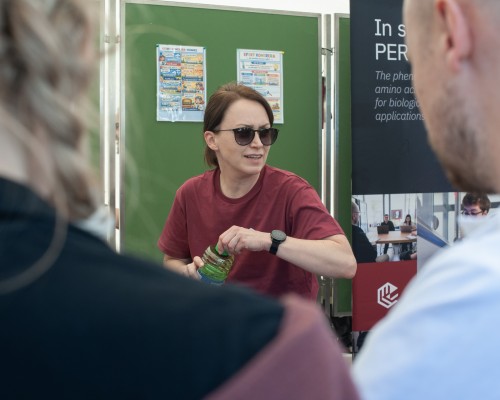
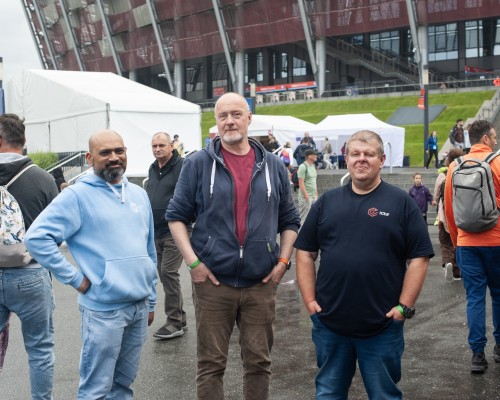
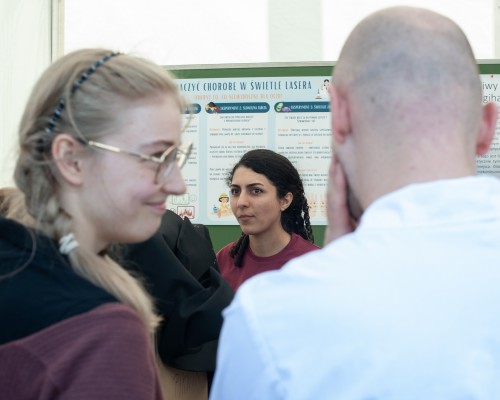
The atmosphere at the booth was welcoming, energetic, and full of enthusiasm. There was no shortage of laughter, friendly exchanges, and teamwork, yet beneath that relaxed atmosphere was a serious commitment to public engagement. For hours, IChF researchers and volunteers explained scientific concepts, demonstrated experiments, answered questions, and encouraged visitors to stop and explore the world through science.
Organizing the stand required significant preparation and teamwork long before the event began. Dr. Luboradzki coordinated the preparations, assembled the team, and ensured that everything ran smoothly throughout the day. He also made sure that the volunteers stayed well-fed - a sizable number of pizzas were ordered for the team and quickly disappeared between demonstrations and conversations with visitors.
Those who were unable to visit the booth in person can still experience some of that atmosphere through the photographs taken by Grzegorz Krzyżewski. His images captured not only the experiments themselves but, more importantly, the reactions they inspired: children’s curiosity, moments of concentration, spontaneous conversations, and the genuine excitement of discovery.
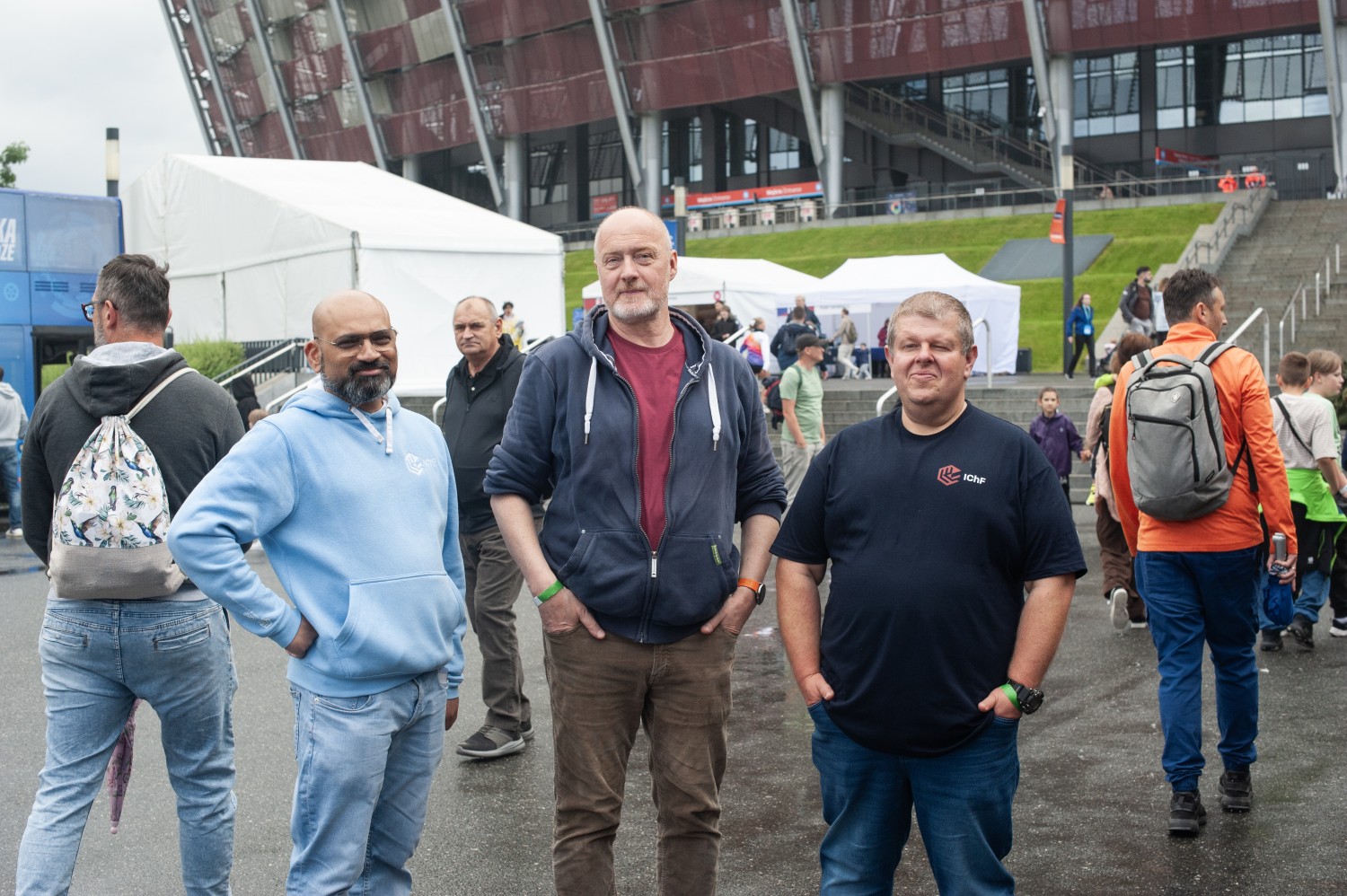
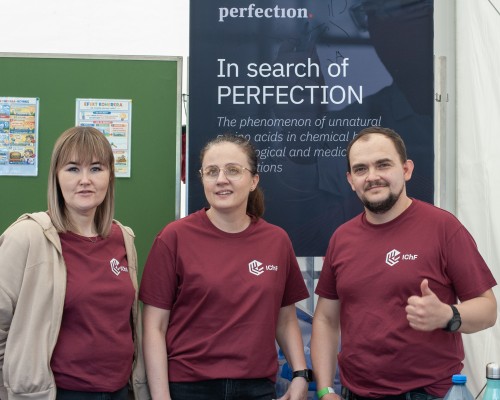
The Institute was represented by a team of volunteers spanning different stages of scientific careers, from PhD students to leaders of research groups and laboratories. Their participation was voluntary and reflected a shared belief that science should remain visible, accessible, and connected to society.
IChF was represented by: Tomasz Jaroch, Joanna Koprowska, Łukasz Krzemiński, Patrycja Kuźma, Dima Lisovytskiy, Roman Luboradzki, Dariusz Łomot, Justyna Mech-Piskorz, Patrycja Nitoń, Julia Owczarska, Marta Paszkiewicz-Gawron, Beata Pleskot, Shaghayegh Saeedi, Piyush Sharma, Klaudia Staśkiewicz, Ashish Tiwari, Patrycja Wiewiórowska, Ida Wiśniewska, and Magda Wójcik.
We would like to sincerely thank all researchers and PhD students who dedicated their time, energy, and weekend to represent the Institute at this remarkable event.


COALESCE is funded by the European Union. Views and opinions expressed are however those of the author(s) only and do not necessarily reflect those of the European Union or the Agency. Neither the European Union nor the granting authority can be held responsible for them.
- Author: IChF team
- Photo source: Photos: Grzegorz Krzyżewski
- Date: 18.06.2026